Insights d'ingénierie
Analyses approfondies des systèmes d'IA, de l'architecture cloud, des systèmes distribués et du leadership en ingénierie.
Parameter-Efficient Fine-Tuning (PEFT) Beyond QLoRA: DoRA, GaLore, and LoftQ
QLoRA is no longer the automatic answer. DoRA for accuracy, LoftQ for quantization damage, GaLore for full-parameter training on small memory — the 2026 PEFT map.
n8n AI Workflow Automation: Architecture, Agents, and When to Use It
Most AI value in a business is glue. n8n vs Zapier vs Make vs custom code, the LLM/agent/RAG node layer, the flows that earn money, and how to run it seriously.
Run LLMs Locally: Ollama vs llama.cpp vs LM Studio vs vLLM
Privacy by construction, zero per-token cost, fully offline. Ollama vs llama.cpp vs LM Studio vs vLLM — the honest comparison, hardware math, and when local loses.
LLM Knowledge Distillation: Teacher-Student Architecture for Smaller, Cheaper Models
Stop paying frontier prices for commodity work. Teacher-student distillation: methods, transfer-set design, the 30-100x cost math, and when not to do it.
How to Build an MCP Server: Tools, Resources, and Production Architecture
A working MCP server fits in 100 lines. Production is the hard part: tool schema design, stdio vs Streamable HTTP, OAuth 2.1, output caps, and audit logging.
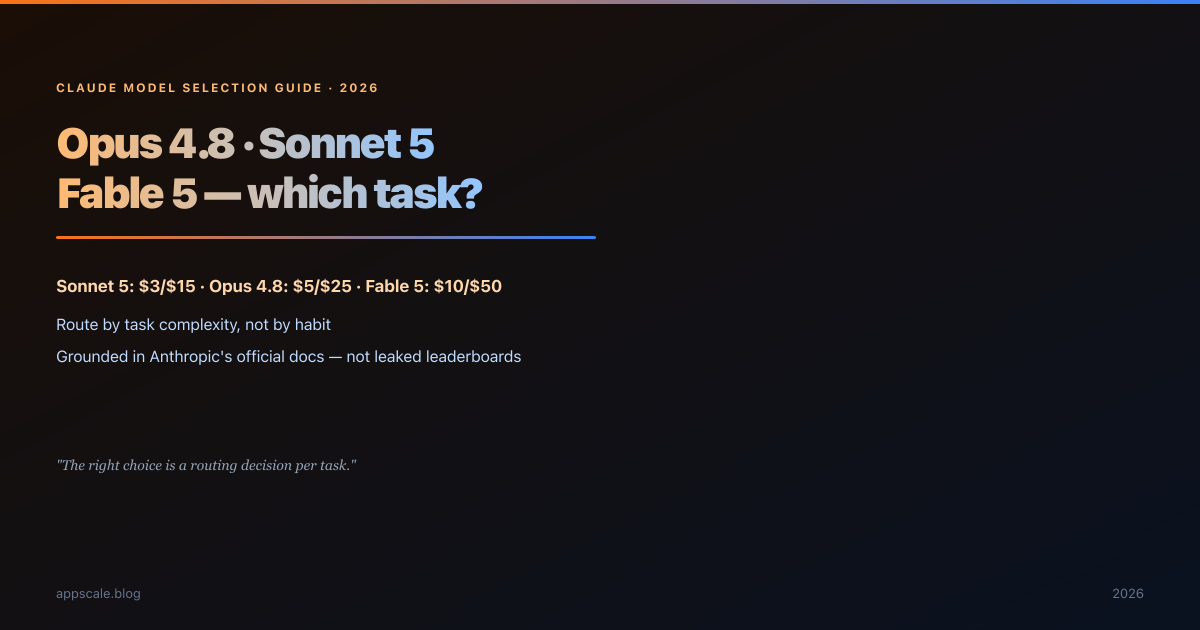
Claude Opus 4.8 vs Sonnet 5 vs Fable 5: Which Model for Which Task
Opus 4.8, Sonnet 5, or Fable 5 — official pricing, positioning, and a task-fit decision framework, grounded in Anthropic's own docs, not contradictory third-party leaderboards.
TPU Inference Architecture: Serving LLMs on Trillium with vLLM
GPU is not the only serving option in 2026. TPU (Trillium) cost-per-token, the XLA compilation model, vLLM TPU backends, and agent-driven ops for self-hosted LLMs.
Local-First Architecture: CRDTs, Sync Engines, and Offline-First Apps for 2026
The industry over-corrected toward routing everything through the cloud. Local-first architecture: CRDTs, sync engines, and why apps should work offline by default.
Deep Agents Architecture: Planning, Sub-Agents, and File-System Memory for Long-Horizon Tasks
A simple tool-calling loop collapses on a 100-step task. Deep agents fix it with planning, sub-agents, and a file system as memory — the long-horizon agent pattern.
Prompt Caching Architecture for LLM Apps & Agents: Prefix Caching, Cost, and Latency
Agents and RAG apps re-send the same long prefix every turn. Prompt caching cuts input cost up to ~90% and speeds first tokens — the win most teams leave off.
A/B Testing and Online Experimentation for LLM Features
A higher offline eval score is a hypothesis, not proof. How to run controlled online experiments on prompts, models, and RAG: architecture, metrics, and the statistics.
Vector Index Tuning for Production: HNSW, IVF, and Product Quantization
The index parameters, not the database brand, decide whether RAG answers in 20ms at 95% recall or 200ms at 80%. Tuning HNSW, IVF, and Product Quantization in production.
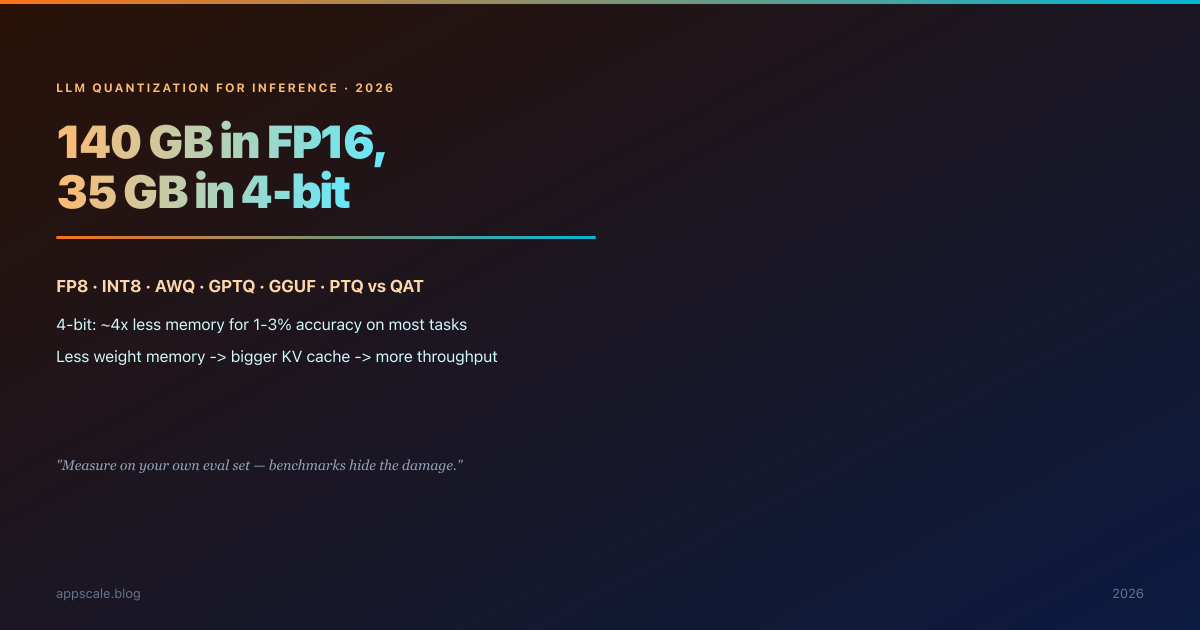
LLM Quantization for Production Inference: INT8, FP8, AWQ, and GGUF
GPUs dominate self-hosted inference cost. Quantization cuts memory 2-4x for a small accuracy hit: FP8, INT8, AWQ, GPTQ, GGUF, PTQ vs QAT, and when not to do it.
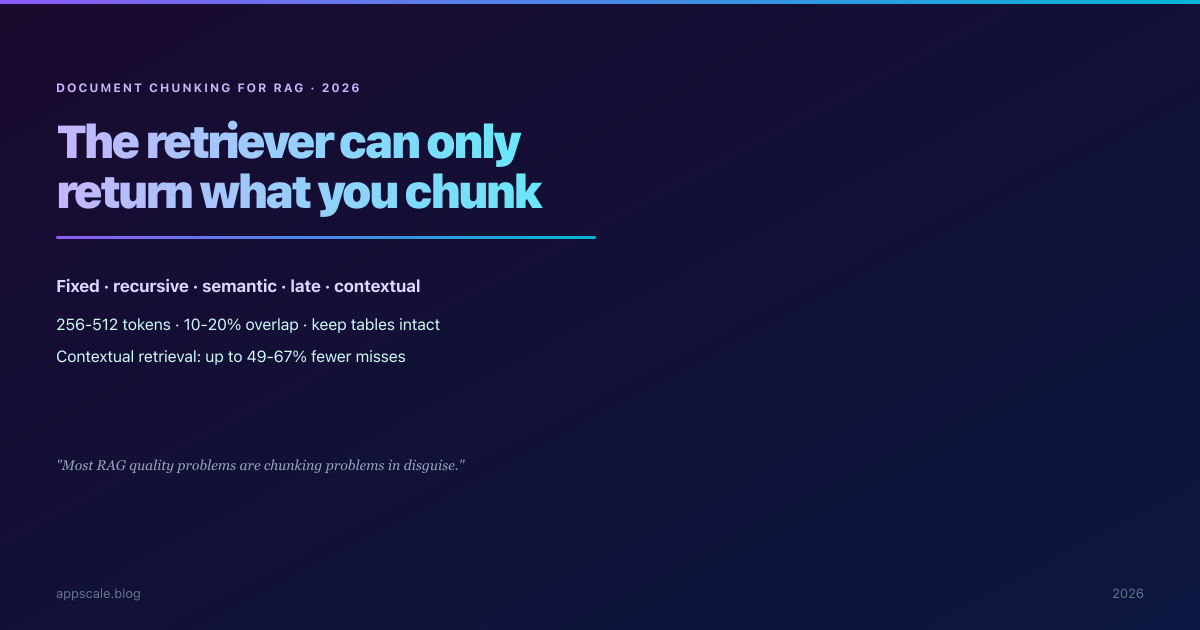
Document Chunking Architecture for RAG: Fixed, Semantic, Late, and Contextual Retrieval
Chunking is the highest-leverage, most-neglected decision in RAG. Fixed vs recursive vs semantic vs late vs contextual retrieval — and the pipeline that ties them together.
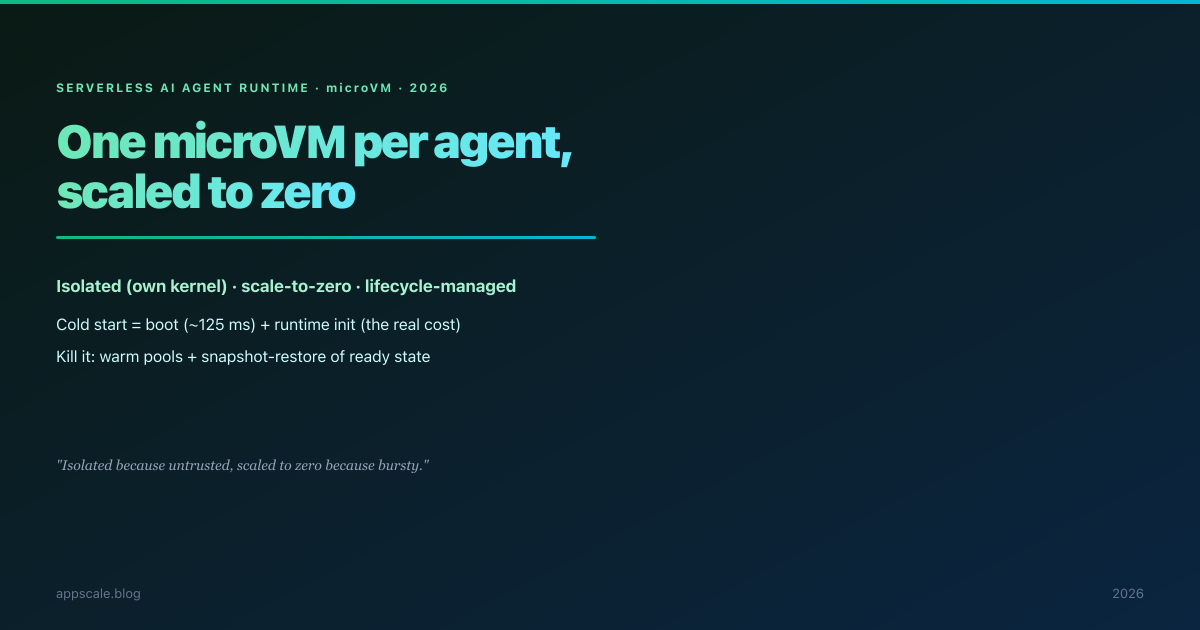
Serverless AI Agent Runtime: microVM Lifecycle Architecture for Agent Workloads
Agents are bursty, long-tailed, and untrusted — exactly what an always-on fleet handles worst. A serverless microVM runtime: scale-to-zero, isolation, and cold-start mitigation.
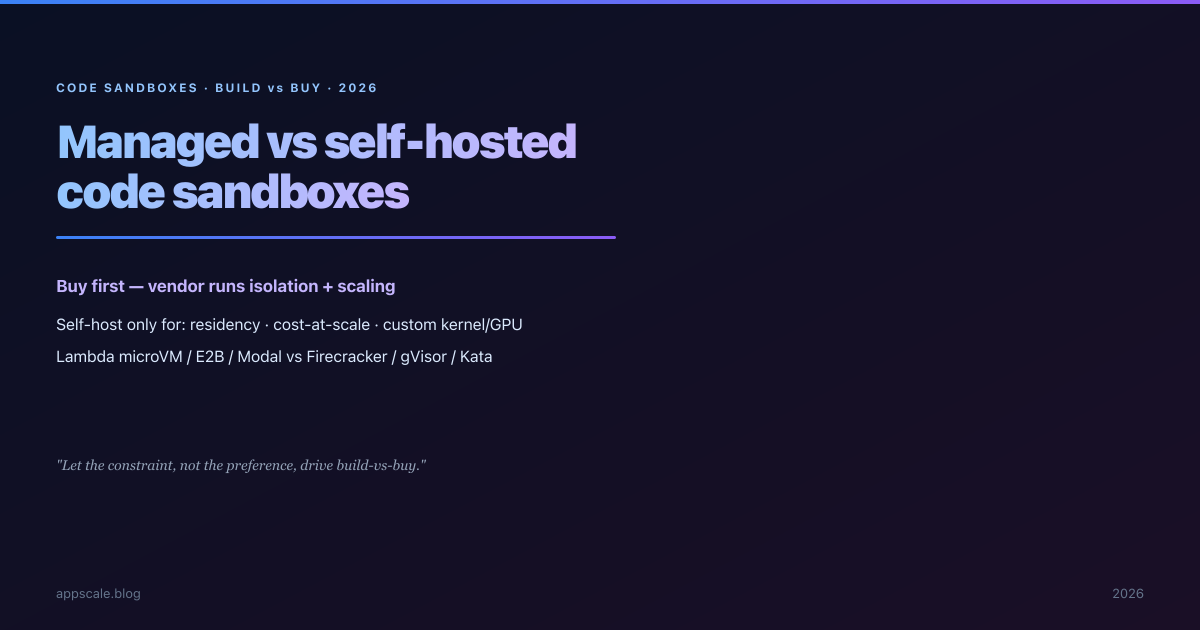
Managed vs Self-Hosted Code Sandboxes: A Build-vs-Buy Decision for AI Code Execution
Should you buy a managed code sandbox or self-host Firecracker yourself for AI code execution? A build-vs-buy decision framework across cost, compliance, and control.
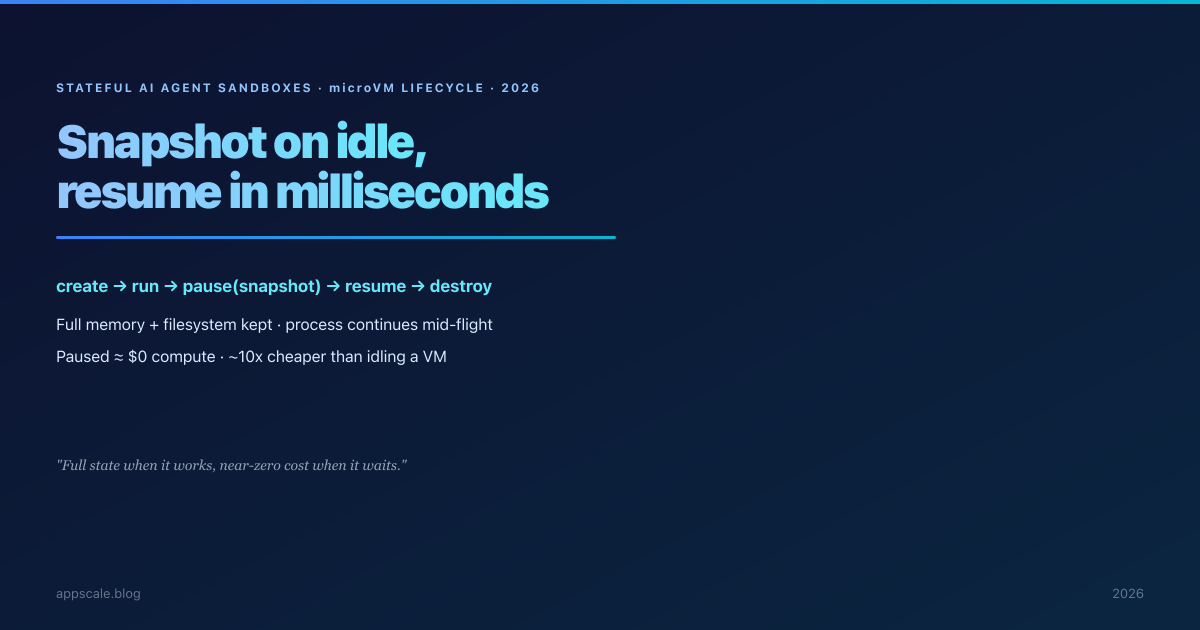
Stateful AI Agent Sandbox Sessions: Pause, Resume & Snapshot with microVMs
Long-running AI agents wait far more than they work. Stateful microVM sandboxes snapshot on idle and resume in milliseconds — full state kept, near-zero idle cost.
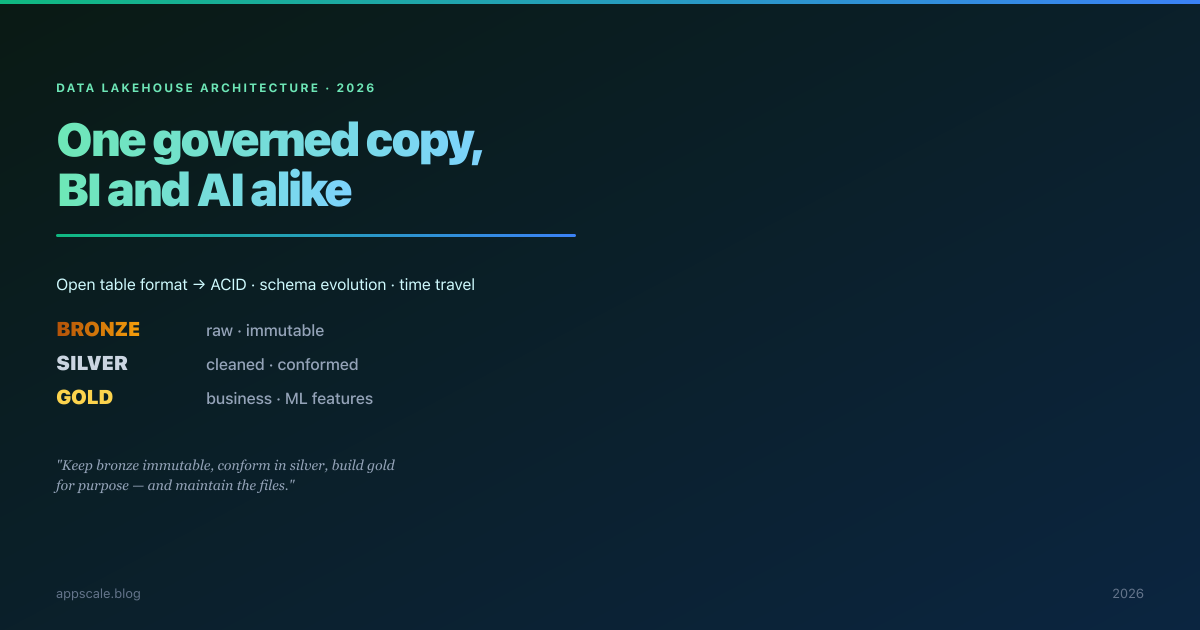
Data Lakehouse Architecture: Iceberg, Delta & the Medallion Pattern
A lakehouse is a warehouse’s table semantics on a lake’s cheap storage, organised by the medallion pattern and kept alive by compaction and governance. How to architect one.
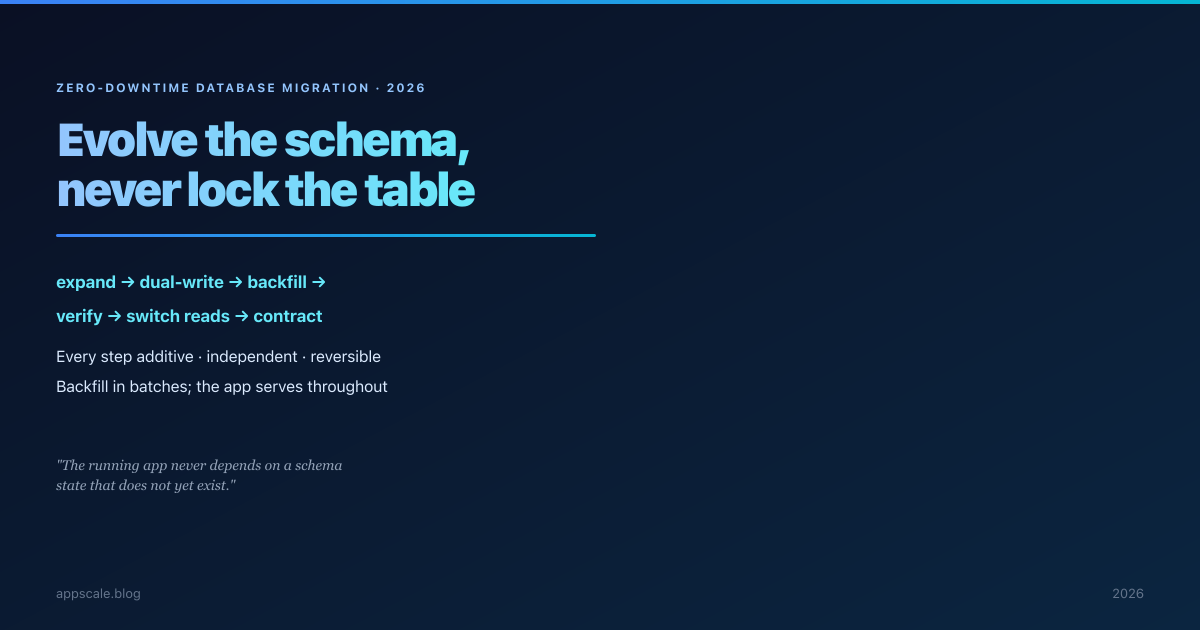
Zero-Downtime Database Migration Architecture: Expand-Contract, Dual-Write & Backfill
Change a production schema with no downtime via expand-contract: add the new shape, dual-write, backfill in batches, verify, switch reads, drop the old. Every step reversible.
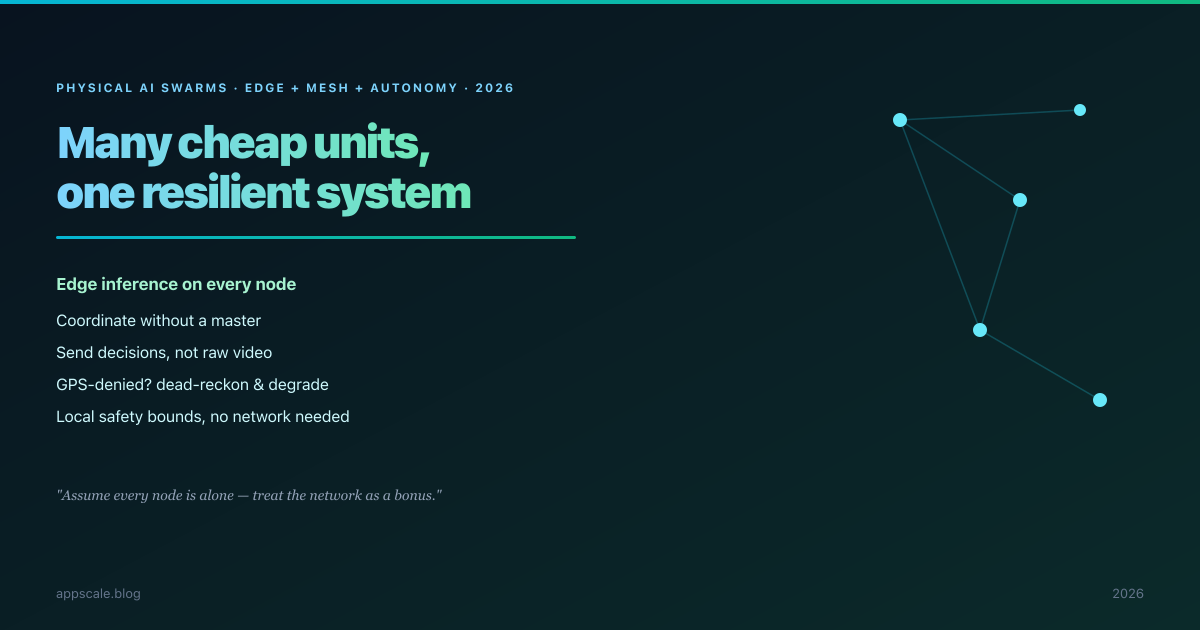
Architecting Physical AI Swarms: Edge Inference, Mesh Networking, and Coordinated Autonomy
A physical AI swarm is a moving distributed system with a hostile network. The architecture for edge inference, masterless coordination, resilient mesh comms, and local safety.
Gardez une longueur d'avance
Analyses hebdomadaires approfondies sur les systèmes d'IA, l'architecture cloud, les systèmes distribués et le leadership en ingénierie. Rejoignez plus de 5 000 ingénieurs.