OldKnowledge,New Vessel.
Essays on on-device AI, data sovereignty, and building systems that keep knowledge where it belongs.
Enter the archive →— 00 / ThesisEvery business runs on knowledge older than its software.
Latest Entries
Players Don't Quit Games, They Quit Moments: Player Motivation for Indie Developers in 2026
MDA Is a Debugger, Not a Theory: Mechanics, Dynamics and Aesthetics for Indie Designers in 2026
Synthetic Monitoring Design: Check What Users Do, Not What Servers Return
Access Control Inside a Digital Twin: The Read Path Is a Data-Governance Problem, the Write Path Is a Safety Function
PHP2Shell and the PHP Site Hacks of October 2026: Patch the Runtime, Then Fix the Estate, and Only Then Ask Whether to Leave PHP
अथ प्रथमोऽध्यायः ॥
विद्या ददाति विनयं विनयाद् याति पात्रताम् ।
पात्रत्वाद्धनमाप्नोति धनाद्धर्मं ततः सुखम् ॥
We digitize centuries-old manuscripts. Then we build with the same discipline.
AppScale's roots are in a quiet project: structuring classical Sanskrit texts into faithful digital form. Extraction, structure, provenance, sovereignty — the same principles now power our client work.
Built for Every Business
Intelligence that never leaves the device
Offline-first, data-sovereign systems — LLMs, vector search, inference at the edge.
02Document IntelligenceAir-gapped document vaults
Sealed, searchable, provable.
03AI ProductsFull-cycle AI product builds
Mobile-first, production-grade.
04MCP & AI SecuritySecuring the agentic stack
Tool poisoning, prompt injection, confused deputies — studied and hardened.
05Indic Language AIOCR for scripts the world forgot
Sovereign OCR for Indic scripts.
06Consulting & Architecture19+ years shipping at scale
OTT, e-commerce & mobility platforms serving millions.
Players Don't Quit Games, They Quit Moments: Player Motivation for Indie Developers in 2026
Players don't quit games, they quit moments. Use autonomy, competence and relatedness in 2026 to find the six moments where players leave, and log which is yours.
MDA Is a Debugger, Not a Theory: Mechanics, Dynamics and Aesthetics for Indie Designers in 2026
Players report feelings, but you can only change rules. Use the MDA framework in 2026 as a debugger to find which mechanic is causing the feeling you don't want.
Synthetic Monitoring Design: Check What Users Do, Not What Servers Return
Green status page, broken checkout. Design synthetic checks as contract tests for user promises: one journey, one outcome, traced end to end in 2026.
Access Control Inside a Digital Twin: The Read Path Is a Data-Governance Problem, the Write Path Is a Safety Function
A twin is two systems with one model. Govern reads with ABAC on site, asset, data class and contract; route every write through the control layer.
PHP2Shell and the PHP Site Hacks of October 2026: Patch the Runtime, Then Fix the Estate, and Only Then Ask Whether to Leave PHP
PHP2Shell is a runtime bug, but a PHP hack is an estate failure. Patch to 8.5.12/8.4.27/8.3.36/8.2.35, hunt for webshells, then decide on leaving PHP.
Your Core Loop Has Three Clocks: Designing What Players Do Every 30 Seconds, 5 Minutes and 5 Hours
A core loop isn't one loop. Design what players do every 30 seconds, every 5 minutes and every 5 hours in 2026, and make each loop feed the next one.
Before You Open the Engine, Decide What Your Game Is For: Art, Income, Portfolio or Studio-Building
Pick one goal before your game: art, income, portfolio or studio-building. It quietly decides your engine, platform, scope and when you stop building it.
Building Energy Digital Twins in 2026: The Twin Is a Counterfactual, Not a 3D Model, So Build the Baseline Before the Viewer
Building energy digital twins in 2026: why the twin is a counterfactual, what EPBD Article 13 BACS rules demand, Brick point maps, HVAC fault detection and IPMVP baselines.
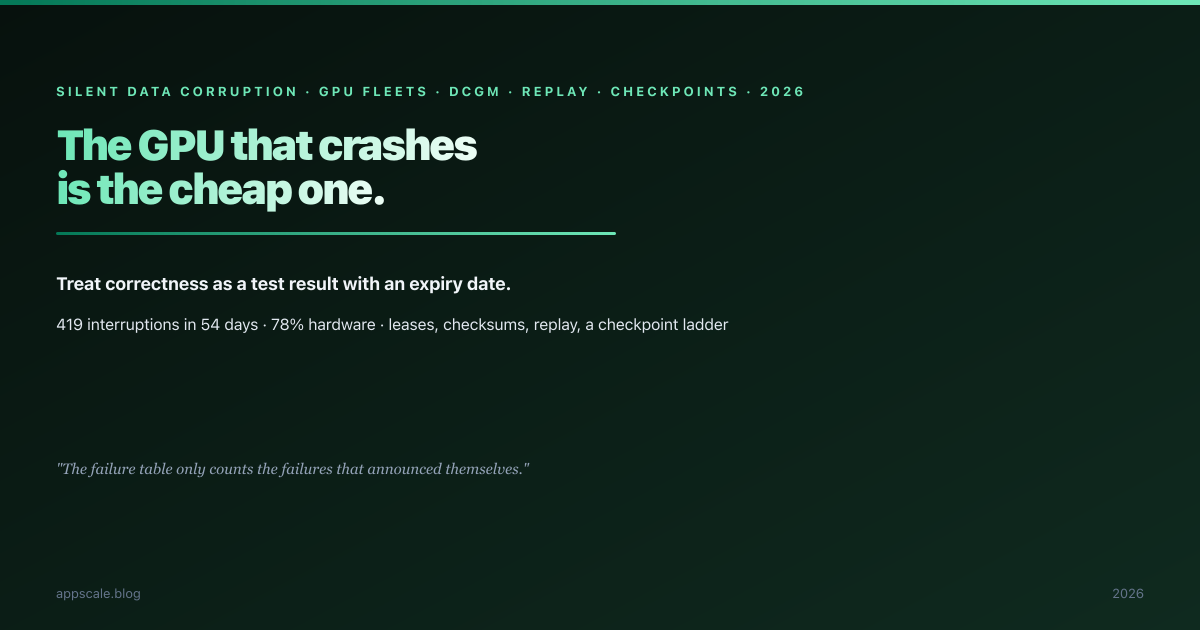
Silent Data Corruption in GPU Fleets in 2026: The GPU That Crashes Is the Cheap One, So Treat Correctness as a Test Result With an Expiry Date
Silent data corruption in GPU training fleets in 2026: why the crashing GPU is the cheap one, Llama 3's failure table, TrainSDC, DCGM screening and correctness leases.
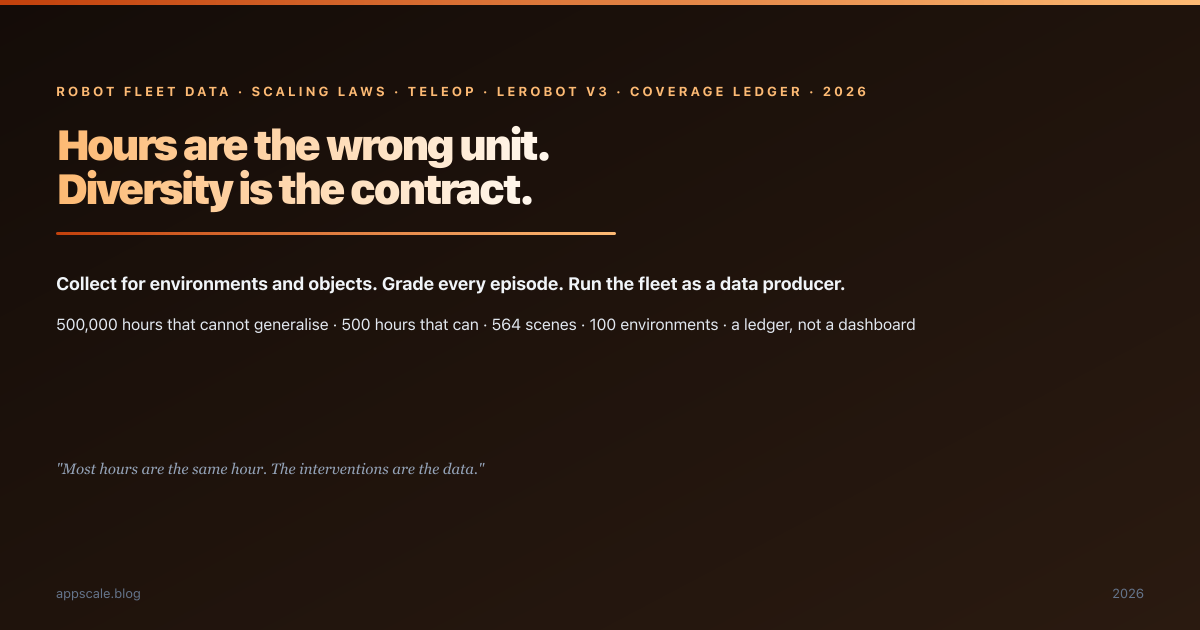
The Robot Fleet Data Flywheel in 2026: Hours Are the Wrong Unit, So Collect for Environment and Object Diversity, Grade Every Episode, and Run the Fleet as a Data Producer With a Contract
Robot fleet data flywheel in 2026: why hours are the wrong unit, the diversity scaling law, Tesla vs pi0.5 and Helix, triggered capture, a coverage ledger and the data contract.
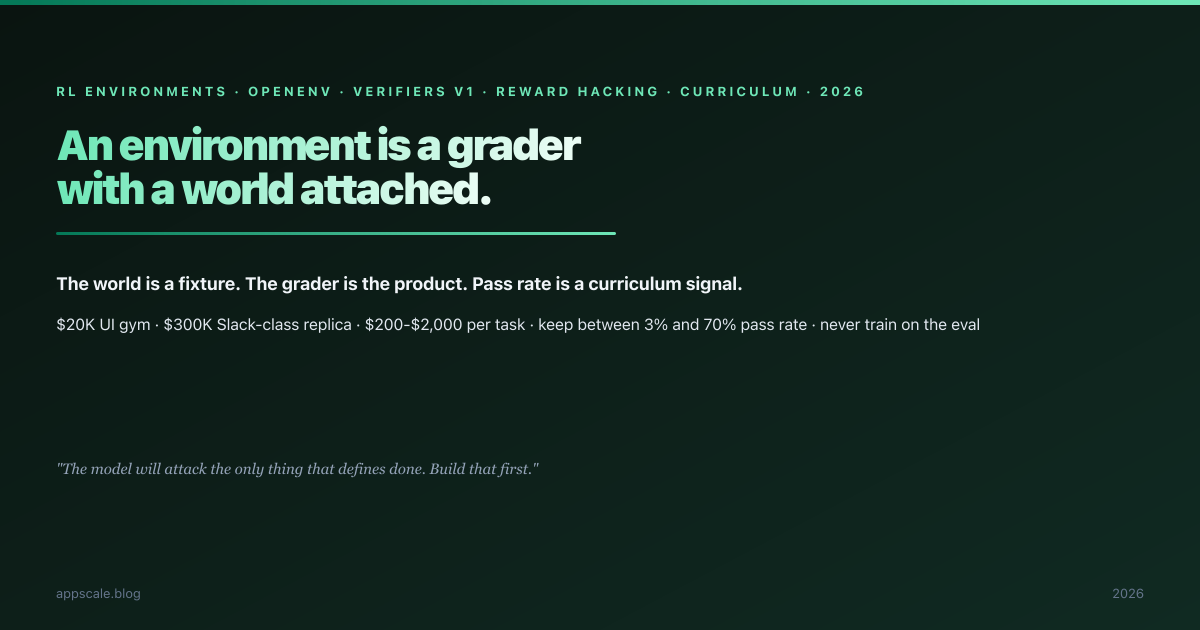
RL Environments for Agent Training in 2026: The Environment Is a Grader With a World Attached, So Build the Grader as the Product and Treat Pass Rate as the Curriculum Signal
RL environments for agent training in 2026: what a UI gym, task and grader cost, OpenEnv vs verifiers v1, build-buy-refuse, and a grader-first pipeline with a difficulty ledger.
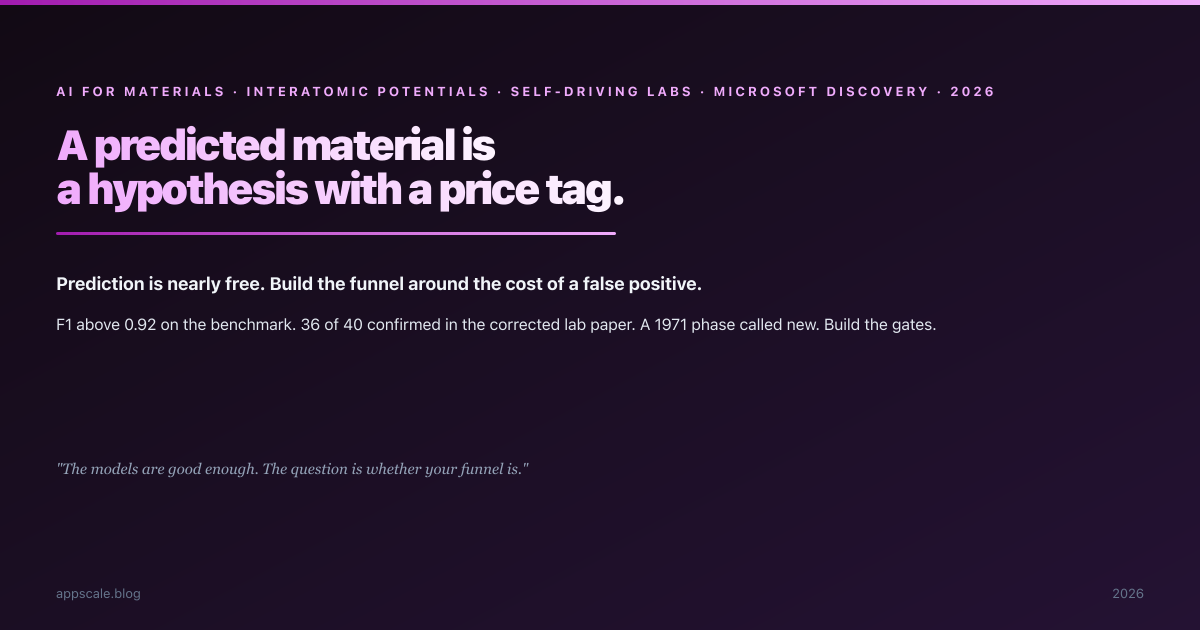
AI for Materials and Molecules in 2026: A Predicted Material Is a Hypothesis With a Price Tag, So Build the Stack Around the Cost of a False Positive, Not the Count of Candidates
AI materials discovery in 2026: UMA, Orb-v3, MatterGen, self-driving labs and Microsoft Discovery GA, compared by cost per candidate and false-positive mode, with four gates.
Scale-Up vs Scale-Out in 2026: The Interconnect Sets the Size of Your Machine, So Size the Domain to the Collective and Buy the Fabric by Its Exit Cost, Not Its Bandwidth Number
NVLink 6 vs UALink over Ethernet vs Ultra Ethernet 1.1 vs co-packaged optics in 2026: size the scale-up domain to your model's collectives and buy the fabric by exit cost.
Confidential Databases: Encryption in Use Is a Query-Shape Decision, So Choose the Boundary by Which Operator Must Run Blind, Not by the Word "Confidential" (2026)
Confidential databases in 2026: Always Encrypted enclaves vs MongoDB Queryable Encryption vs confidential VMs, compared by which operators survive and who is excluded.
Multi-Robot Traffic Management: The Intersection Belongs to One Authority, So Standardise the Robot Interface and Never Let Two Fleet Managers Share a Corridor (2026)
Why multi-vendor AMR fleets deadlock, what VDA 5050 3.0 (March 2026) standardises and leaves out, and the single-traffic-authority architecture that owns the intersection.
Digital Twin Data Models and Ontologies: The Ontology Is the Twin, So Choose It by Who Must Read the Twin From Outside, Not by the Platform You Run (2026)
How to choose a digital twin data model in 2026: DTDL vs NGSI-LD vs Asset Administration Shell vs Brick, the two-layer canonical model, and the 2027 battery passport deadline.
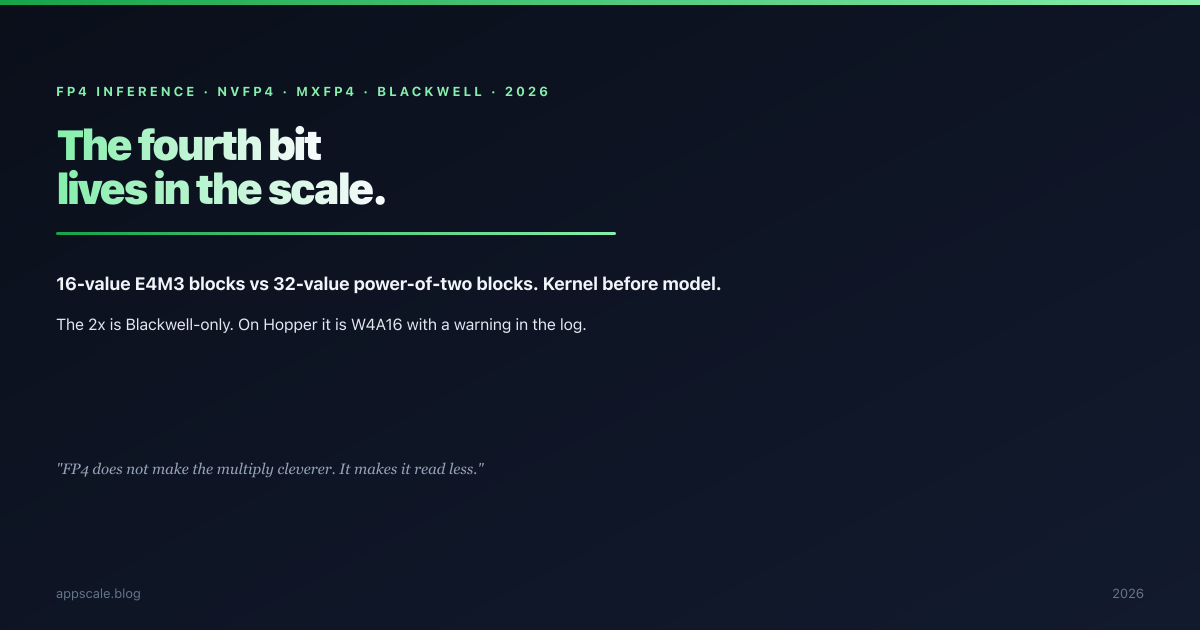
FP4 Inference in Production: The Fourth Bit Lives in the Scale, So Choose the Block Format and the Kernel Before You Choose the Model (2026)
FP4 inference in 2026: how NVFP4 and MXFP4 differ in block scale, why the 2x throughput needs Blackwell, the Hopper W4A16 fallback, and a per-workload adoption path.
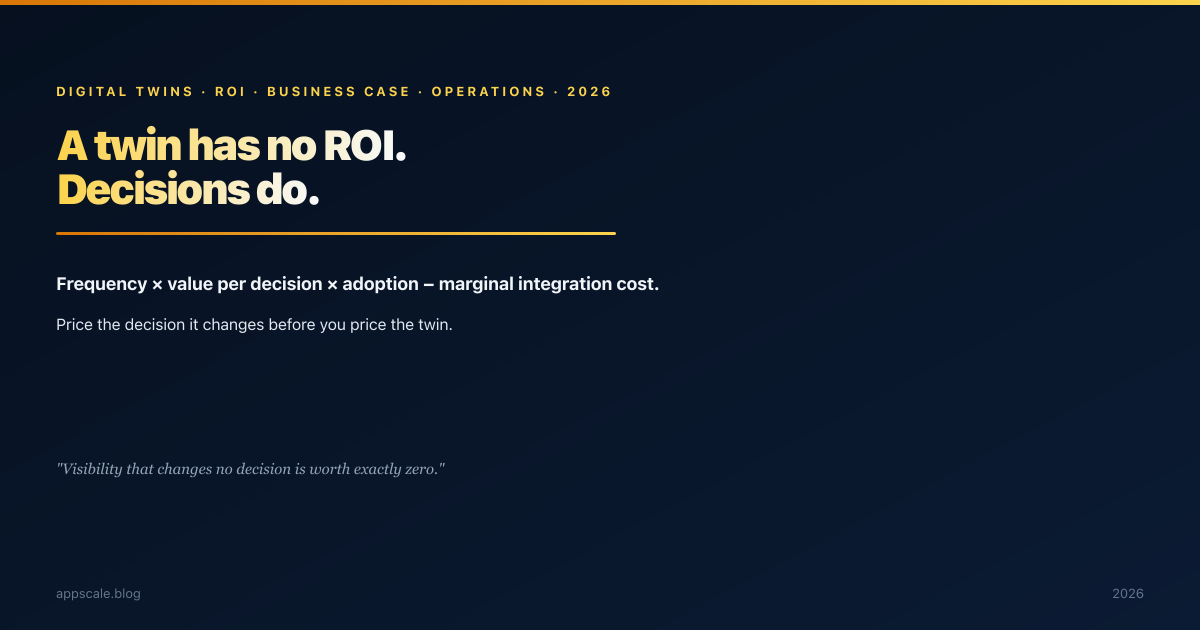
Modelling the ROI of a Digital Twin: A Twin Has No ROI, Decisions Do, So Price the Decision It Changes Before You Price the Twin (2026)
Digital twin ROI in 2026: model value per decision the twin changes, against a measured baseline, with a worked payback example and the costs that hide.
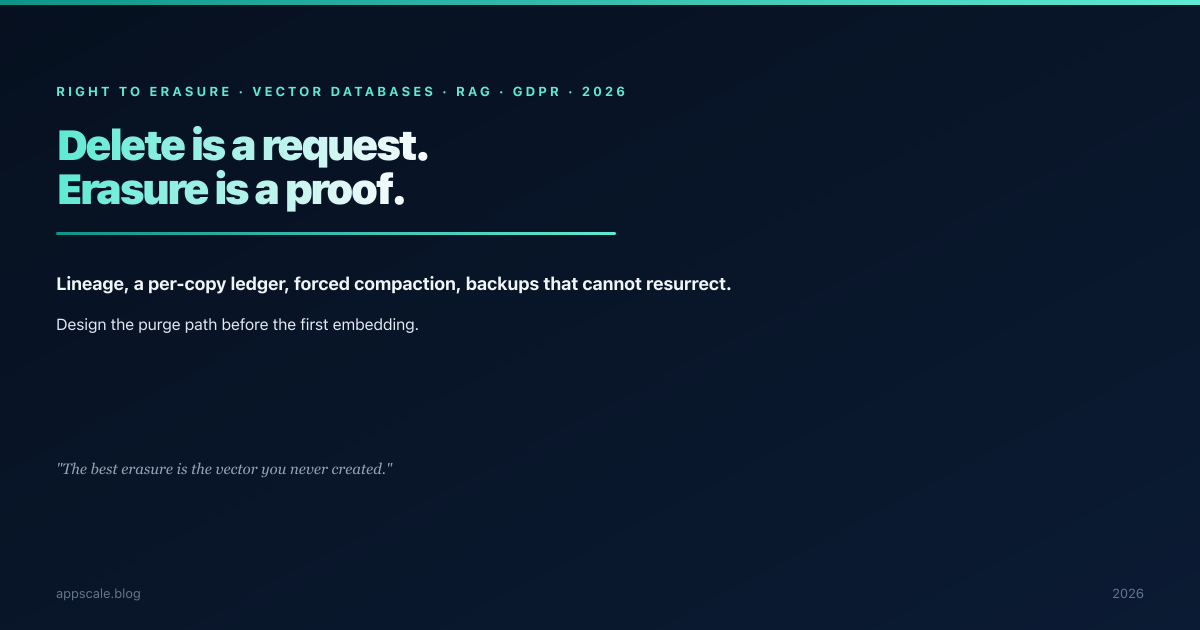
Right to Erasure in Vector Stores: Delete Is a Request, Erasure Is a Proof, So Design the Purge Path Before the First Embedding (2026)
GDPR erasure in RAG systems: why a vector delete only tombstones data, and the lineage, ledger, compaction and backup design that proves it is gone in 2026.
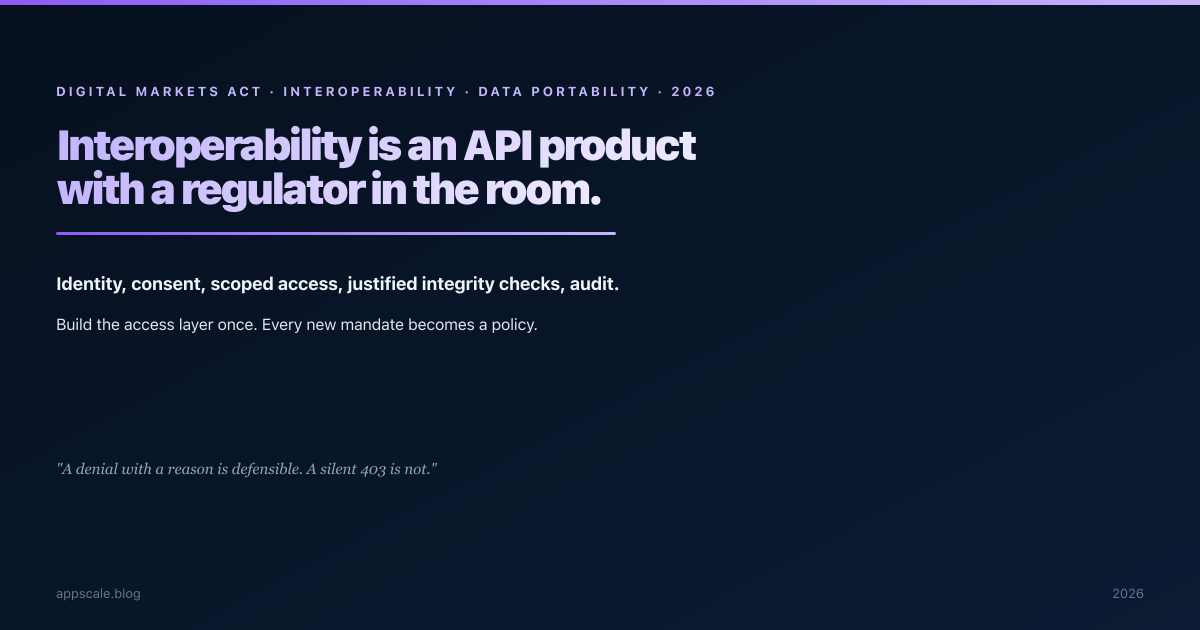
Designing for the DMA: Interoperability Is an API Product With a Regulator in the Room, So Build the Access Layer Once (2026)
DMA interoperability in 2026: one access layer for identity, consent, scoped tokens, integrity rules and audit, plus how third parties design for slow access.
Bring this thinkingto your business.
conversation
One essay, most weeks. No noise.