Инженерные инсайты
Глубокие разборы AI-систем, облачной архитектуры, распределённых систем и инженерного лидерства.
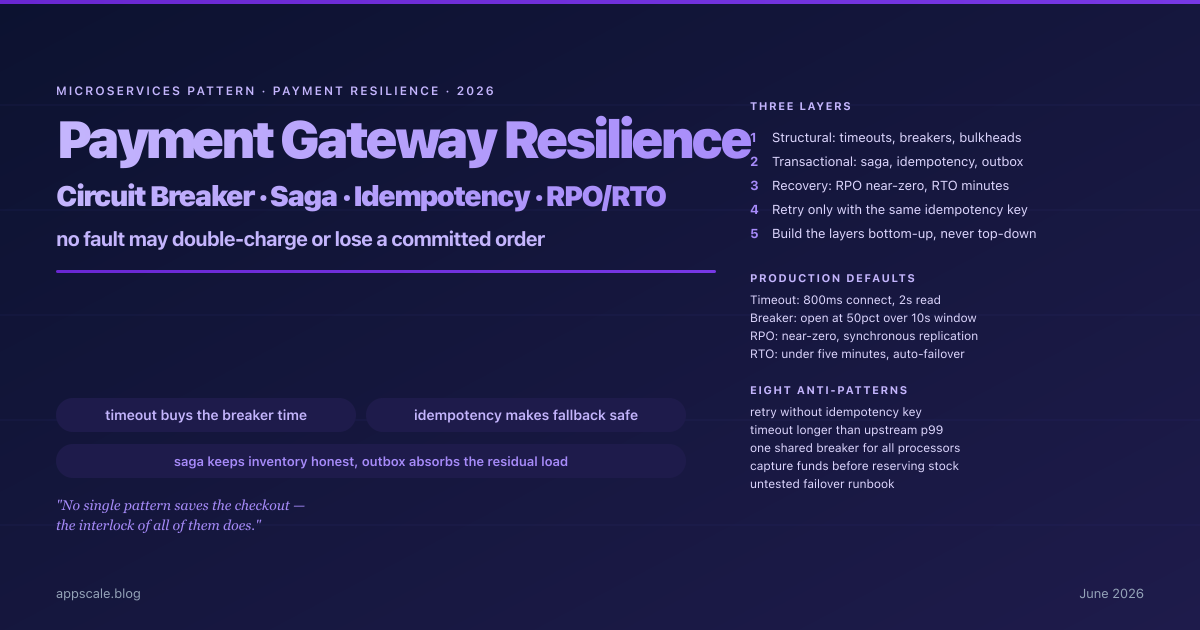
How a High-Throughput Payment Gateway Stays Up — Timeouts, Circuit Breakers, Sagas, Idempotency, and RPO/RTO (2026)
How a high-throughput payment gateway stays up: timeouts, circuit breakers, sagas, idempotency keys, the transactional outbox, and near-zero RPO with low RTO failover.
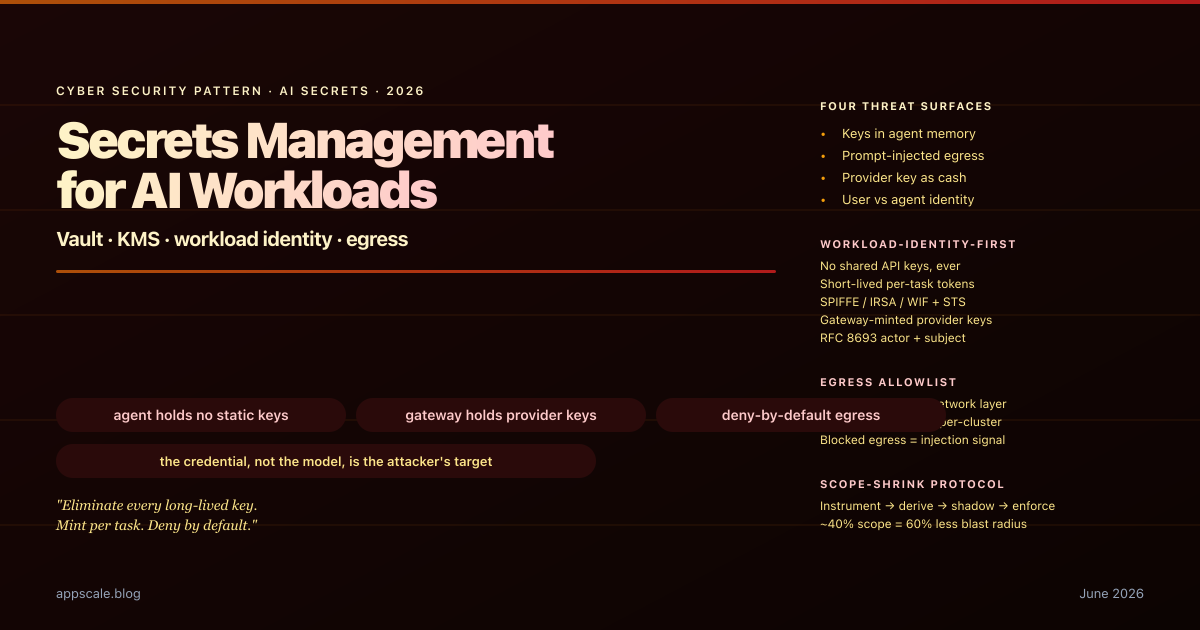
Secrets Management for AI Workloads — Vault, KMS, Workload Identity, and Per-Tool Egress Allowlists (2026)
Production secrets management for AI workloads in 2026: workload identity, no shared API keys, short-lived capability tokens, gateway-minted provider keys, and egress allowlists.
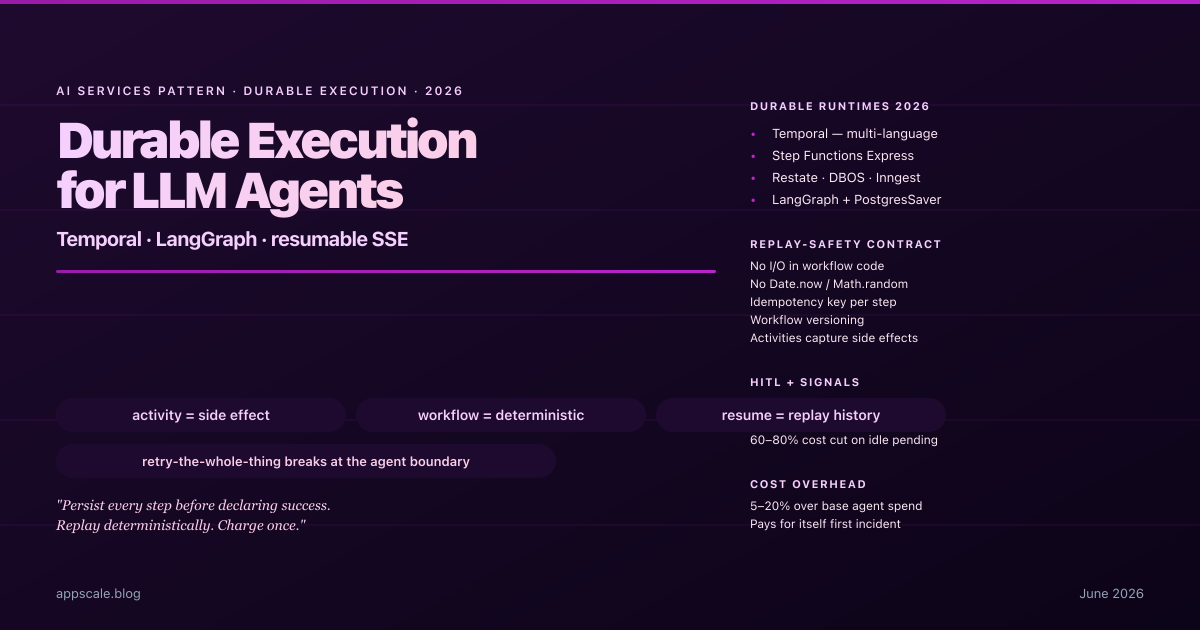
Durable Execution for LLM Agents — Temporal, LangGraph Checkpointers, and Resumable SSE (2026)
Production durable execution for LLM agents in 2026: Temporal, LangGraph checkpointers, replay-safe activities, idempotency keys, resumable SSE, HITL signals.
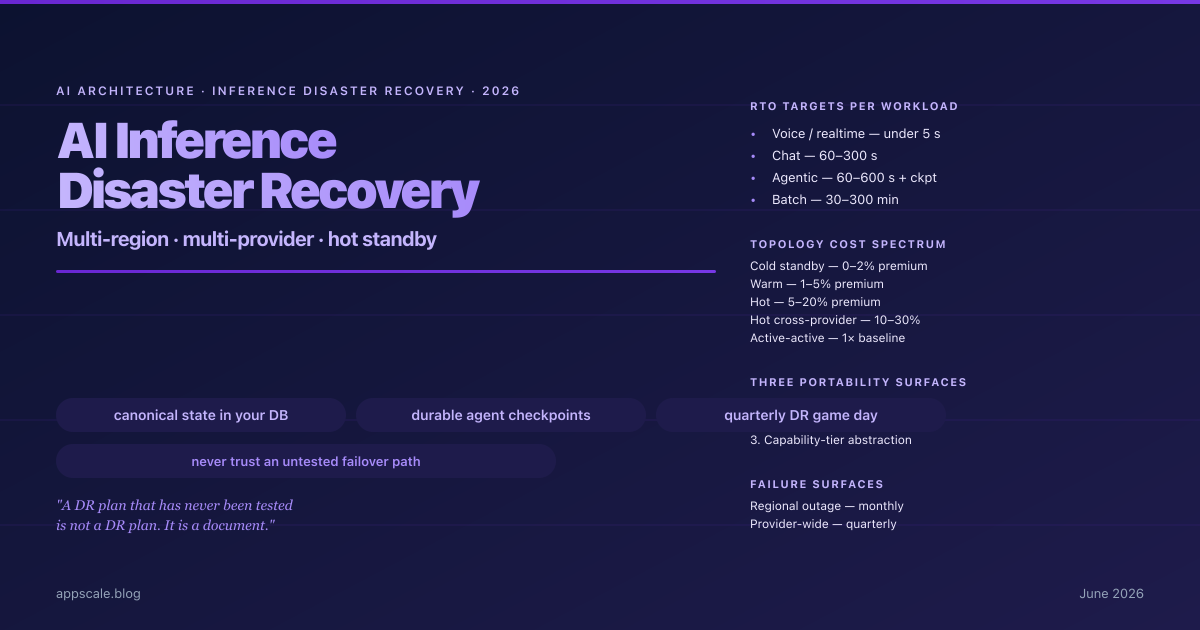
AI Inference Disaster Recovery — Multi-Region, Multi-Provider, and the Failover Playbook (2026)
Production AI inference DR for 2026: multi-region within provider, multi-provider with portability, hot standby per workload tier, durable checkpoints, game day.
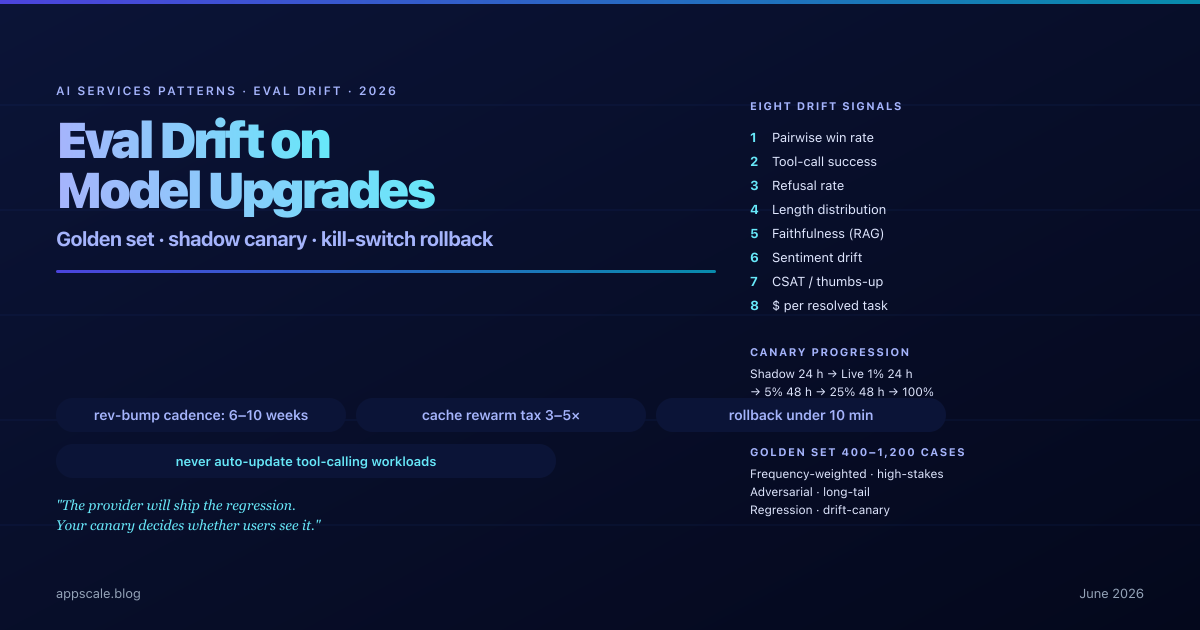
Eval Drift on Model Upgrades — Silent Regression, Canary Traffic, and Golden-Set Gates (2026)
Production playbook for eval drift on LLM upgrades: pinned snapshots, daily golden-set replay, shadow then live canary, eight signals, kill-switch rollback.
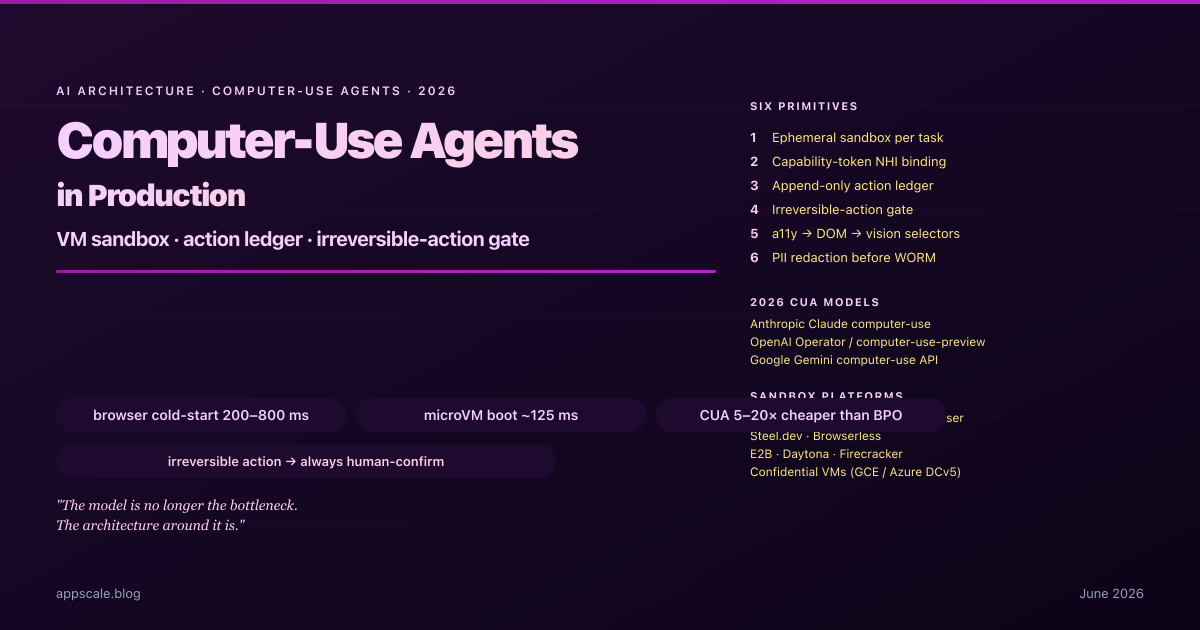
Computer-Use Agents in Production — VM Sandboxing, Action Audit, and Recovery (2026)
Production architecture for computer-use agents in 2026: VM-per-task sandboxing, action ledger, irreversible-action gate, selector resilience, and eval drift.
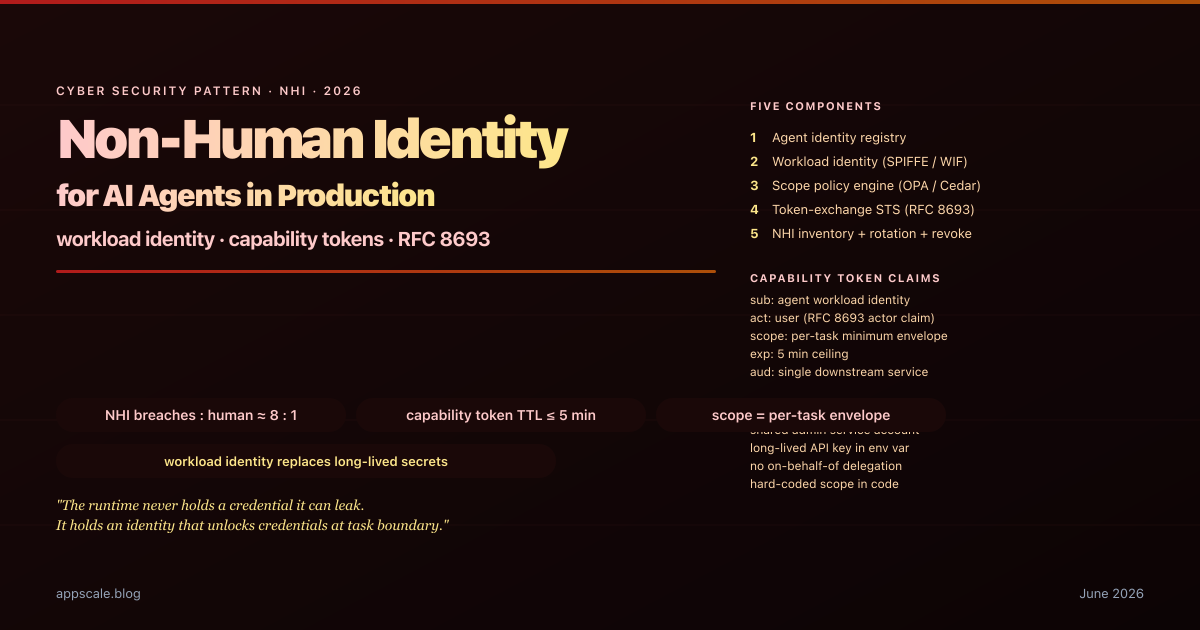
Non-Human Identity for AI Agents — Workload Identity, Capability Tokens, and the End of the Shared Service Account (2026)
Non-human identity for AI agents in 2026: workload identity, RFC 8693 capability tokens, on-behalf-of delegation, scope policy engine, and rotation discipline.
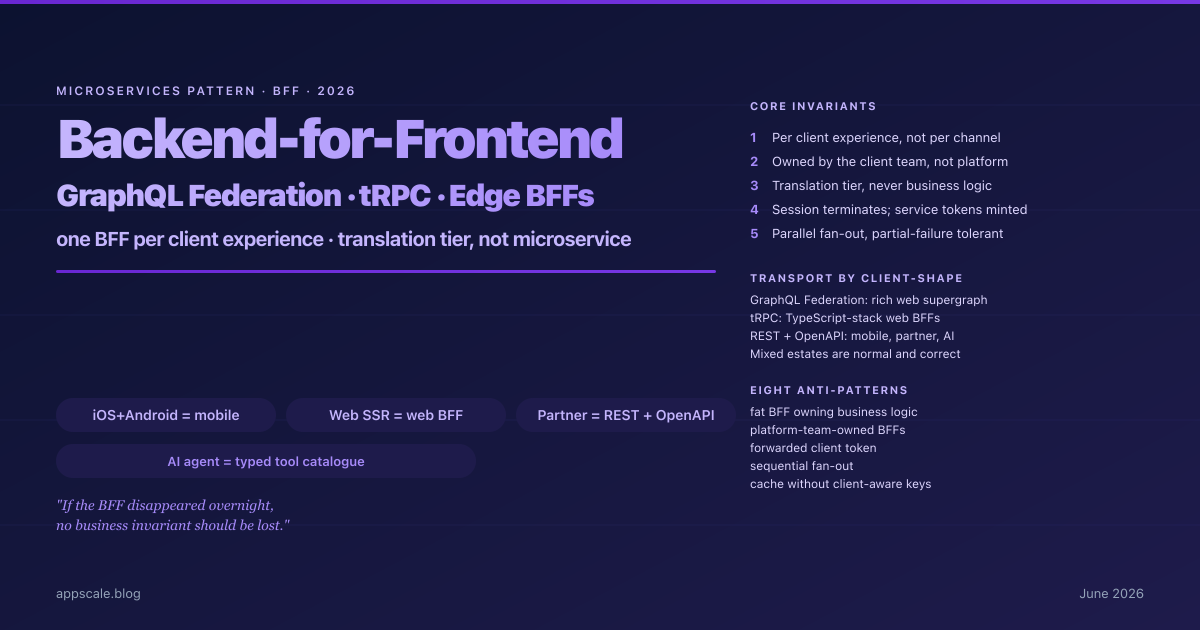
Backend-for-Frontend (BFF) in Production — GraphQL Federation, tRPC, and Edge BFFs Without the Anti-Patterns (2026)
Backend-for-Frontend in 2026: one BFF per client experience, GraphQL Federation vs tRPC vs REST per client-shape, Edge BFFs, and eight production anti-patterns.
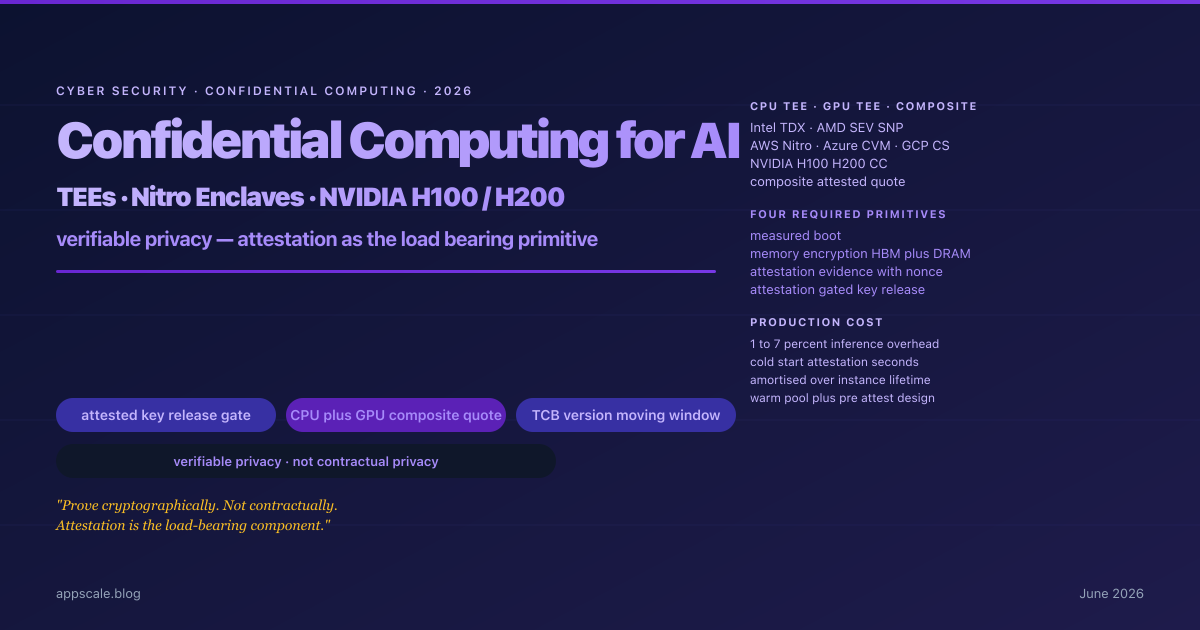
Confidential Computing for AI Inference in 2026 — TEEs, Nitro Enclaves, NVIDIA H100/H200, and the Verifiable-Privacy Architecture
Confidential computing for AI inference in 2026: CPU TEEs, NVIDIA H100/H200 GPU CC, attestation-gated key release, and the verifiable-privacy architecture procurement now demands.
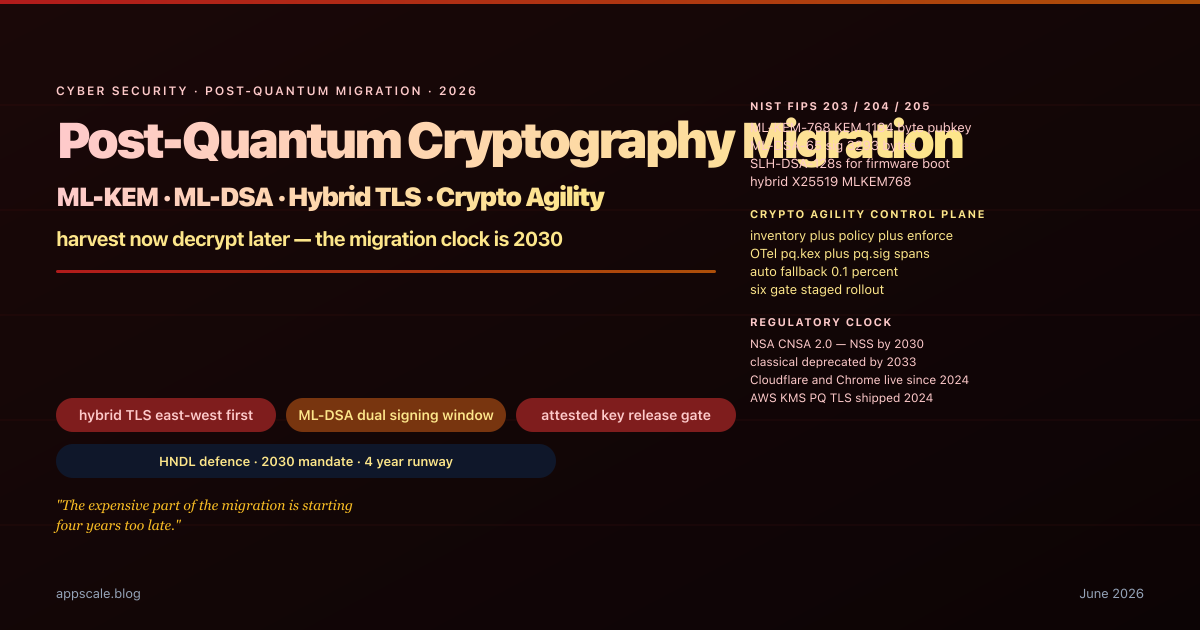
Post-Quantum Cryptography Migration in 2026 — ML-KEM, ML-DSA, and Hybrid TLS for Production Systems
Post-quantum migration in 2026: ML-KEM, ML-DSA, hybrid TLS, the crypto-agility control plane, and the six-gate rollout that survives production at NSA-CNSA-2 timelines.
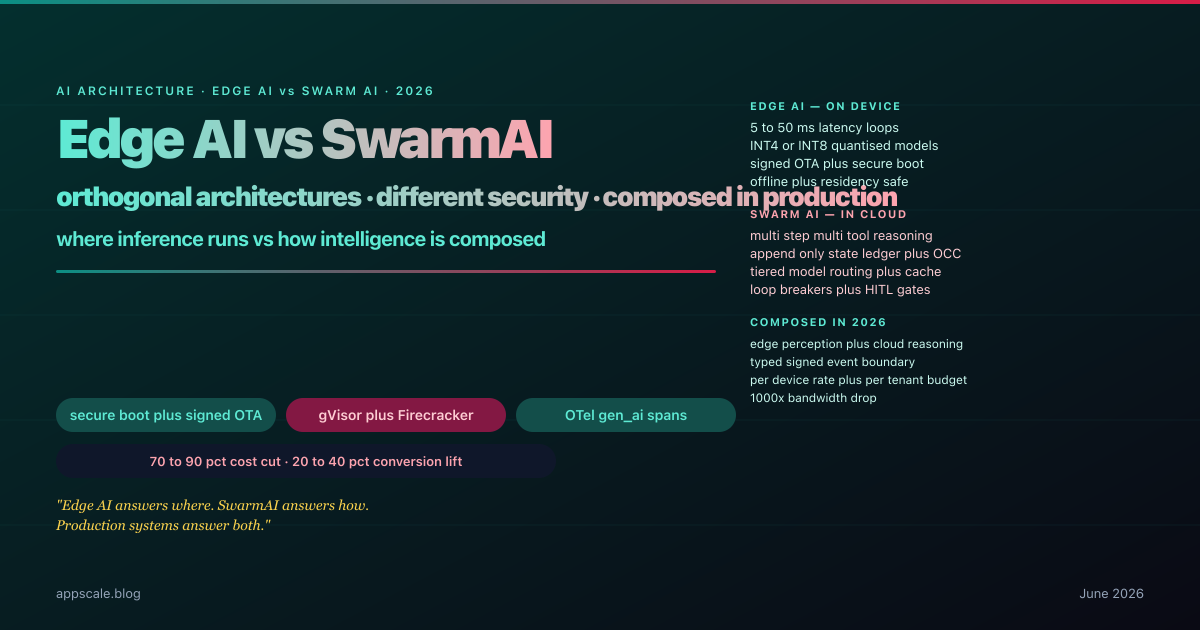
Edge AI vs SwarmAI — Differences, Security, Adoption, and Business Plus Consumer Benefits (2026)
How Edge AI and SwarmAI differ in 2026, the security threat models for each, adoption sequencing, and the business plus consumer benefits when systems compose both.
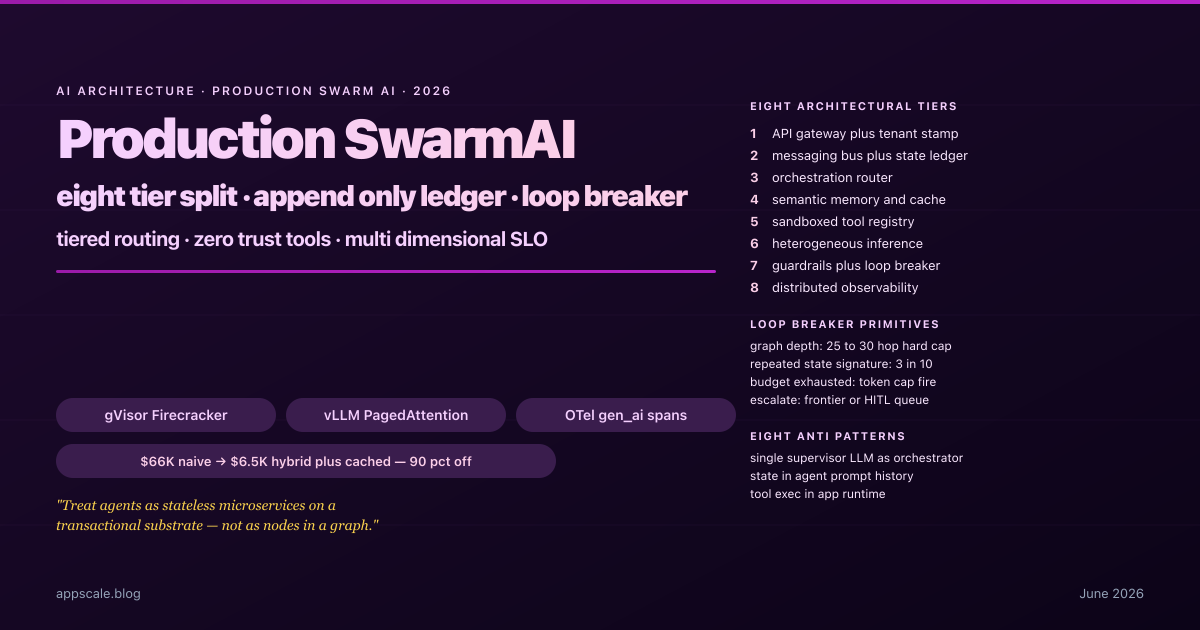
Production SwarmAI Systems — Architecture, State, Guardrails, and Observability for Multi-Agent Platforms (2026)
How production SwarmAI platforms split into eight tiers, bound emergence with loop-breakers, route across model tiers, and cut costs by 90 percent without quality loss in 2026.
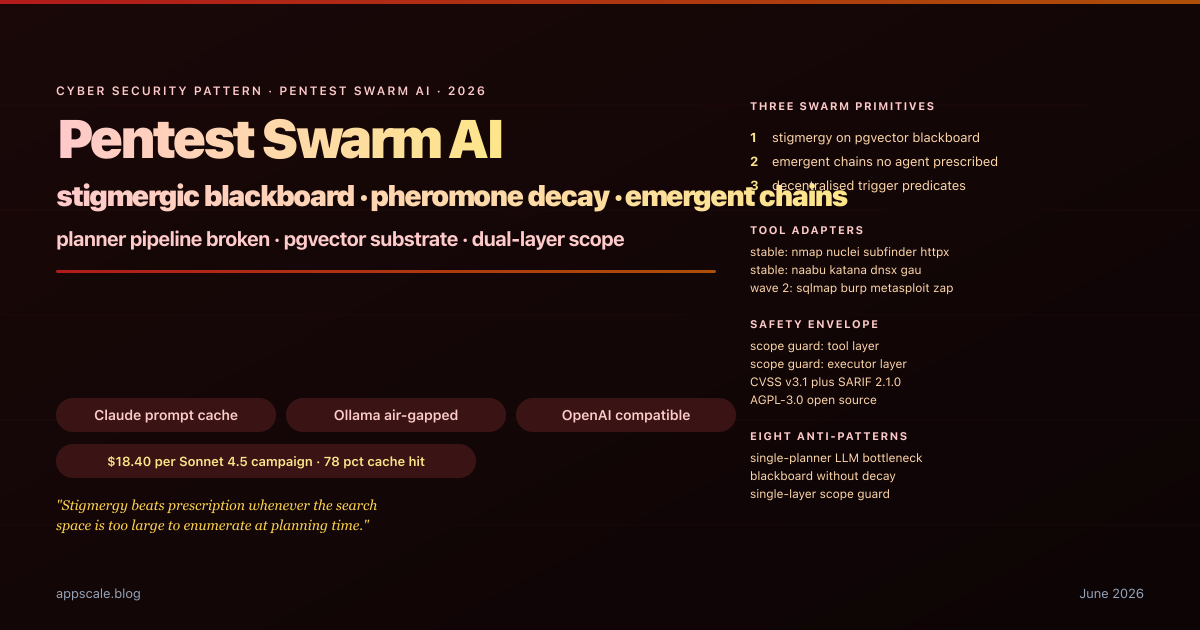
Pentest Swarm AI — Stigmergic Blackboard Architecture for Autonomous Penetration Testing (2026)
How Pentest Swarm AI replaces planner-LLM pipelines with a pgvector blackboard, pheromone-weighted findings, dual-layer scope guards, and trigger-predicate dispatch in 2026.
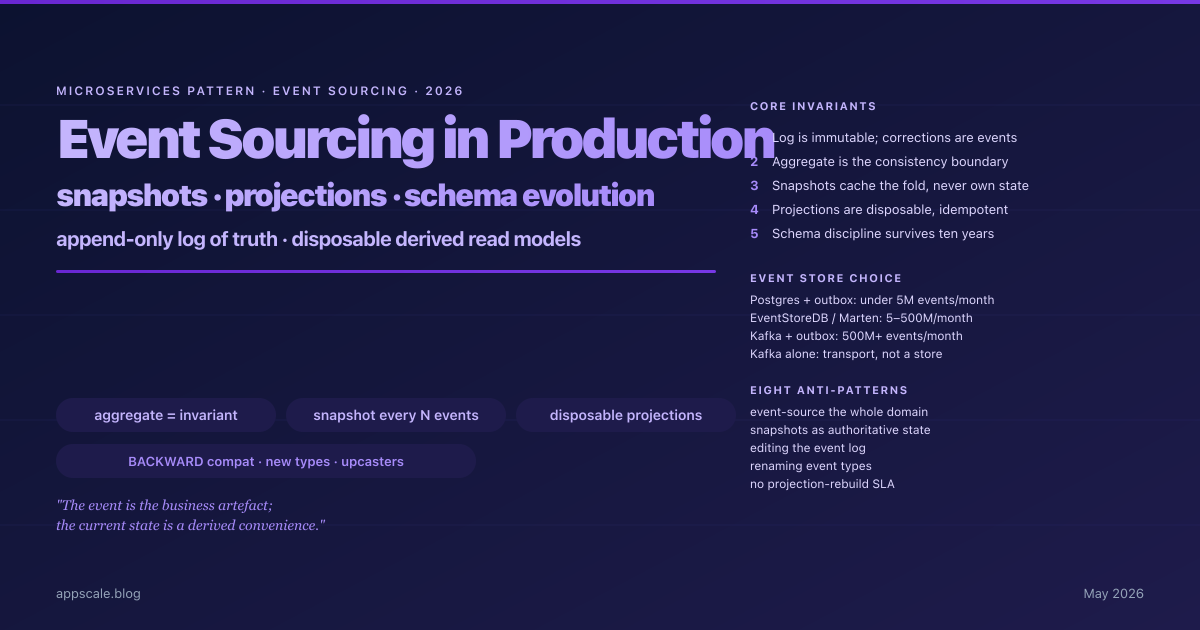
Event Sourcing in Production — Snapshots, Projections, and Schema Evolution Without Tears (2026)
Event sourcing for production microservices in 2026 — aggregate boundaries, append-only stores, snapshot strategy, projection rebuilds, and schema evolution.
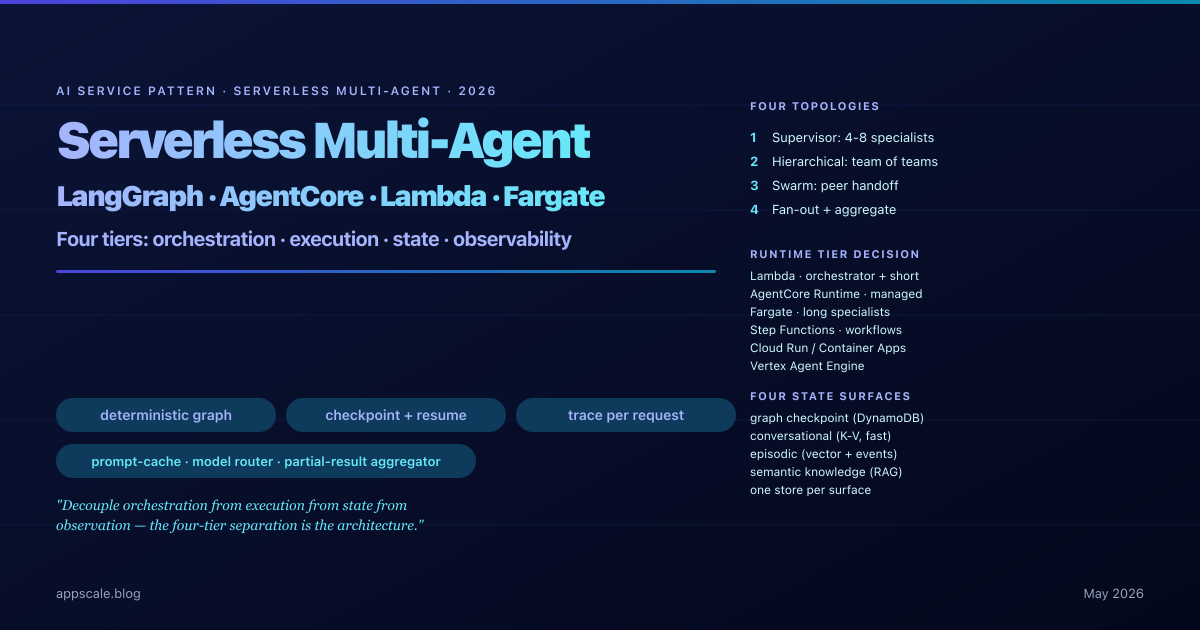
Serverless Multi-Agent Orchestration — LangGraph, Bedrock AgentCore, and the Architecture Pattern Behind Production AI Workflows (2026)
2026 pattern for serverless multi-agent systems: LangGraph orchestration, Bedrock AgentCore, fan-out topologies, four-tier state, per-span observability.
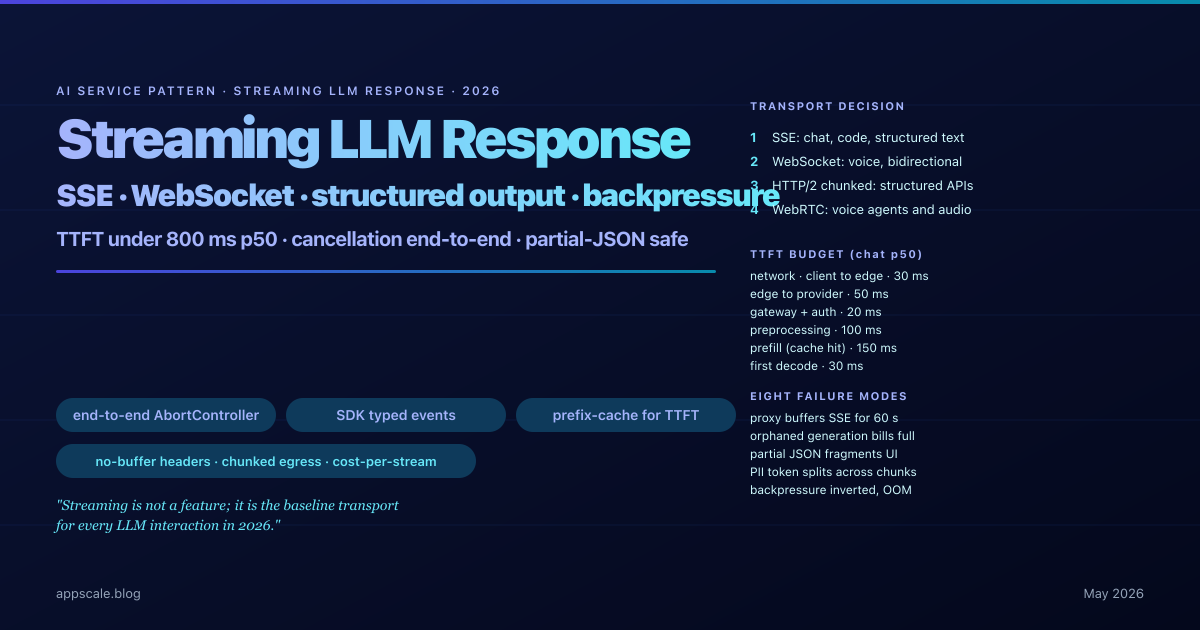
Streaming LLM Response Pattern — SSE, WebSockets, Structured Output, and Backpressure (2026 Architecture)
The 2026 production architecture for LLM streaming: SSE versus WebSockets, structured output, backpressure, end-to-end cancellation, TTFT levers, and proxy buffering.
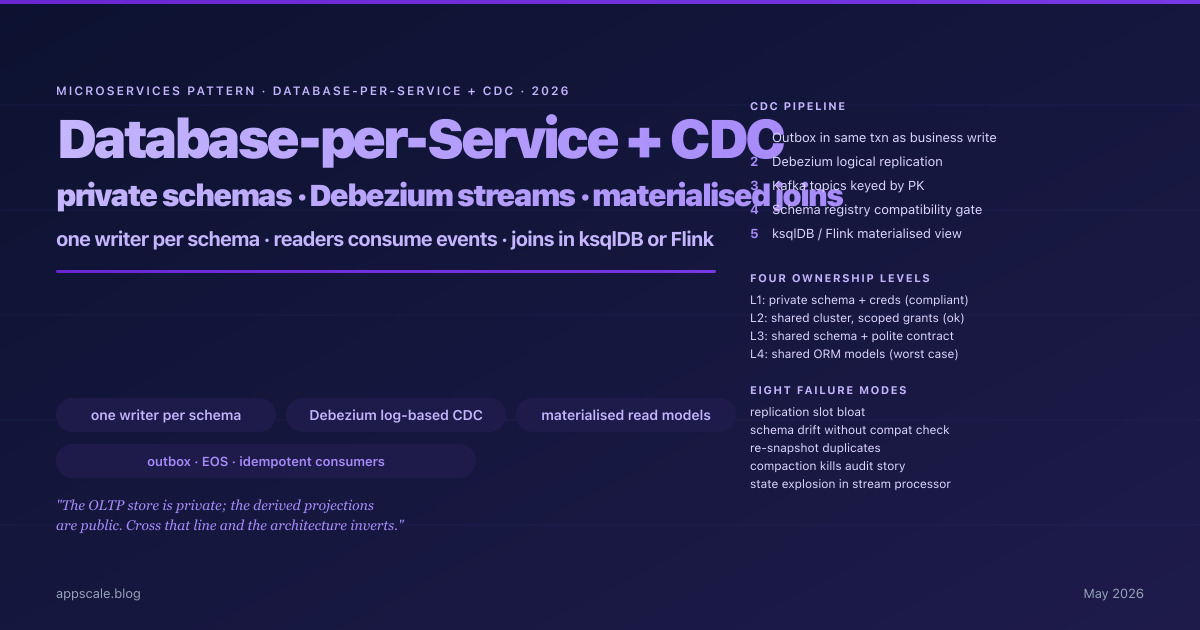
Database-per-Service and Cross-Service Joins with CDC — The 2026 Architecture for Reporting Without Distributed Transactions
The 2026 architecture for database-per-service plus cross-service joins via Debezium CDC, Kafka, and ksqlDB / Flink materialised views — with the operational runbook.
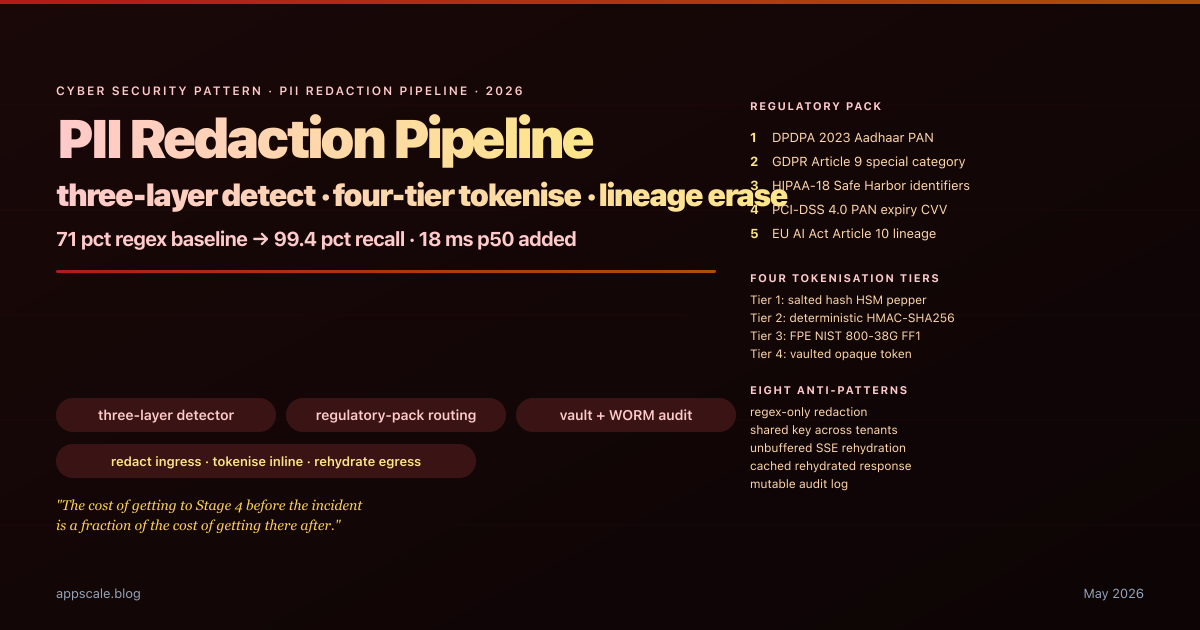
PII Redaction Pipeline Architecture for LLM Workloads — Presidio, NER, and Reversible Tokenisation (2026)
The 2026 architecture for PII redaction in LLM stacks: three-layer detector, regulatory-pack routing, four tokenisation tiers, per-tenant CMK, WORM audit, provenance graph.
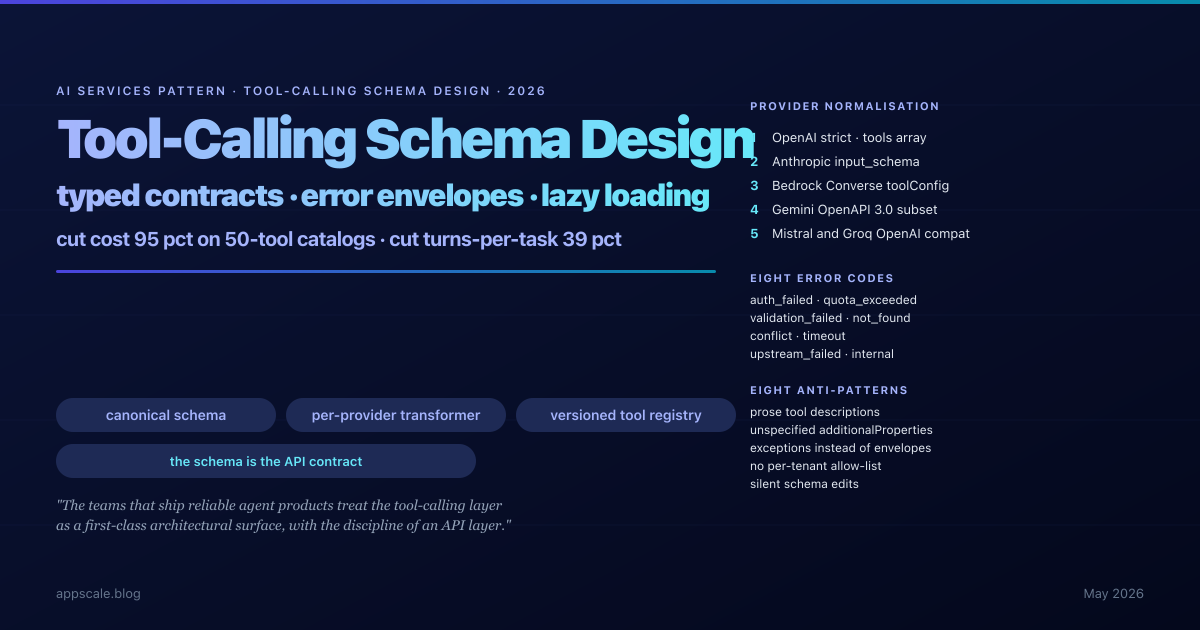
Tool-Calling Schema Design for LLM Agents — The 2026 Production Pattern
Production tool-calling needs typed canonical schemas, eight-code error envelopes, per-tenant allow-lists, and lazy loading. The schema layer pays back at 95% cost cut.
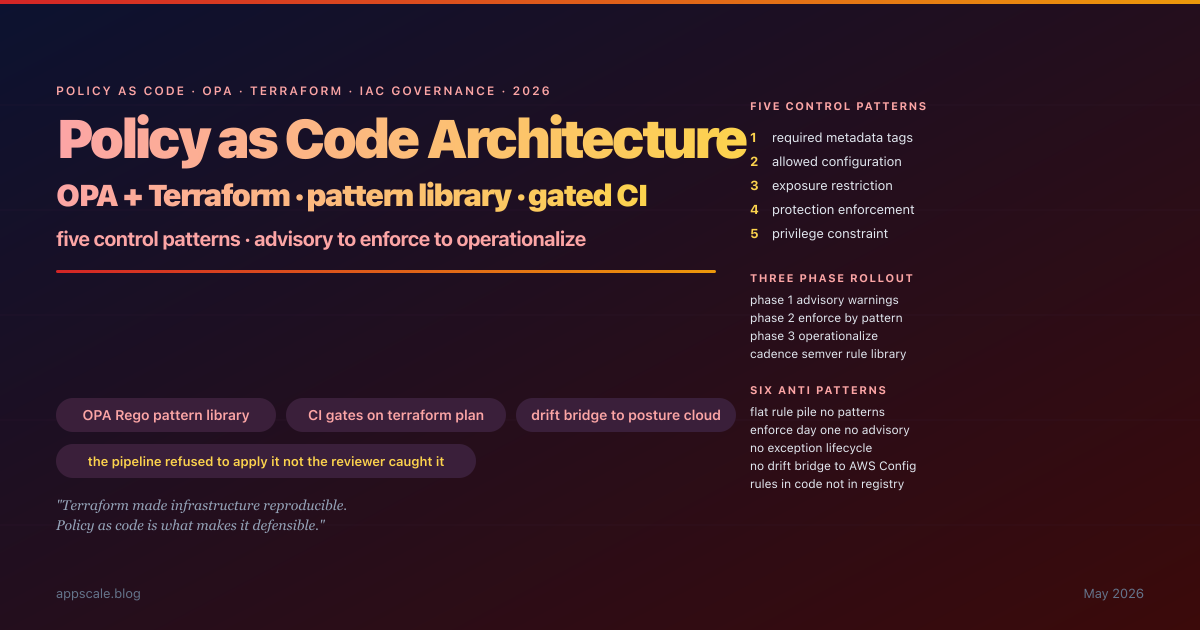
Policy-as-Code Architecture: OPA + Terraform Pattern Library for IaC Governance (2026)
IaC without policy-as-code is a fast lane to misconfigured cloud: every engineer writes Terraform that passes terraform plan, no one writes the controls that say "S3 buckets must be encrypted with customer-managed KMS, must enforce TLS, must deny public read; security groups must not expose port 3389 to 0.0.0.0/0; IAM roles must not have wildcard trust principals". Policy-as-code, expressed as a versioned pattern library of OPA Rego rules evaluated against every Terraform plan in CI/CD, turns the cloud security model from "reviewer caught it" to "the pipeline refused to apply it". This article is the production architecture: the five orthogonal control patterns (required metadata, allowed configuration, exposure restriction, protection enforcement, privilege constraint) that compose into every IaC governance system, three production-grade Rego examples with the failure modes they catch, the pattern library directory layout with shared helpers and test fixtures, the six-stage gated CI/CD pipeline with structured violation reporting, the three-phase rollout (advisory → enforce → operationalize) that protects developer velocity, the OPA vs Checkov vs tfsec vs Conftest decision matrix, the drift bridge to AWS Config / Azure Policy / GCP Security Command Center, and the exception lifecycle with TTL and audit trail that keeps the process from becoming a permanent loophole.
Оставайтесь впереди
Еженедельные глубокие разборы AI-систем, облачной архитектуры, распределенных систем и инженерного лидерства. Присоединяйтесь к 5,000+ инженерам.