OldKnowledge,New Vessel.
Essays on on-device AI, data sovereignty, and building systems that keep knowledge where it belongs.
Enter the archive →— 00 / ThesisEvery business runs on knowledge older than its software.
Latest Entries
Emergent Gameplay from Interlocking Systems: Fire, Wind and Water (2026)
The Art of Telegraphing Attacks, Traps and Hazards (2026)
Your Digital Twin Is a Hypothesis: Validating Simulation Against Reality in 2026
Your Trace Stops at the Queue: Distributed Tracing Across Asynchronous Boundaries in 2026
Risk vs Reward and Push-Your-Luck Systems (2026)
अथ प्रथमोऽध्यायः ॥
विद्या ददाति विनयं विनयाद् याति पात्रताम् ।
पात्रत्वाद्धनमाप्नोति धनाद्धर्मं ततः सुखम् ॥
We digitize centuries-old manuscripts. Then we build with the same discipline.
AppScale's roots are in a quiet project: structuring classical Sanskrit texts into faithful digital form. Extraction, structure, provenance, sovereignty — the same principles now power our client work.
Built for Every Business
Intelligence that never leaves the device
Offline-first, data-sovereign systems — LLMs, vector search, inference at the edge.
02Document IntelligenceAir-gapped document vaults
Sealed, searchable, provable.
03AI ProductsFull-cycle AI product builds
Mobile-first, production-grade.
04MCP & AI SecuritySecuring the agentic stack
Tool poisoning, prompt injection, confused deputies — studied and hardened.
05Indic Language AIOCR for scripts the world forgot
Sovereign OCR for Indic scripts.
06Consulting & Architecture19+ years shipping at scale
OTT, e-commerce & mobility platforms serving millions.
Emergent Gameplay from Interlocking Systems: Fire, Wind and Water (2026)
You don't need Breath of the Wild's budget for emergent play. How to link fire, wind and water with a few rules, a Unity fire grid, and what systemic design costs.
The Art of Telegraphing Attacks, Traps and Hazards (2026)
A trap you can't see coming is a tax, not a trap. How to time, layer and test telegraphs for attacks and hazards, with a Godot trap and lessons from our playtests.
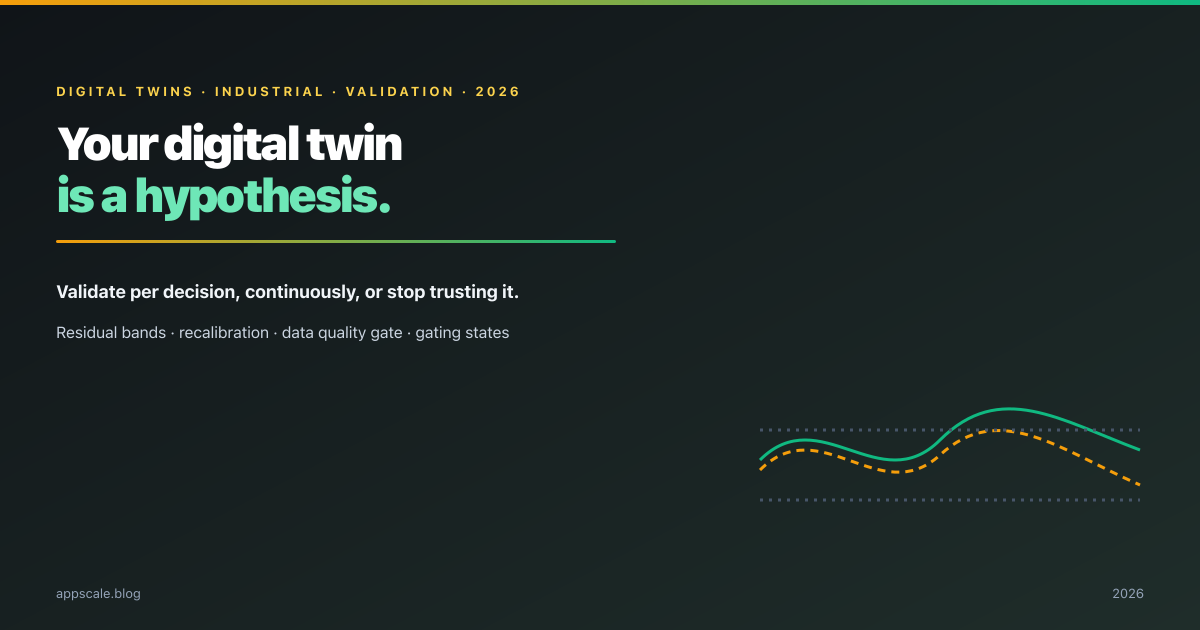
Your Digital Twin Is a Hypothesis: Validating Simulation Against Reality in 2026
Digital twins rarely crash; they drift until nobody trusts them. Validate per decision with residual bands, disciplined recalibration and gating states.
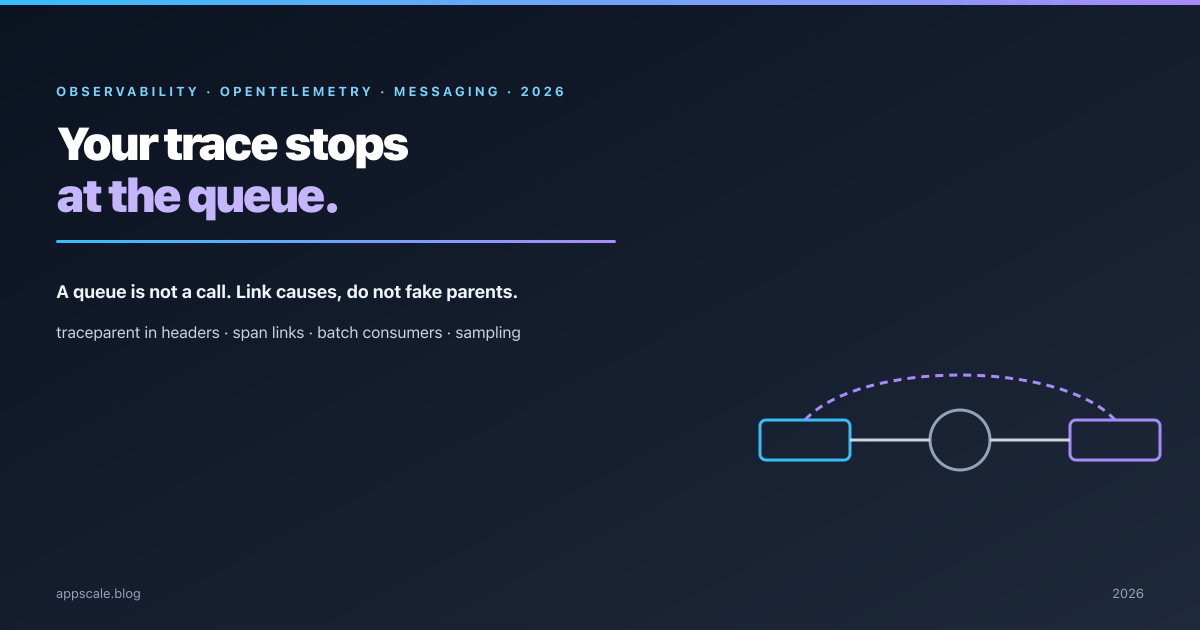
Your Trace Stops at the Queue: Distributed Tracing Across Asynchronous Boundaries in 2026
Traces end at Kafka, SQS or RabbitMQ because a queue is not a call. Propagate context per message, use span links over parents, and fix sampling.
Risk vs Reward and Push-Your-Luck Systems (2026)
Risk systems die from bad tuning, not bad ideas. The four parts of push-your-luck, how loss aversion skews them, a Unity combo bank and the PawScooty combo rules.
Environmental Storytelling Through Layout, Props and Decals (2026)
A space can tell players what happened without one line of text. Layout, one hero prop and a few decals do it, plus a Godot script to check testers really looked.
A Cron Job Fails by Saying Nothing: Observability for Scheduled Jobs in 2026
A cron job that never starts writes no logs and throws no errors. How to alert on missing success with heartbeats, absent() and freshness checks.
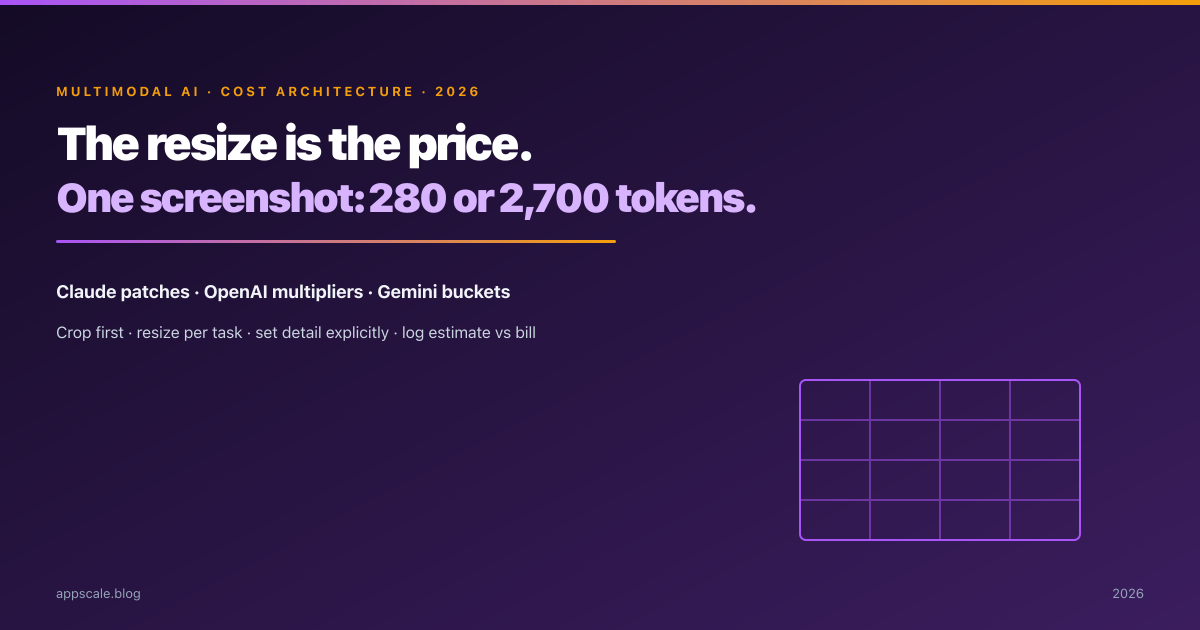
The Resize Is the Price: What Vision Tokens Really Cost in 2026, and Where to Cut Them
Claude, OpenAI and Gemini turn pixels into tokens with different rules. Why one screenshot costs 280 or 2,700 tokens, and how a resize layer controls the bill.
React Native After the Bridge: Rescuing Legacy Native Modules in 2026
The Bridge is gone and the interop shim is being retired. How to find modules that will break, rewrite them as TurboModules and Fabric views, and plan the upgrade.
Level Pacing and the Beat Sheet: Tension, Relief, Exploration, Climax (2026)
A level can be hard in the right places and still feel flat. Plan tension, relief, exploration and climax as a beat sheet, with a Godot spawner and PawScooty notes.
Spatial Affordance: Guiding Players With Light, Colour and Leading Lines (2026)
Players walk towards light, follow lines and trust reserved colour. How to guide them without waypoints, with a Unity guide light and lessons from PawScooty.
The Robot Is a Flight Recorder, Not a Log Shipper: Fleet Observability and Remote Diagnostics in 2026
Field failures that never reproduce need a flight recorder: a RAM ring buffer, MCAP snapshots on trigger, small health telemetry, and audited remote diagnostics.
The Click Is the Root Span: Correlating Frontend RUM With Backend Traces in 2026
RUM says the click took 640ms, APM says the API took 140ms. Make the interaction the root span, propagate traceparent safely, and let the browser decide sampling.
Onboarding Without Tutorials: Teaching Players Through Level Design (2026)
Players skip tutorial text. Teach each mechanic through the level: introduce it safely, test it, twist it, combine it. Lessons from PawScooty's hidden swipe.
Game Jam Prototyping: Validating a Game Concept in 48 Hours (2026)
A game jam is a concept test with a clock. Scope to one verb, ship a browser build in 48 hours, and let five strangers decide if it earns a full build.
Spatial Computing in the Enterprise in 2026: Buy the Job, Not the Headset
HoloLens is out of production and Meta stopped business Quest sales. Where enterprise spatial computing pays in 2026, and how to survive a platform exit.
The Questionnaire Is Not the Evidence: Third-Party AI Model Due Diligence in 2026
A vendor questionnaire proves claims, not behaviour. Third-party AI model due diligence in 2026 needs three ledgers: claims, measured behaviour, change terms.
Find the Fun in Grey Boxes: Greyboxing and Fast Prototyping for Indie Developers in 2026
Greyboxing finds the fun before art hides the flaws. Pick one question, build it from cubes in an evening, test with fresh players, then kill or keep it.
Your GDD Has Two Readers Now: Writing a Game Design Document for Humans and AI Agents in 2026
Your game design document has two readers now: people and AI agents. How to split a GDD so both can use it, with real PawScooty lessons and Unity code.
A Benchmark Is a Claim About an Operating Point: How to Benchmark AI Accelerators Honestly in 2026
Accelerator benchmarks disagree because each picks its own operating point. How to read MLPerf v6.1 and Endpoints in 2026 and price cost per good token.
Bring this thinkingto your business.
conversation
One essay, most weeks. No noise.
Advertise and partner
Reach engineering leaders and CTOs reading about AI, mobile and cloud architecture.
Sponsored mentions, co-authored sidebars and deep-dives. Relevant products only, always disclosed.