OldKnowledge,New Vessel.
Essays on on-device AI, data sovereignty, and building systems that keep knowledge where it belongs.
Enter the archive →— 00 / ThesisEvery business runs on knowledge older than its software.
Latest Entries
A Topology Spread Constraint Is an Admission-Time Promise, Not a Runtime Invariant: Fixing Pod Distribution Drift on EKS with the Descheduler (2026)
The Semantic Layer Is Now an AI Interface: The Model Picks the Metric, the Compiler Writes the SQL (2026)
Your Guardrail Reads Strings and Your Model Reads Meaning: Encoding, Translation and Unicode Bypasses, and Why the Fix Is Not a Better Filter (2026)
The Operator Pattern as Platform Strategy: Reconciliation Is the Product, Not the Custom Resource (2026)
Egress Is an Architecture Constraint, Not a Line Item: Designing for Data Gravity Before the EU Data Act Zeroes Switching Charges (2026)
अथ प्रथमोऽध्यायः ॥
विद्या ददाति विनयं विनयाद् याति पात्रताम् ।
पात्रत्वाद्धनमाप्नोति धनाद्धर्मं ततः सुखम् ॥
We digitize centuries-old manuscripts. Then we build with the same discipline.
AppScale's roots are in a quiet project: structuring classical Sanskrit texts into faithful digital form. Extraction, structure, provenance, sovereignty — the same principles now power our client work.
Built for Every Business
Intelligence that never leaves the device
Offline-first, data-sovereign systems — LLMs, vector search, inference at the edge.
02Document IntelligenceAir-gapped document vaults
Sealed, searchable, provable.
03AI ProductsFull-cycle AI product builds
Mobile-first, production-grade.
04MCP & AI SecuritySecuring the agentic stack
Tool poisoning, prompt injection, confused deputies — studied and hardened.
05Indic Language AIOCR for scripts the world forgot
Sovereign OCR for Indic scripts.
06Consulting & Architecture19+ years shipping at scale
OTT, e-commerce & mobility platforms serving millions.
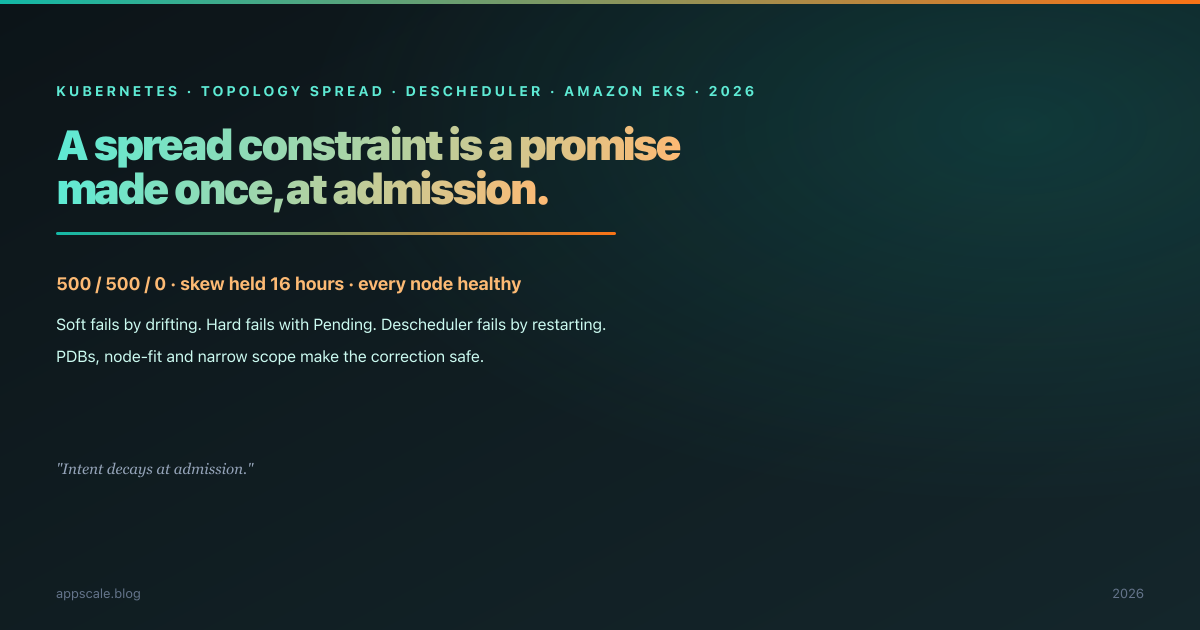
A Topology Spread Constraint Is an Admission-Time Promise, Not a Runtime Invariant: Fixing Pod Distribution Drift on EKS with the Descheduler (2026)
Topology spread is checked once, at pod placement. Why EKS pod distribution drifts after a zone gap, what it costs in resilience, and when the descheduler is safe to run.
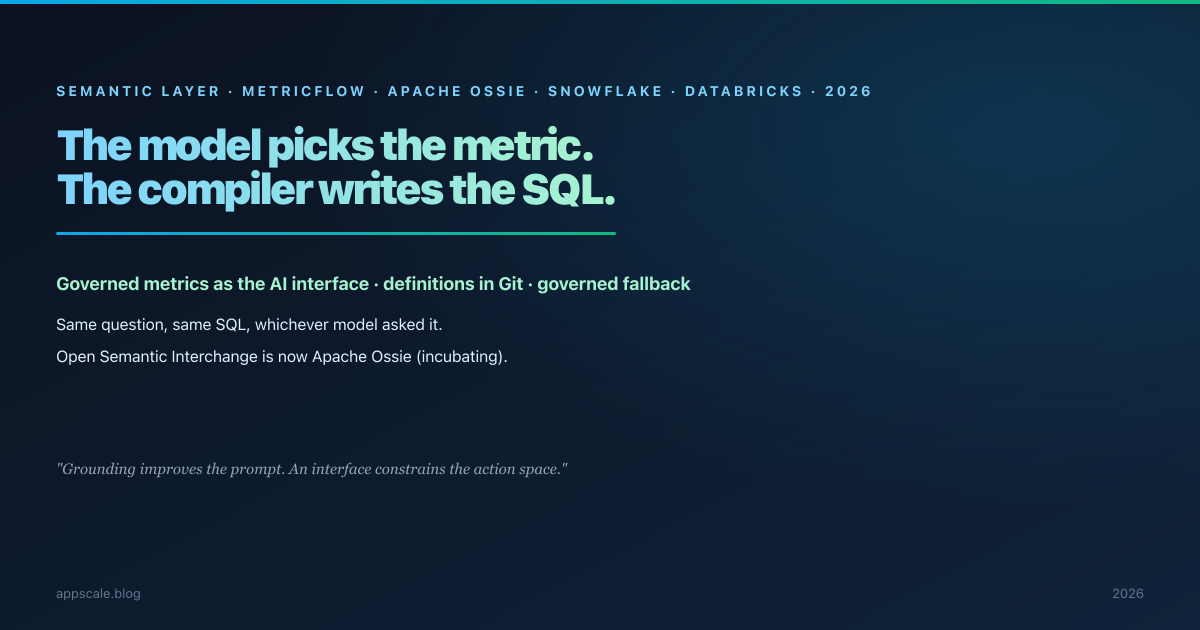
The Semantic Layer Is Now an AI Interface: The Model Picks the Metric, the Compiler Writes the SQL (2026)
The semantic layer is now an AI interface. What MetricFlow, Snowflake semantic views, Databricks metric views and Apache Ossie give you, and when not to build one.
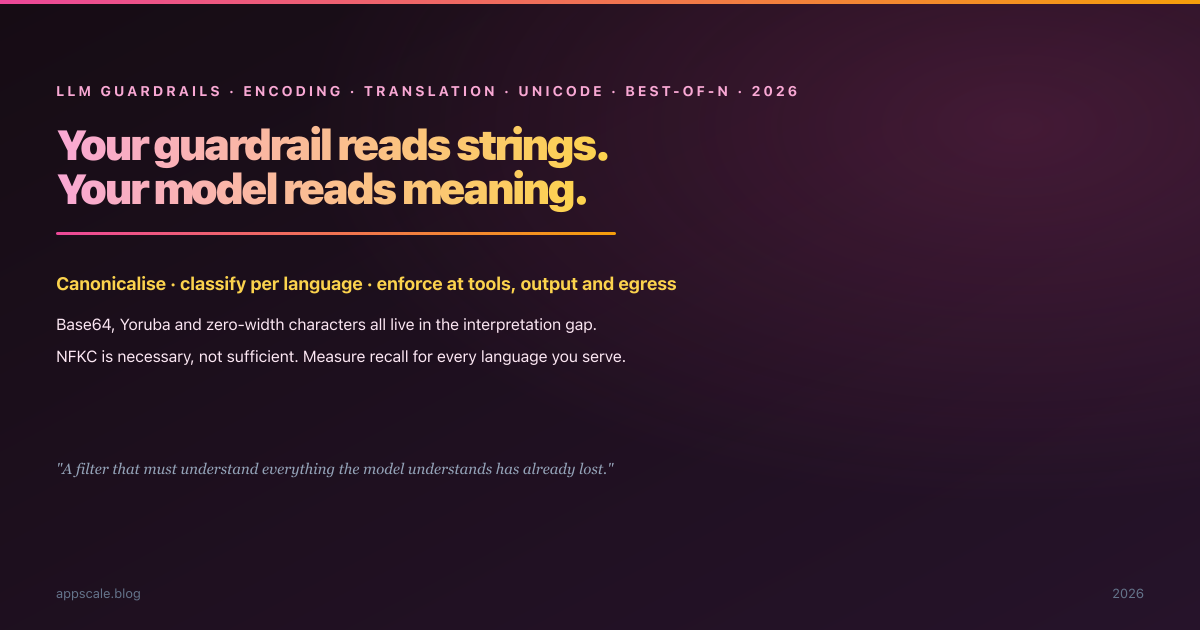
Your Guardrail Reads Strings and Your Model Reads Meaning: Encoding, Translation and Unicode Bypasses, and Why the Fix Is Not a Better Filter (2026)
Guardrails read strings; models read meaning. Why encodings, translation and Unicode tricks slip past input filters, and the four-rule design that contains the gap.
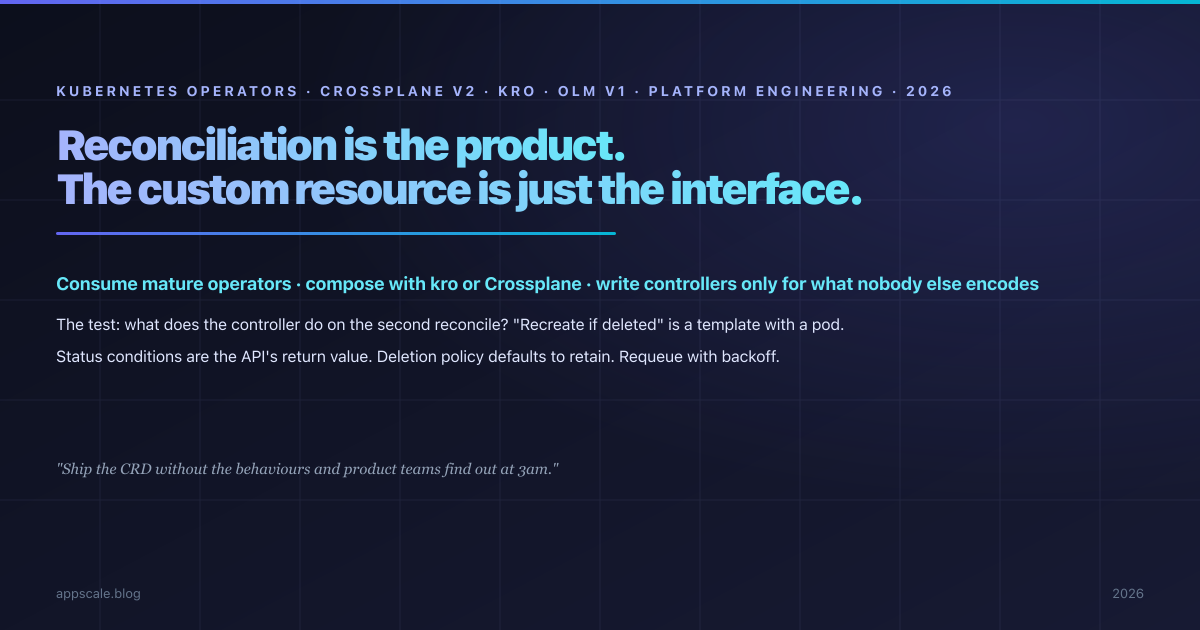
The Operator Pattern as Platform Strategy: Reconciliation Is the Product, Not the Custom Resource (2026)
An operator earns its place by reconciling, not by defining a CRD. When to compose with kro or Crossplane v2, when to consume via OLM v1, and when to write a controller.
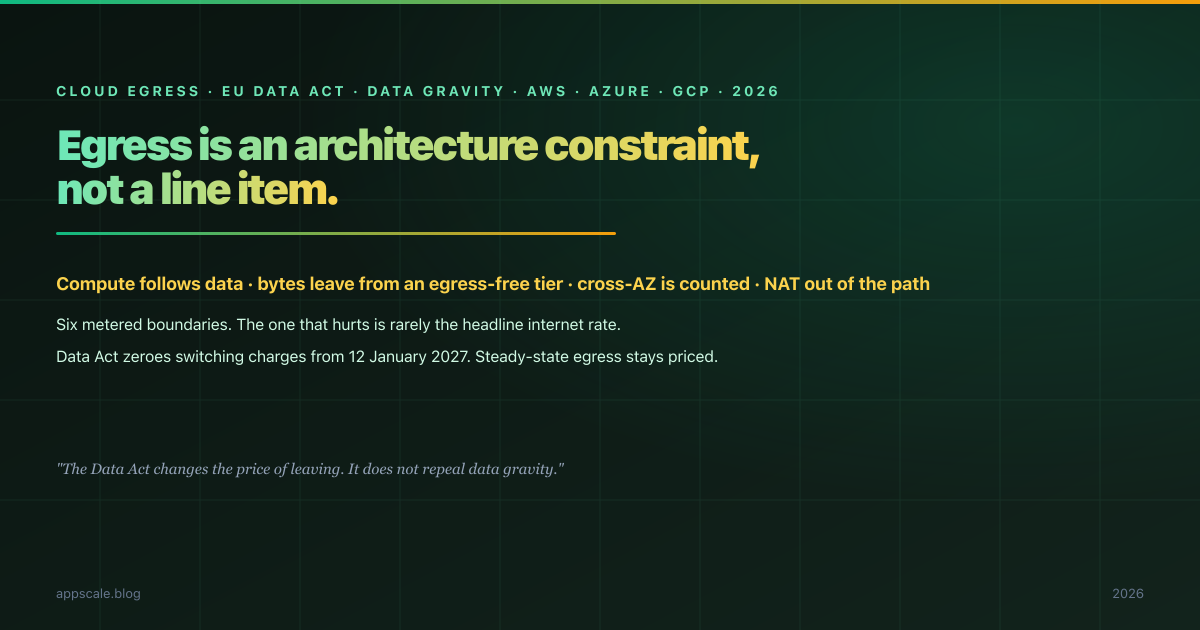
Egress Is an Architecture Constraint, Not a Line Item: Designing for Data Gravity Before the EU Data Act Zeroes Switching Charges (2026)
Egress is a design constraint, not a line item. Where the six metered boundaries are, what the EU Data Act changes in January 2027, and four rules to design for data gravity.
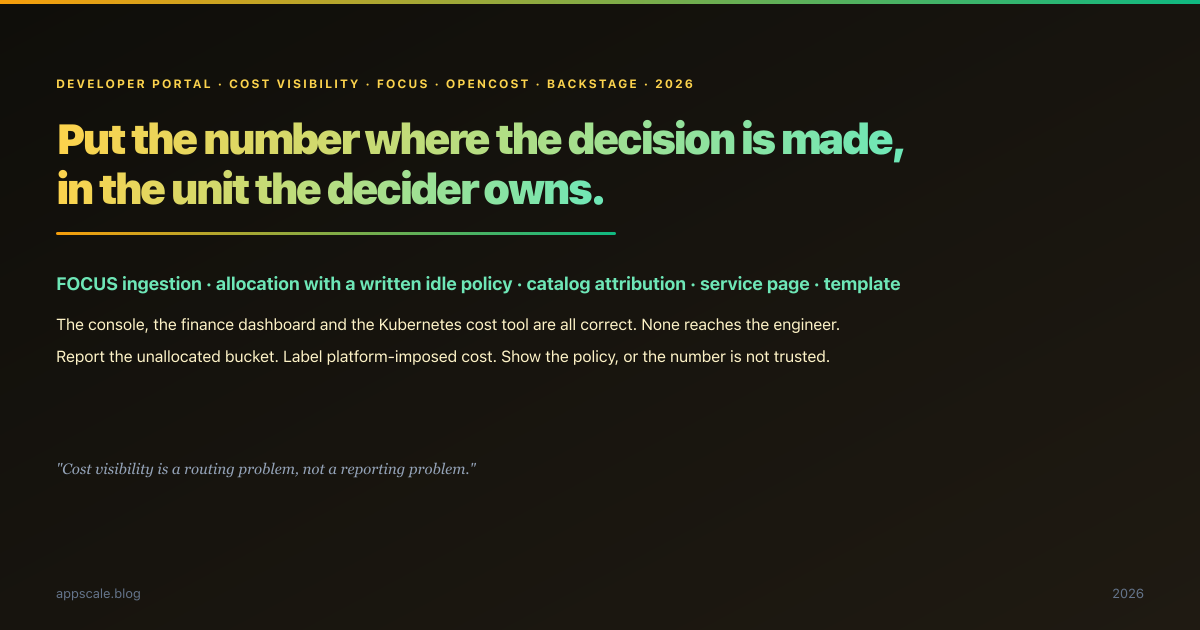
Cost Visibility Inside the Developer Portal: Put the Number Where the Decision Is Made, in the Unit the Decider Owns (2026)
Dashboards are correct and change nothing. Route cost per service into the developer portal and the template: FOCUS ingestion, OpenCost allocation, catalog attribution.
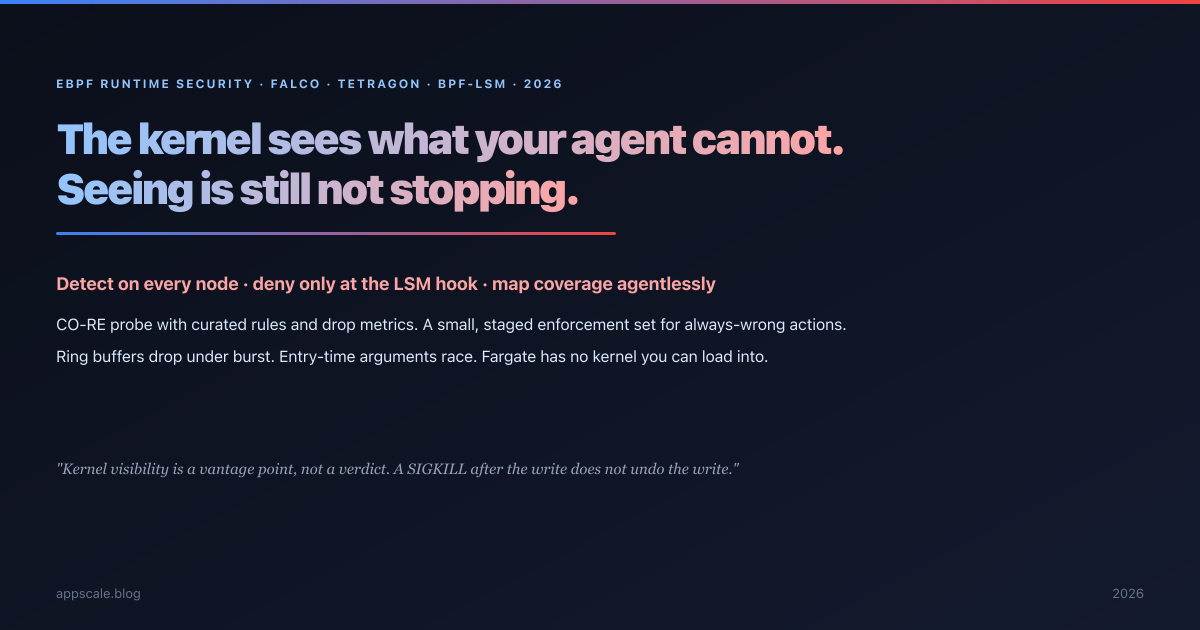
eBPF for Runtime Security: What the Kernel Sees That Your Agent Cannot, and Why Seeing Is Not Stopping (2026)
eBPF sees every syscall your agent misses, but seeing is not stopping. Detect with CO-RE probes, enforce only at LSM hooks, and map the nodes the sensor cannot reach.
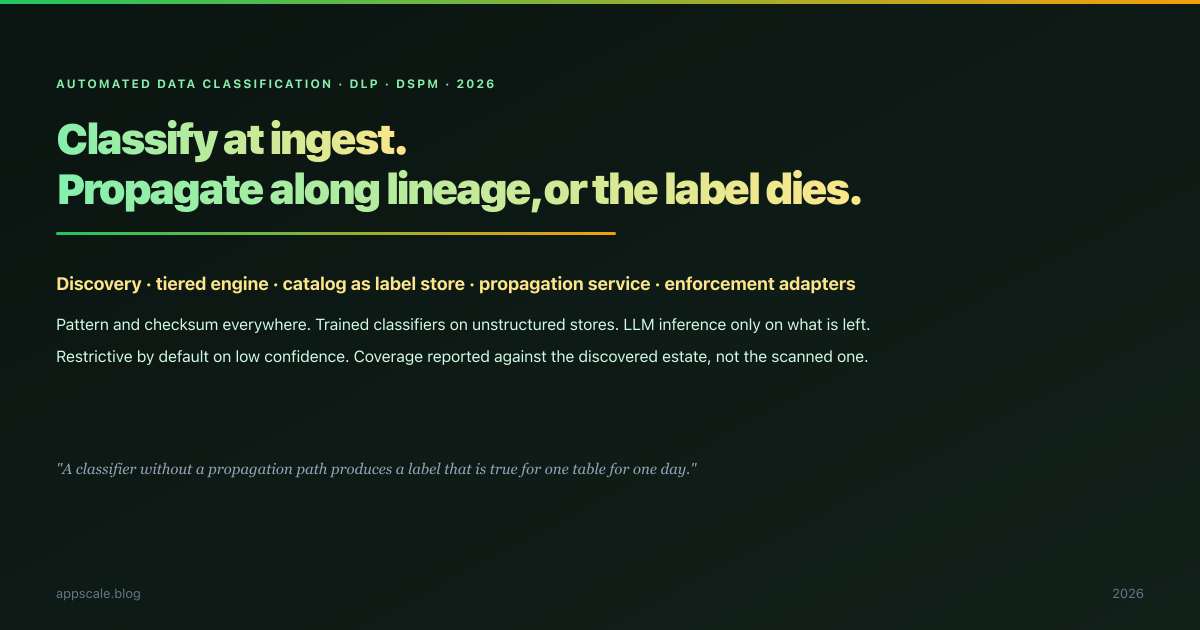
Automated Data Classification: The Prerequisite Every DLP Program Skips, and Why Labels Must Propagate or Die (2026)
DLP fails because it guesses at egress. Classify at ingest, store labels in the catalog with provenance, propagate along lineage, and enforce everywhere including AI indexes.
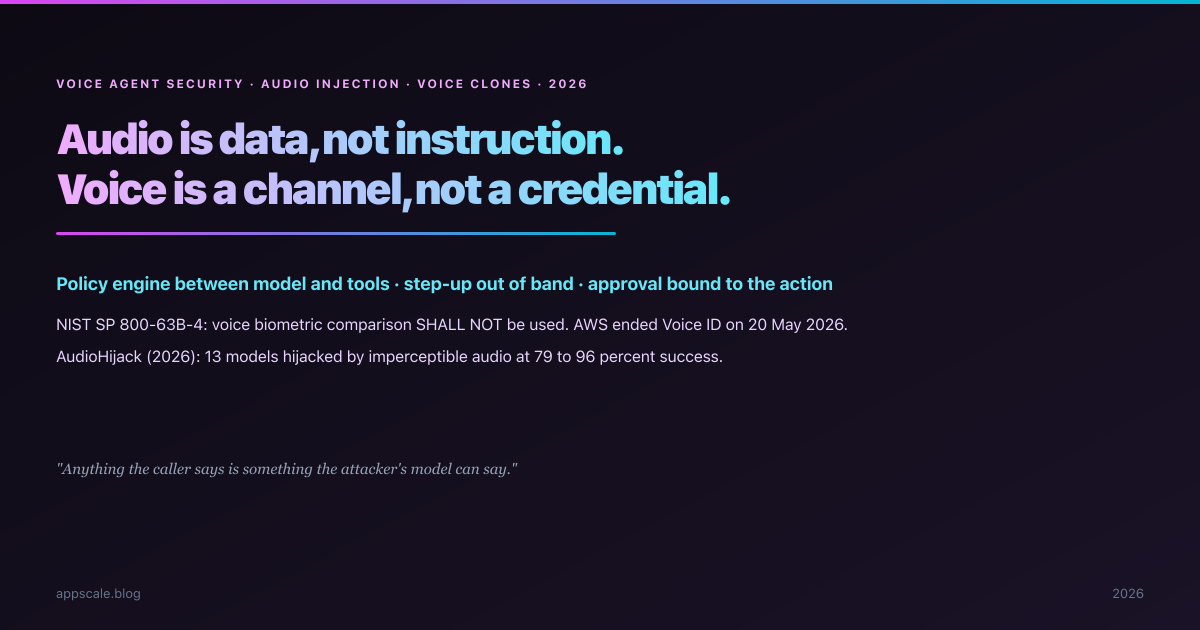
Voice Agents Are an Open Microphone: Audio Injection, Voice Clones, and Why Voice Is Not a Credential (2026)
NIST says voice biometrics SHALL NOT be used and AWS ended Voice ID in May 2026. Treat audio as data, gate every tool call by policy, and step up out of band.
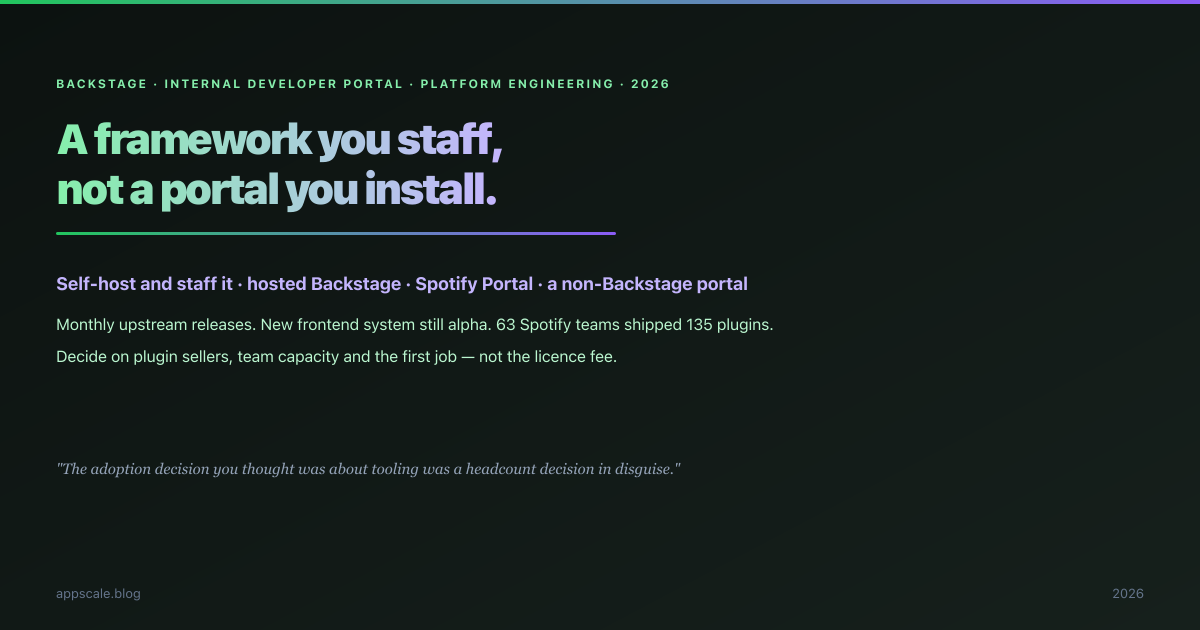
Backstage Adoption: A Reality Check — It Is a Framework You Staff, Not a Portal You Install (2026)
Backstage is a framework you staff, not a portal you install. Self-host with a central team, pay a vendor to host it, or buy a non-Backstage portal: how to decide in 2026.
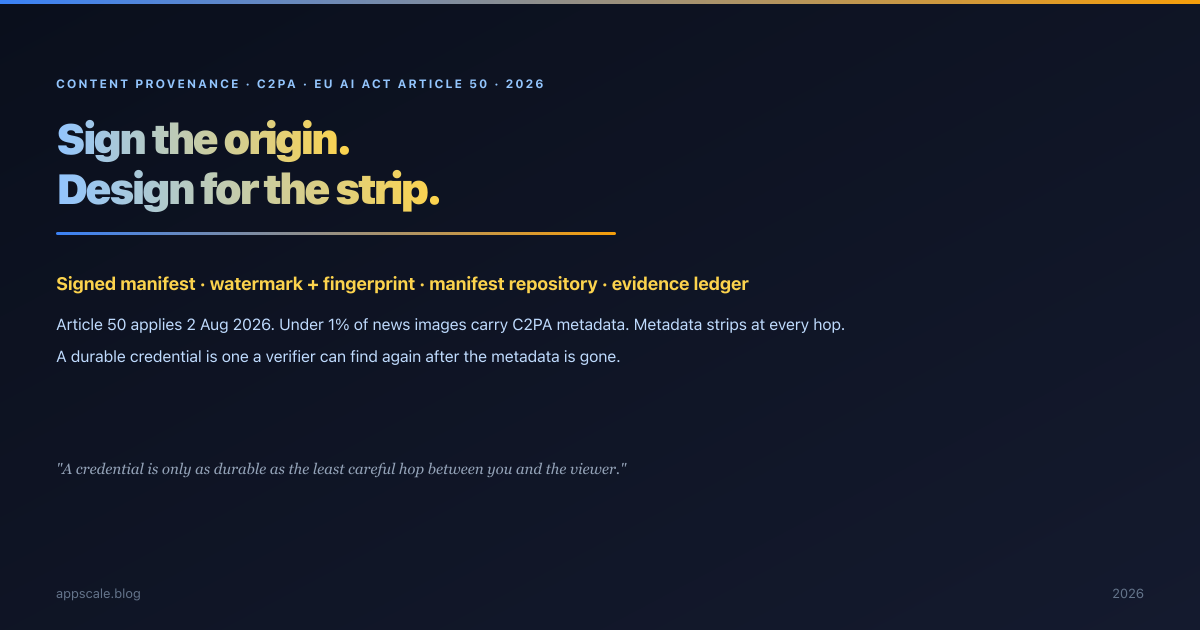
Content Provenance for the Enterprise: C2PA Signs the Origin, Durable Credentials Survive the Strip (2026)
Article 50 applies from August 2026 and a C2PA manifest dies at the first re-encode. Sign the origin, add a soft binding, run a repository, log the marking as evidence.
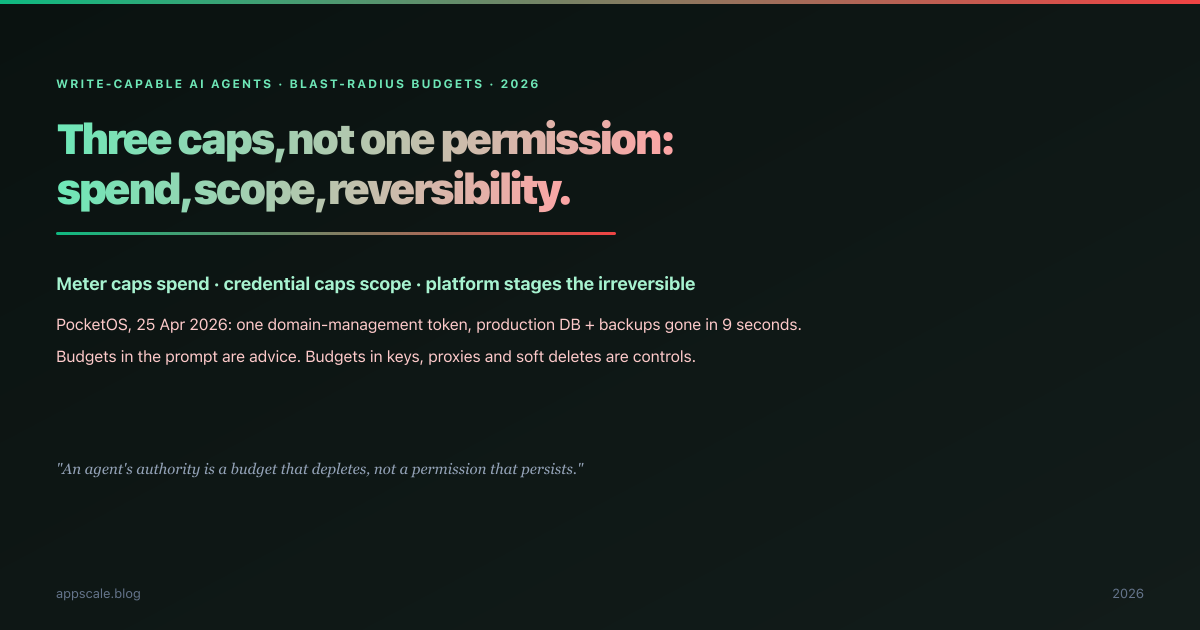
Blast-Radius Budgets for Write-Capable Agents: Spend, Scope and Reversibility Are Three Caps, Not One Permission (2026)
An agent's authority is a budget that depletes, not a permission that persists. Cap spend at the meter, scope in the credential, irreversibility at the platform.
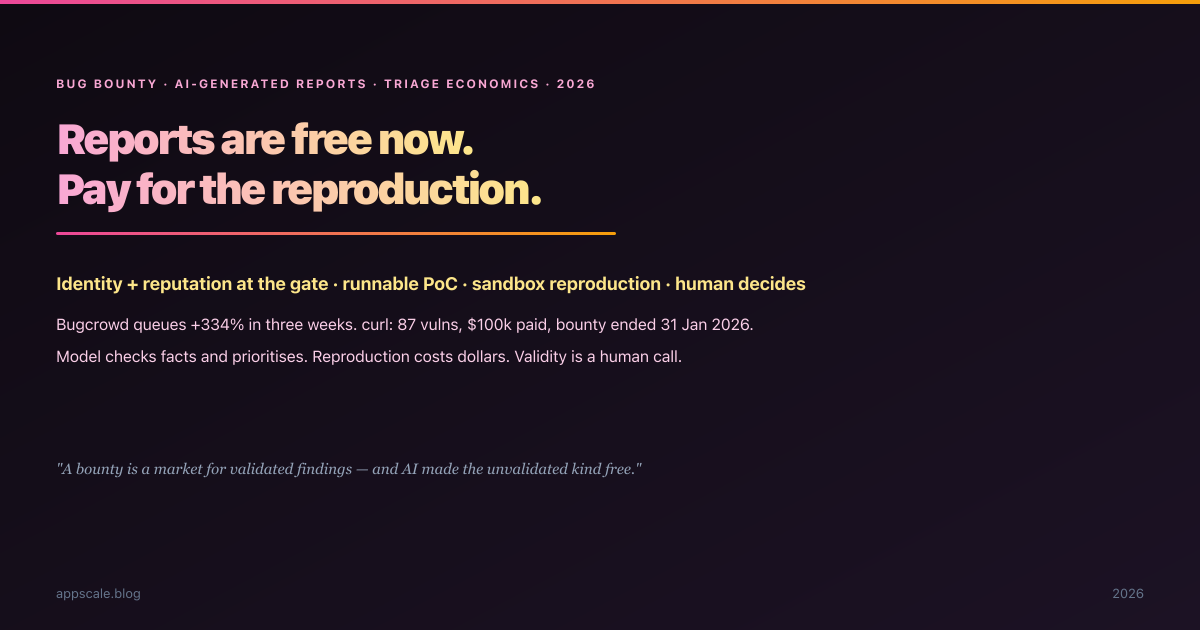
Bug Bounty in the AI-Slop Era: Pay for the Reproduction, Not the Report (2026)
AI made vulnerability reports free to write and left them expensive to validate. Gate intake with identity and a runnable PoC, reproduce in a sandbox, pay for proof.
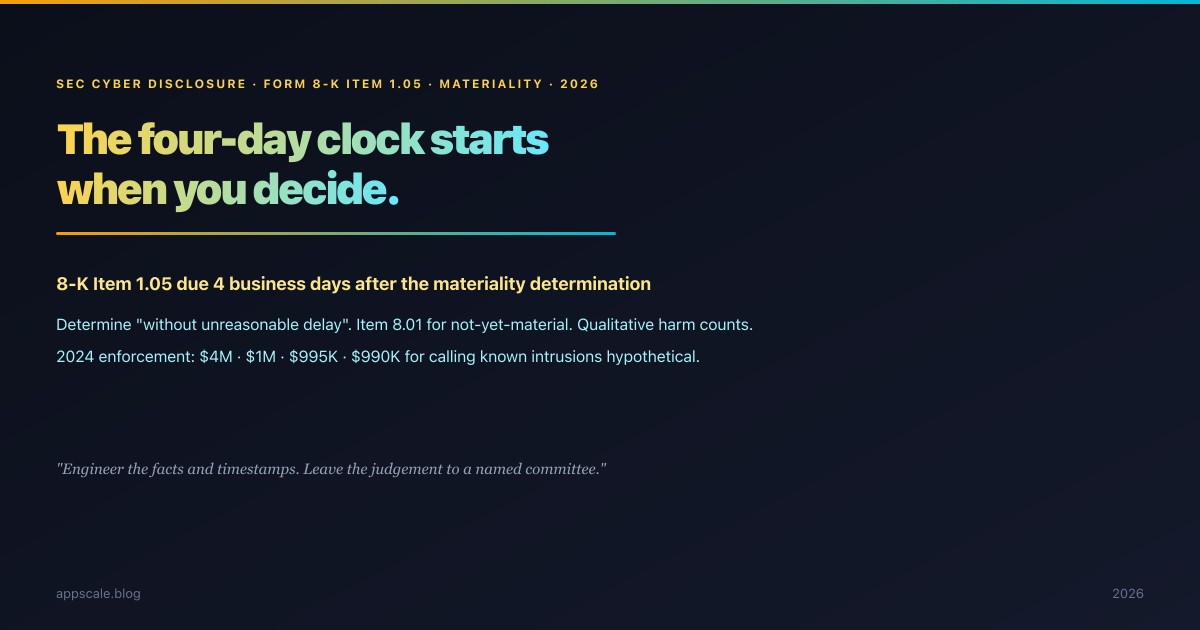
SEC Cyber Disclosure: The Four-Day Clock Starts When You Decide, So Make the Decision an Engineered Record (2026)
The SEC four-day 8-K clock starts at the materiality decision. How to engineer the facts, convening triggers and audit trail behind it, and what not to automate.
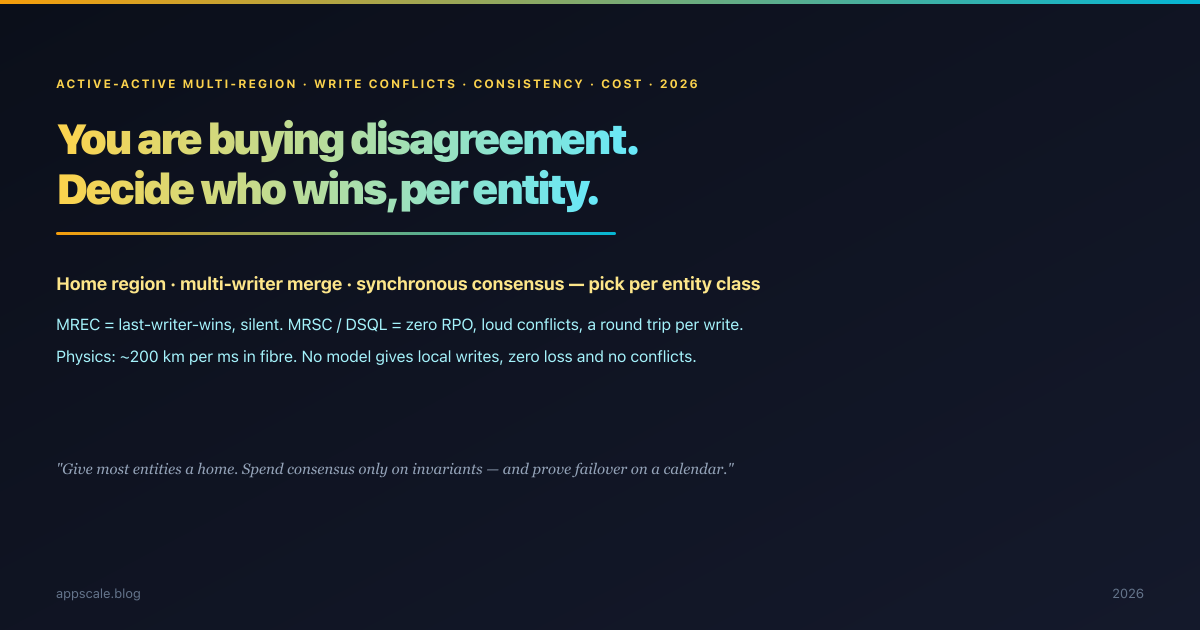
Active-Active Multi-Region: You Are Buying Disagreement, So Decide Who Wins Per Entity (2026)
Active-active is not two regions that both work; it is two regions allowed to disagree. Classify entities, pick a write model per class, and prove the failover.
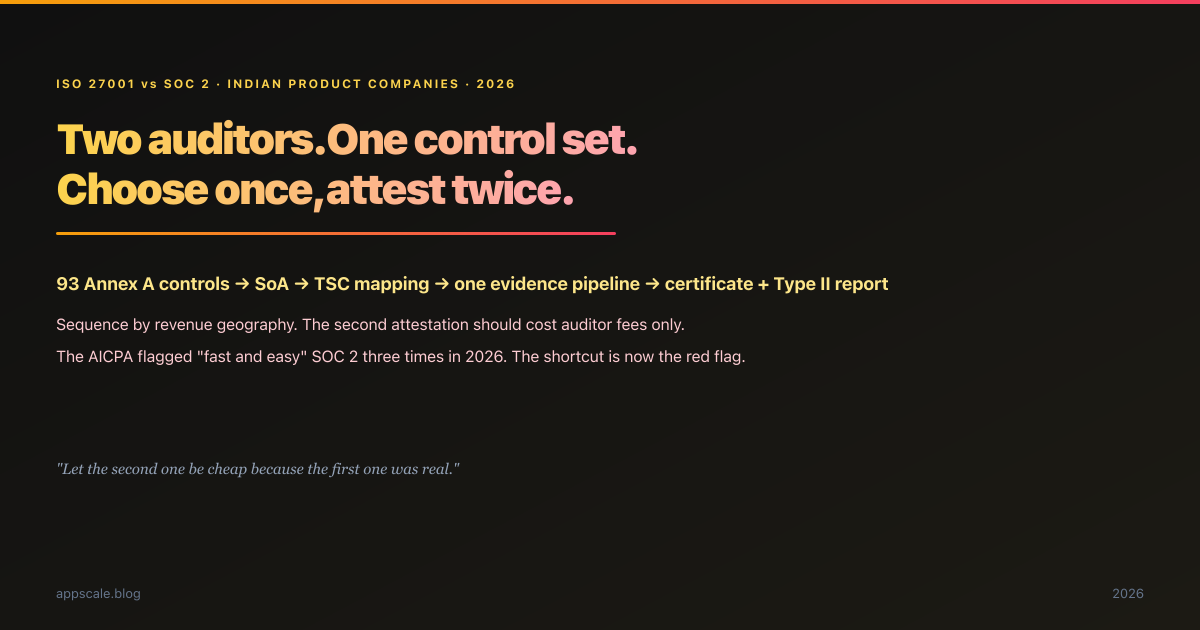
ISO 27001 vs SOC 2 for Indian Product Companies: Choose the Control Set Once, Attest Twice (2026)
ISO 27001 and SOC 2 are two auditors reading one control set. Build it once, sequence by revenue geography, and skip the "SOC 2 in two weeks" package the AICPA now flags.
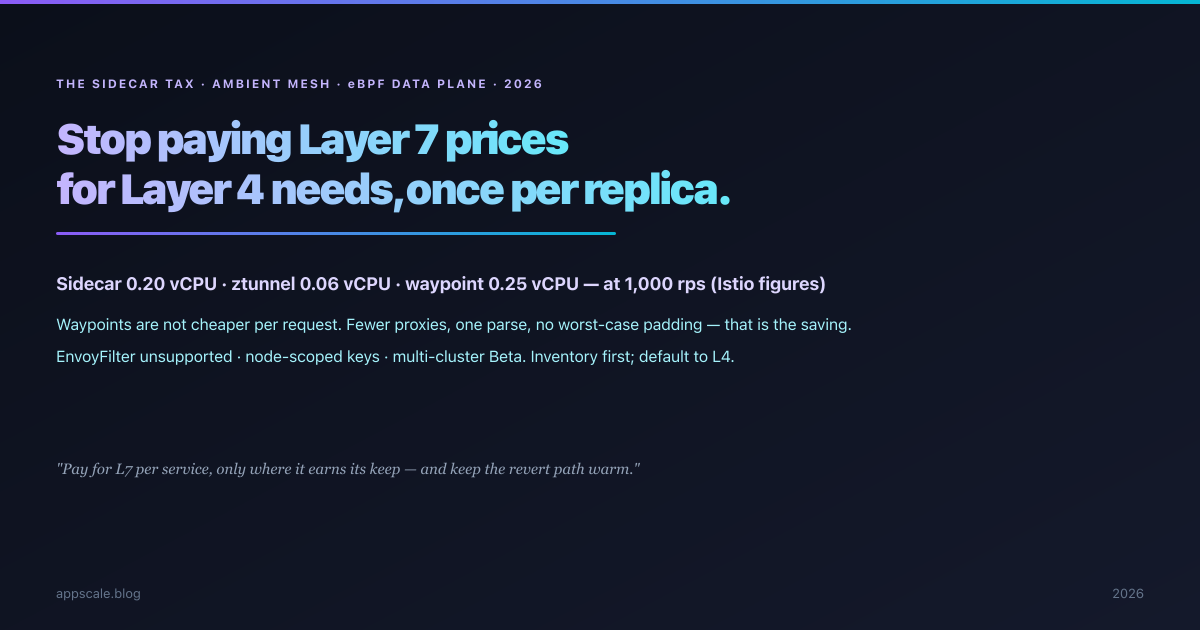
The Sidecar Tax: Ambient Mesh, the eBPF Data Plane, and What a Sidecarless Migration Actually Buys (2026)
Sidecarless meshes do not make L7 cheaper; they let you stop buying L7 for services that never used it. Istio ambient vs Cilium eBPF vs sidecars, with the honest limits.
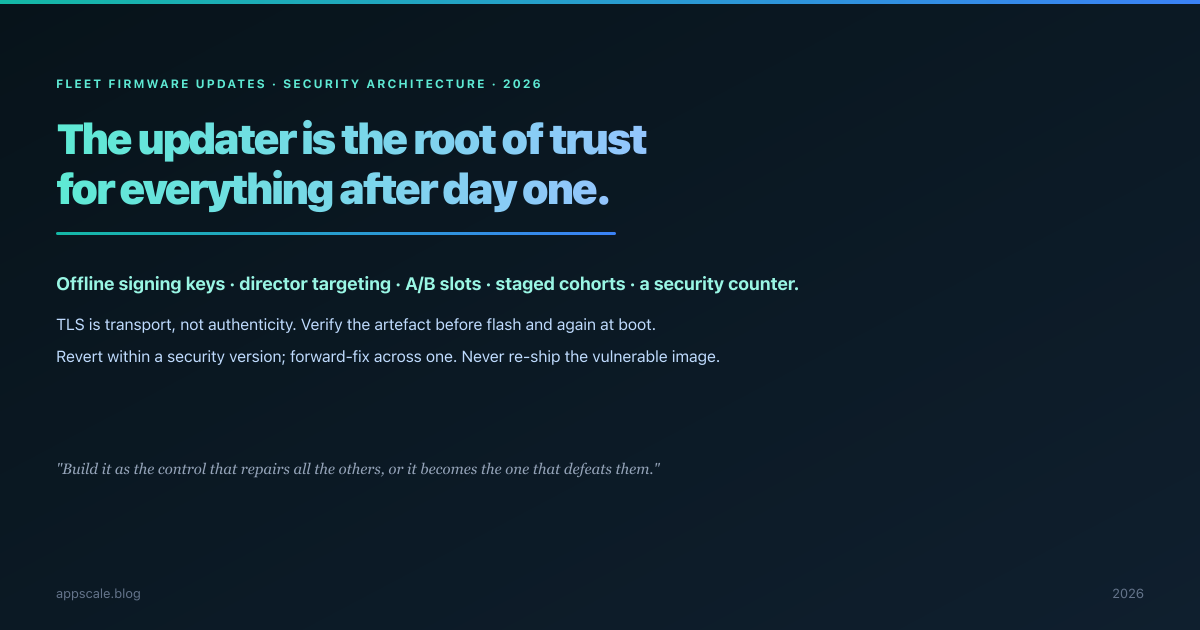
Fleet Firmware Updates as a Security Control: Signing, Staged Rollout, and Rollback (2026)
The OTA updater is the root of trust after day one. A 2026 guide to offline signing keys, director targeting, A/B slots, staged cohorts and rollback that never un-patches.
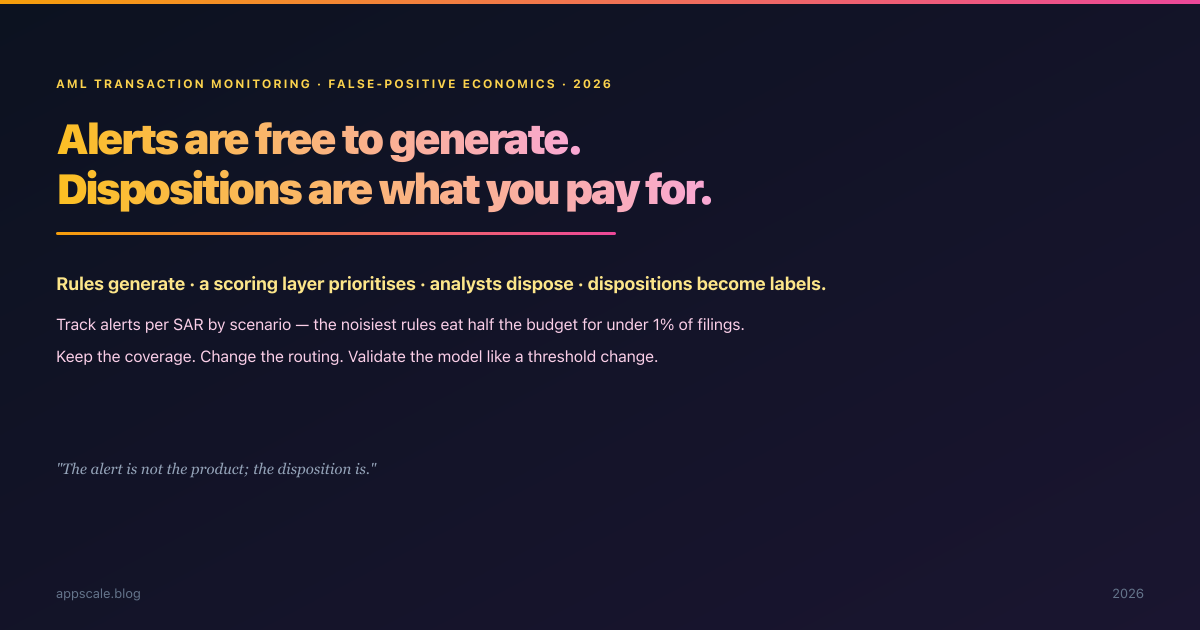
AML Transaction Monitoring: The False-Positive Economics Nobody Models (2026)
AML alerts are free to generate and expensive to close. A 2026 architecture for tiered monitoring: rules for coverage, a scoring layer to route, dispositions as labels.
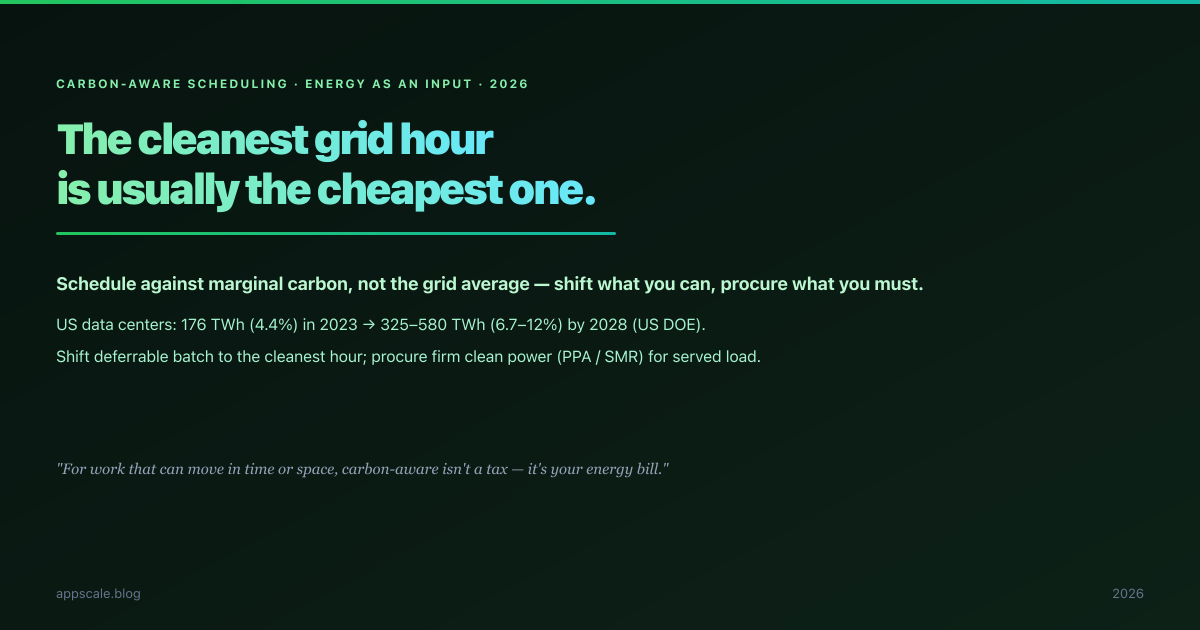
Carbon-Aware Scheduling: Energy as an Architecture Input for AI Datacenters (2026)
For AI work that can move in time or space, the cleanest grid hour is usually the cheapest. A 2026 guide to carbon-aware scheduling, marginal signals and clean-power procurement.
Bring this thinkingto your business.
conversation
One essay, most weeks. No noise.