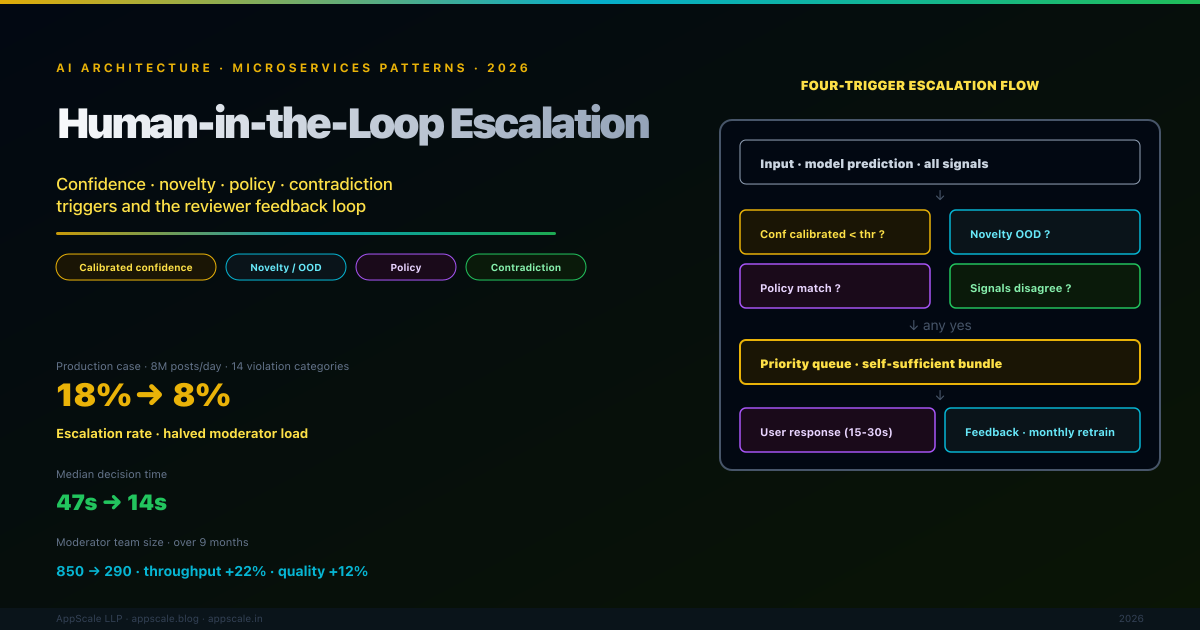
The most common mistake in production AI systems is to treat the model as the final decision-maker for every input. The model is a probabilistic component — sometimes confident and correct, sometimes confident and wrong, sometimes uncertain and the right answer is "ask a human." A system that ignores the third case ships hallucinations as authoritative answers; a system that routes everything through humans defeats the point of automation. The Human-in-the-Loop escalation pattern is a structured routing mechanism that detects, before the prediction is acted upon, that the model's output should not be trusted, and routes that input to a human reviewer with the right context to decide. The reviewer's decision becomes both the immediate user-facing answer and a labelled training example that closes the feedback loop. This article covers the production design: which signals reliably indicate "this needs a human" (calibrated confidence, novelty, policy triggers, contradiction), how to build a reviewer queue that humans can keep up with, what the interface needs for sub-30-second decisions, and how to feed reviewer decisions back into training without contamination.