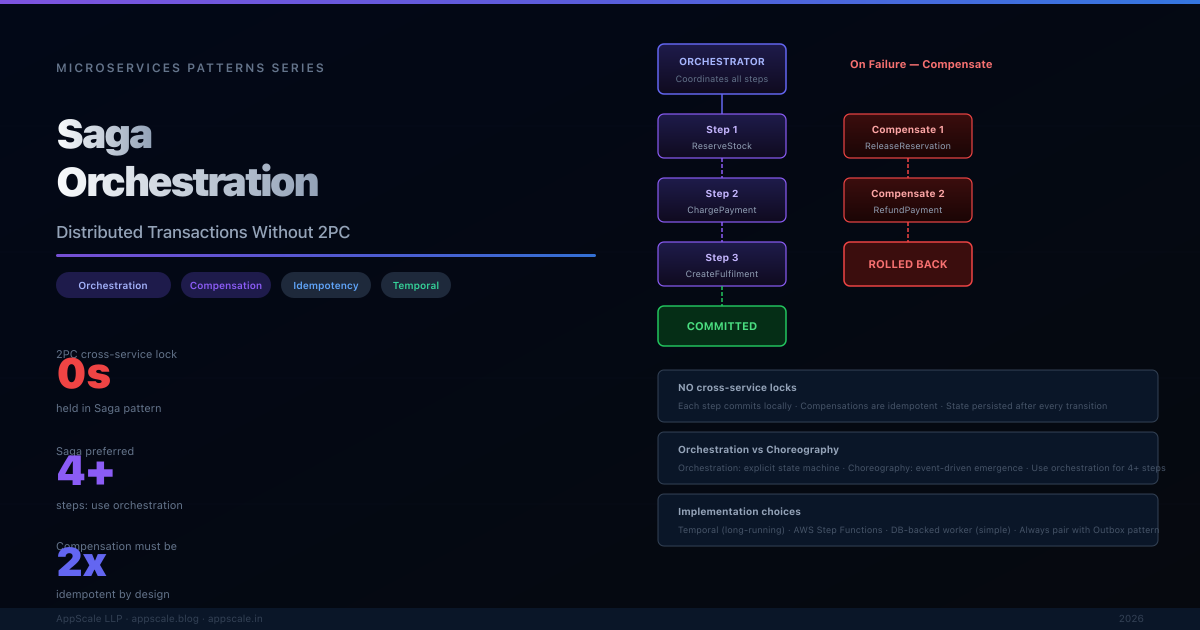
Saga Orchestration Pattern: Managing Distributed Transactions Without 2PC (2026)


Network retries, message re-delivery, and client timeouts mean write operations in distributed systems can be triggered more than once. Without idempotency, the result is duplicate charges, double inventory deductions, and incorrect state. This article covers the idempotency key pattern, Redis-based key stores with atomic SET NX, database unique constraints as the second line of defence, message queue deduplication, HTTP method semantics, and how idempotency integrates with Saga and Outbox patterns.
The dual-write problem — writing to a database and publishing to a message broker without atomicity — causes data loss and phantom events in production. The Outbox pattern solves it definitively: write both the business record and the outbound message in the same database transaction, then relay it to the broker. This guide covers polling vs CDC relays, Debezium integration, consumer idempotency, and how Outbox enables reliable Saga step execution.
The single biggest performance lever for a globally-distributed system is reducing the network distance between users and the data they read. Multi-region read replication maintains read-only replicas in each region where users live, with writes flowing to a primary and reads served from the geographically nearest replica. This guide covers when the pattern is the right answer, the read-after-write consistency strategies that determine whether the application can tolerate replication lag, the database technologies (Postgres logical replication, Aurora Global, DynamoDB Global Tables, CockroachDB, Spanner), production configuration with Postgres, and the operational discipline that prevents subtle consistency bugs.
The 2026 architecture for database-per-service plus cross-service joins via Debezium CDC, Kafka, and ksqlDB / Flink materialised views — with the operational runbook.
Advertise and partner
Reach engineering leaders and CTOs reading about AI, mobile and cloud architecture.
Sponsored mentions and co-authored articles or technical deep-dives. Relevant products only, always disclosed.