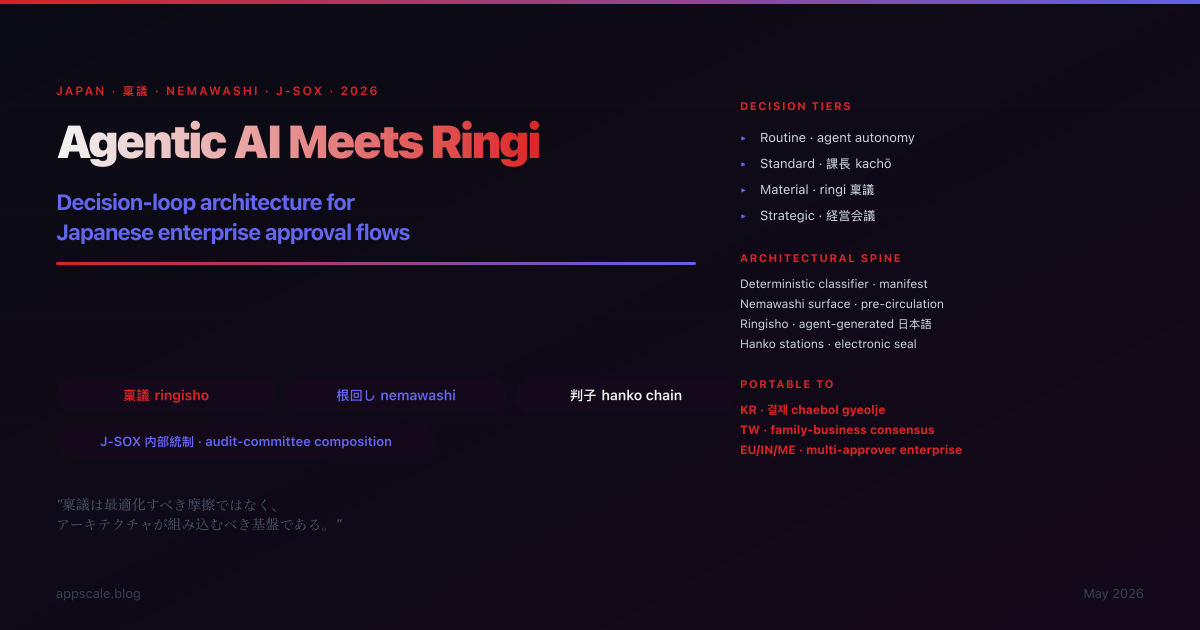
返回博客ai-architectureAgentic AI Meets Ringi: Decision Loop Architecture for Japanese Enterprise Approval Flows (2026)May 12, 202619 min read ringi seido nemawashi hanko japanese enterprise agentic ai multi approver consensus decision j-sox internal control ringisho keiretsu audit committee decision loop architecture role graded autonomy ai architecture japanese llmFrequently Asked QuestionsWhy does the standard agentic-AI human-in-the-loop pattern fail Japanese ringi seido in practice?How is the decision tier classified, and why is a deterministic rule engine specifically required rather than an LLM judgement?What concretely does the nemawashi surface look like as a structured workflow rather than informal email?How is the Japanese ringisho actually generated by the agent, and what does the template structure look like?How does electronic hanko integration actually work with the firm's existing approval system?What does the audit-trail schema look like, and what queries does the J-SOX reviewer actually run against it?How does this transplant to Korean chaebol gyeolje approval flows?When does the agent step back from leading a decision and hand it to a human-led nemawashi?How does model-vendor selection (Sakana AI, NTT tsuzumi, JP-domiciled inference) affect the architecture?What does Stage 4 maturity look like in practice, and what business outcomes does it produce? 分享这篇文章 Twitter LinkedIn WhatsApp复制链接Download as PDFSatyam人工智能和云架构师。帮助团队构建可扩展到数百万的系统。Comments Leave a commentPost Comment