OldKnowledge,New Vessel.
Essays on on-device AI, data sovereignty, and building systems that keep knowledge where it belongs.
Enter the archive →— 00 / ThesisEvery business runs on knowledge older than its software.
Latest Entries
Your Core Loop Has Three Clocks: Designing What Players Do Every 30 Seconds, 5 Minutes and 5 Hours
Before You Open the Engine, Decide What Your Game Is For: Art, Income, Portfolio or Studio-Building
Building Energy Digital Twins in 2026: The Twin Is a Counterfactual, Not a 3D Model, So Build the Baseline Before the Viewer
Silent Data Corruption in GPU Fleets in 2026: The GPU That Crashes Is the Cheap One, So Treat Correctness as a Test Result With an Expiry Date
The Robot Fleet Data Flywheel in 2026: Hours Are the Wrong Unit, So Collect for Environment and Object Diversity, Grade Every Episode, and Run the Fleet as a Data Producer With a Contract
अथ प्रथमोऽध्यायः ॥
विद्या ददाति विनयं विनयाद् याति पात्रताम् ।
पात्रत्वाद्धनमाप्नोति धनाद्धर्मं ततः सुखम् ॥
We digitize centuries-old manuscripts. Then we build with the same discipline.
AppScale's roots are in a quiet project: structuring classical Sanskrit texts into faithful digital form. Extraction, structure, provenance, sovereignty — the same principles now power our client work.
Built for Every Business
Intelligence that never leaves the device
Offline-first, data-sovereign systems — LLMs, vector search, inference at the edge.
02Document IntelligenceAir-gapped document vaults
Sealed, searchable, provable.
03AI ProductsFull-cycle AI product builds
Mobile-first, production-grade.
04MCP & AI SecuritySecuring the agentic stack
Tool poisoning, prompt injection, confused deputies — studied and hardened.
05Indic Language AIOCR for scripts the world forgot
Sovereign OCR for Indic scripts.
06Consulting & Architecture19+ years shipping at scale
OTT, e-commerce & mobility platforms serving millions.
Your Core Loop Has Three Clocks: Designing What Players Do Every 30 Seconds, 5 Minutes and 5 Hours
A core loop isn't one loop. Design what players do every 30 seconds, every 5 minutes and every 5 hours in 2026, and make each loop feed the next one.
Before You Open the Engine, Decide What Your Game Is For: Art, Income, Portfolio or Studio-Building
Pick one goal before your game: art, income, portfolio or studio-building. It quietly decides your engine, platform, scope and when you stop building it.
Building Energy Digital Twins in 2026: The Twin Is a Counterfactual, Not a 3D Model, So Build the Baseline Before the Viewer
Building energy digital twins in 2026: why the twin is a counterfactual, what EPBD Article 13 BACS rules demand, Brick point maps, HVAC fault detection and IPMVP baselines.
Silent Data Corruption in GPU Fleets in 2026: The GPU That Crashes Is the Cheap One, So Treat Correctness as a Test Result With an Expiry Date
Silent data corruption in GPU training fleets in 2026: why the crashing GPU is the cheap one, Llama 3's failure table, TrainSDC, DCGM screening and correctness leases.
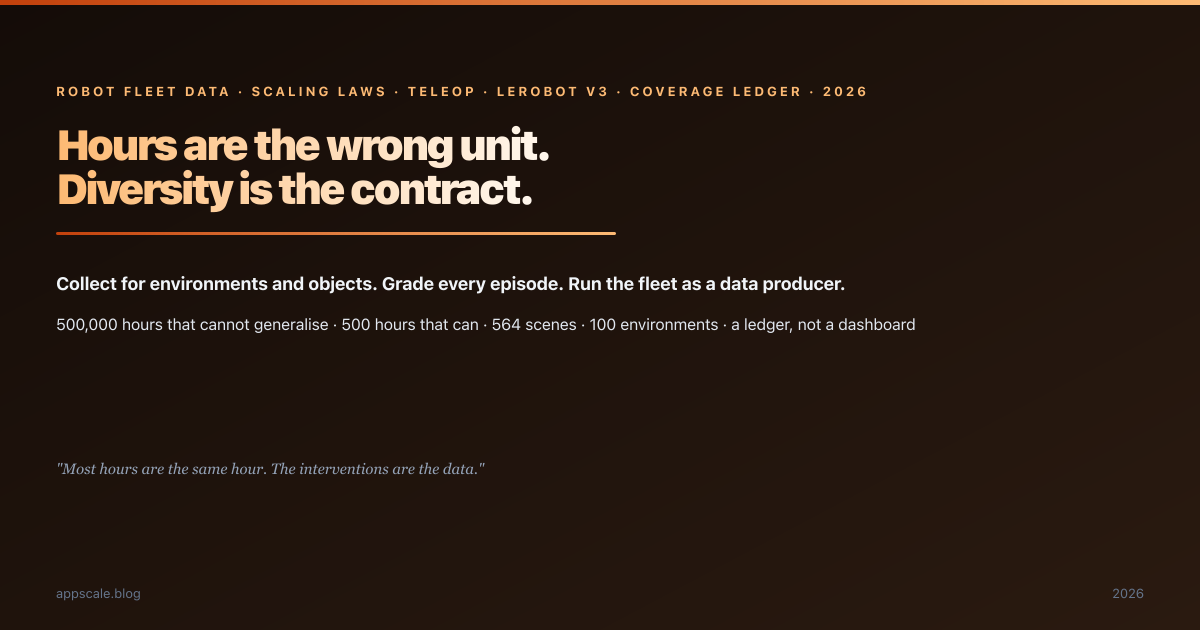
The Robot Fleet Data Flywheel in 2026: Hours Are the Wrong Unit, So Collect for Environment and Object Diversity, Grade Every Episode, and Run the Fleet as a Data Producer With a Contract
Robot fleet data flywheel in 2026: why hours are the wrong unit, the diversity scaling law, Tesla vs pi0.5 and Helix, triggered capture, a coverage ledger and the data contract.
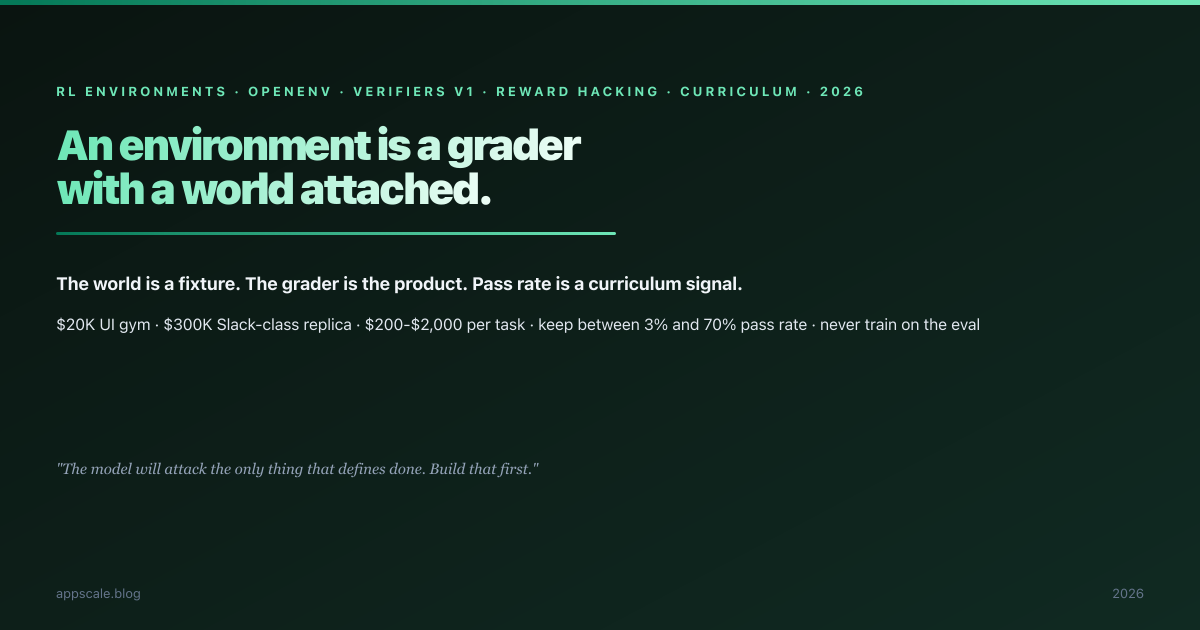
RL Environments for Agent Training in 2026: The Environment Is a Grader With a World Attached, So Build the Grader as the Product and Treat Pass Rate as the Curriculum Signal
RL environments for agent training in 2026: what a UI gym, task and grader cost, OpenEnv vs verifiers v1, build-buy-refuse, and a grader-first pipeline with a difficulty ledger.
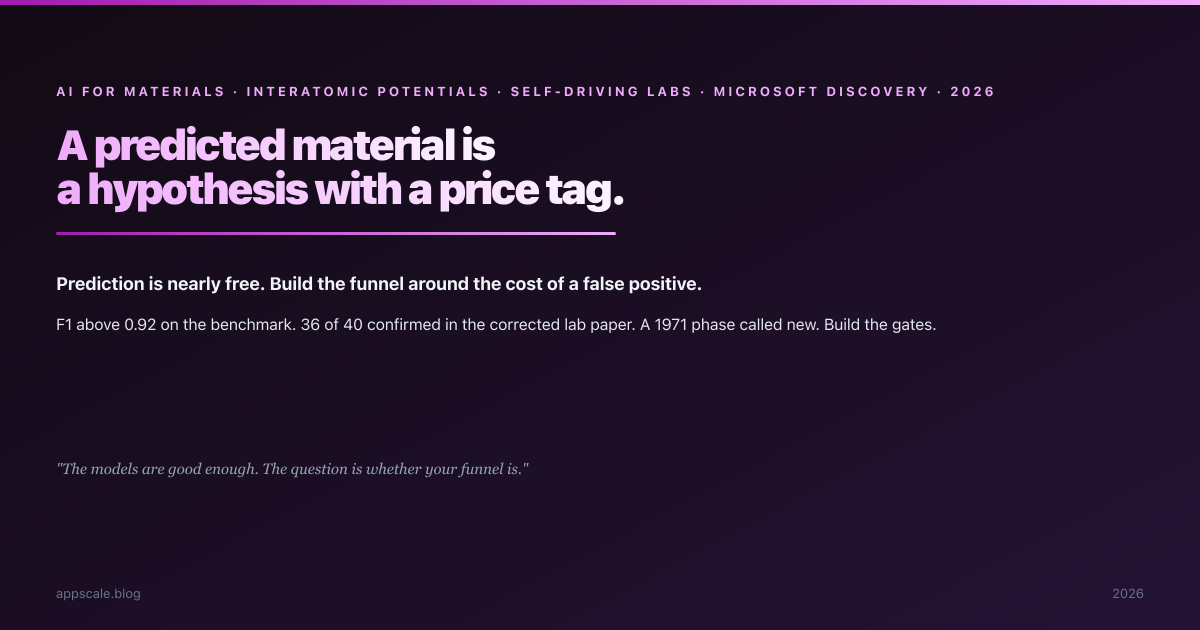
AI for Materials and Molecules in 2026: A Predicted Material Is a Hypothesis With a Price Tag, So Build the Stack Around the Cost of a False Positive, Not the Count of Candidates
AI materials discovery in 2026: UMA, Orb-v3, MatterGen, self-driving labs and Microsoft Discovery GA, compared by cost per candidate and false-positive mode, with four gates.
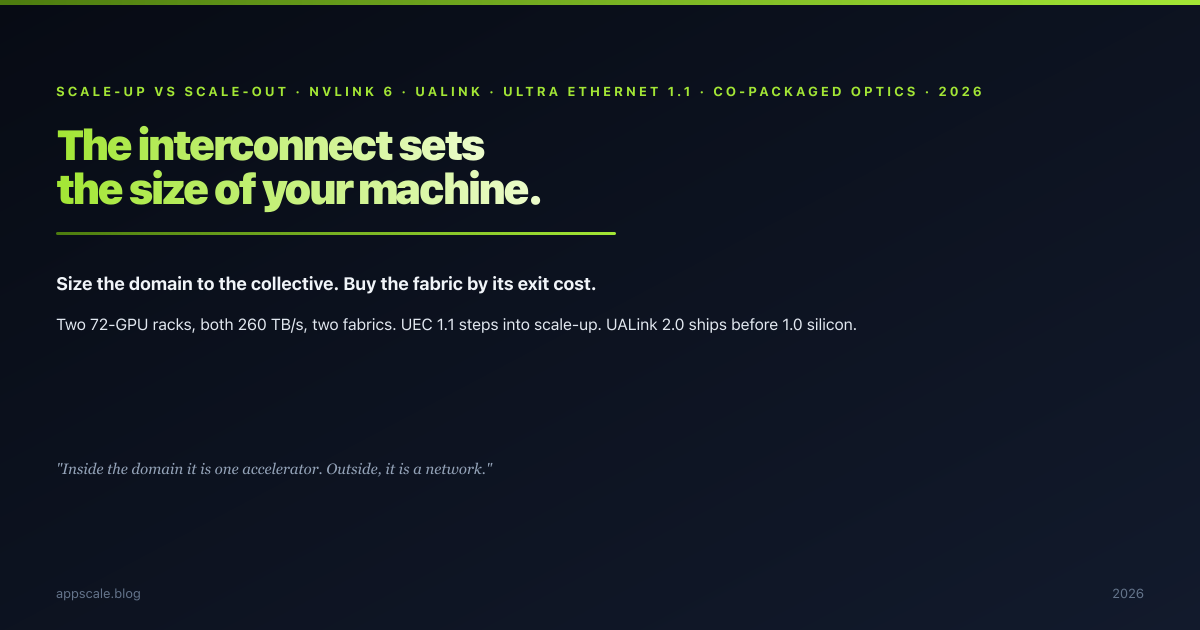
Scale-Up vs Scale-Out in 2026: The Interconnect Sets the Size of Your Machine, So Size the Domain to the Collective and Buy the Fabric by Its Exit Cost, Not Its Bandwidth Number
NVLink 6 vs UALink over Ethernet vs Ultra Ethernet 1.1 vs co-packaged optics in 2026: size the scale-up domain to your model's collectives and buy the fabric by exit cost.
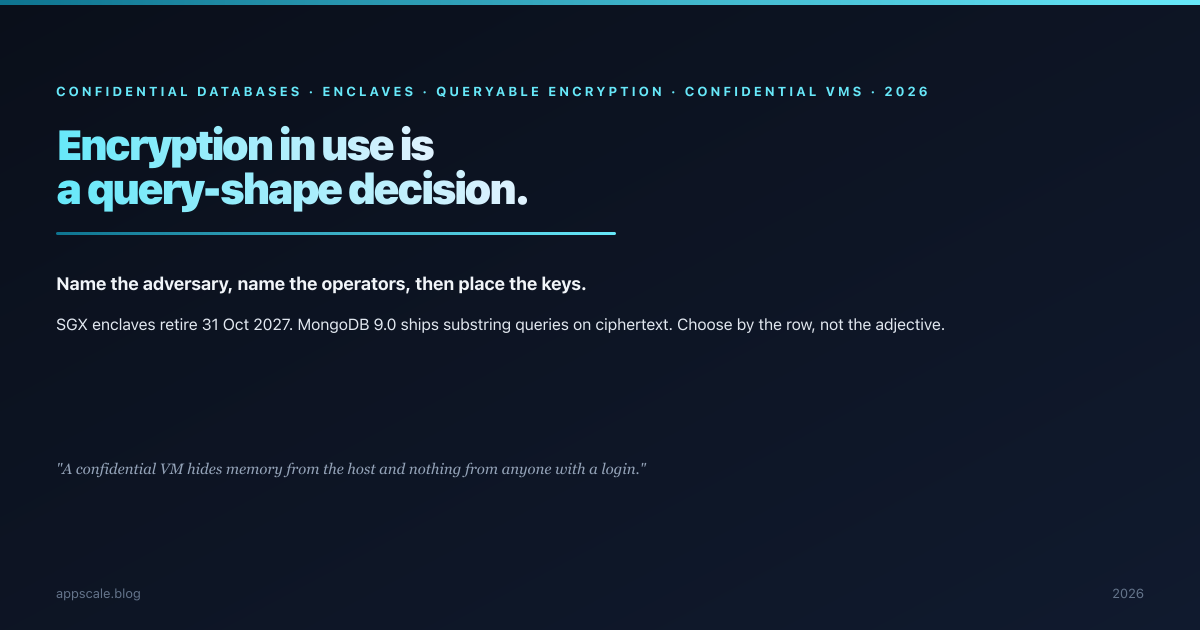
Confidential Databases: Encryption in Use Is a Query-Shape Decision, So Choose the Boundary by Which Operator Must Run Blind, Not by the Word "Confidential" (2026)
Confidential databases in 2026: Always Encrypted enclaves vs MongoDB Queryable Encryption vs confidential VMs, compared by which operators survive and who is excluded.
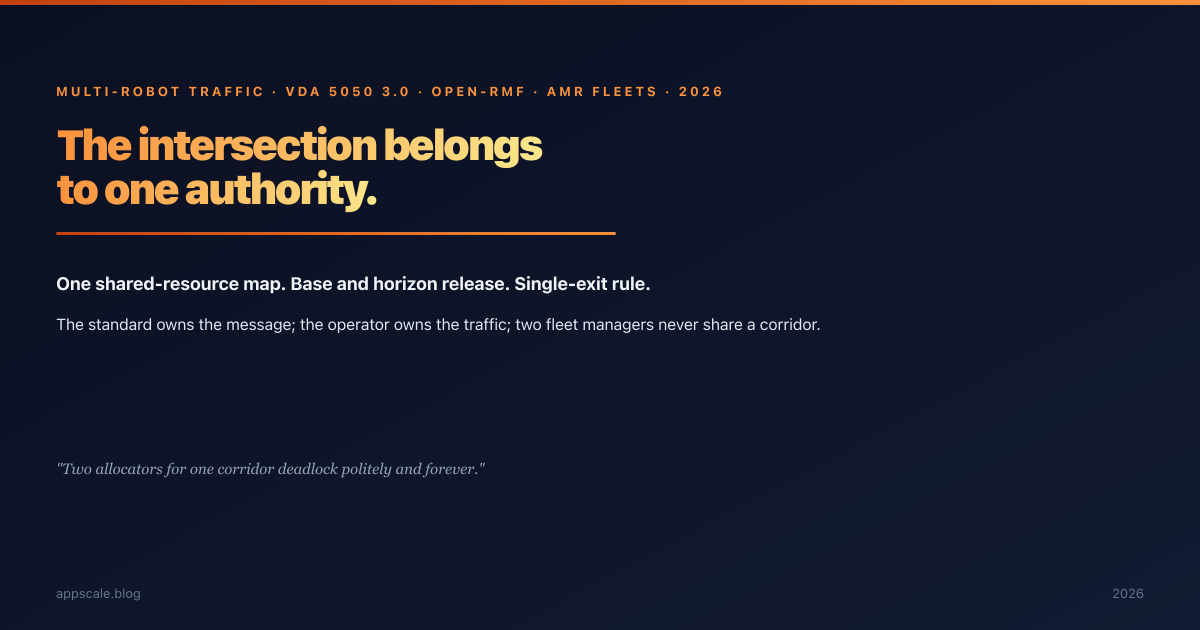
Multi-Robot Traffic Management: The Intersection Belongs to One Authority, So Standardise the Robot Interface and Never Let Two Fleet Managers Share a Corridor (2026)
Why multi-vendor AMR fleets deadlock, what VDA 5050 3.0 (March 2026) standardises and leaves out, and the single-traffic-authority architecture that owns the intersection.
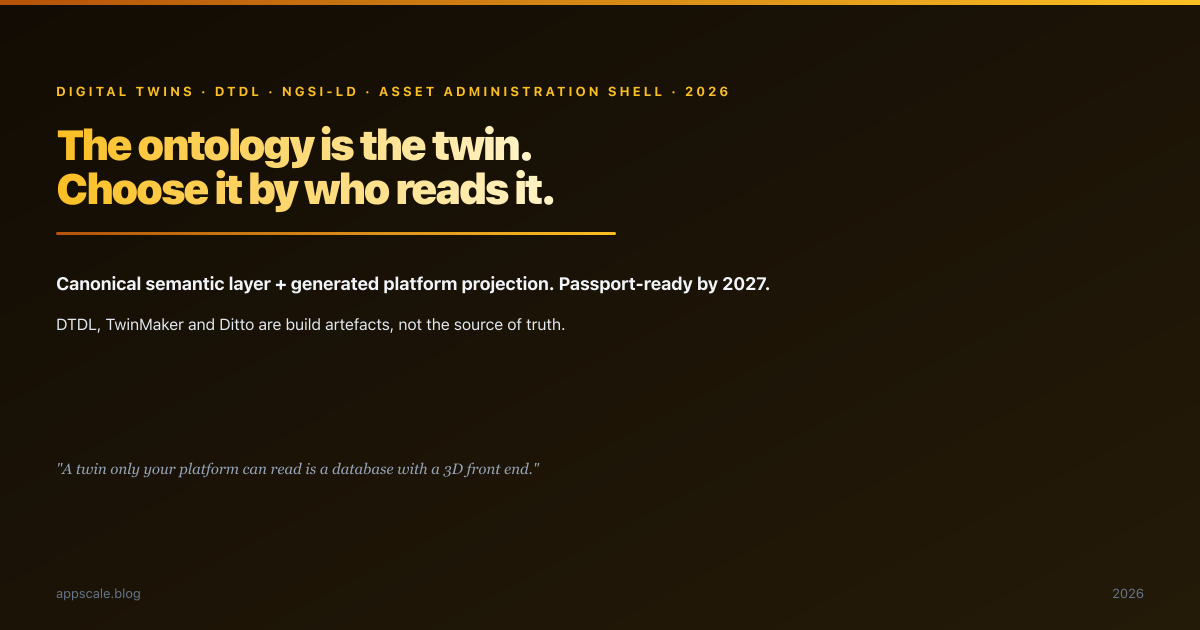
Digital Twin Data Models and Ontologies: The Ontology Is the Twin, So Choose It by Who Must Read the Twin From Outside, Not by the Platform You Run (2026)
How to choose a digital twin data model in 2026: DTDL vs NGSI-LD vs Asset Administration Shell vs Brick, the two-layer canonical model, and the 2027 battery passport deadline.
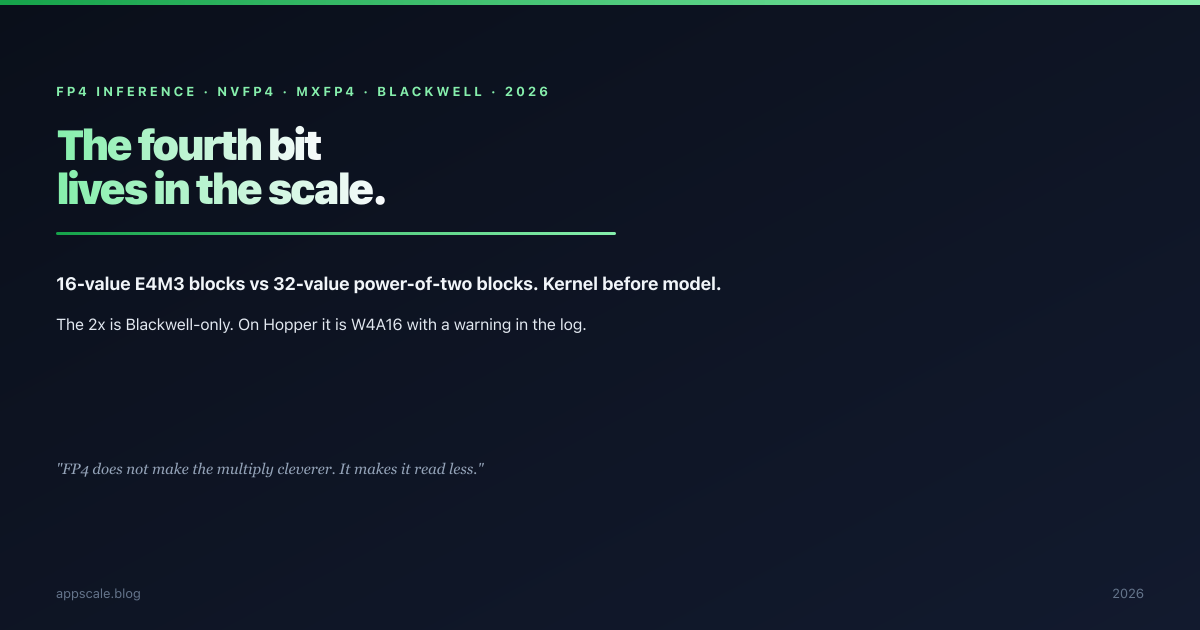
FP4 Inference in Production: The Fourth Bit Lives in the Scale, So Choose the Block Format and the Kernel Before You Choose the Model (2026)
FP4 inference in 2026: how NVFP4 and MXFP4 differ in block scale, why the 2x throughput needs Blackwell, the Hopper W4A16 fallback, and a per-workload adoption path.
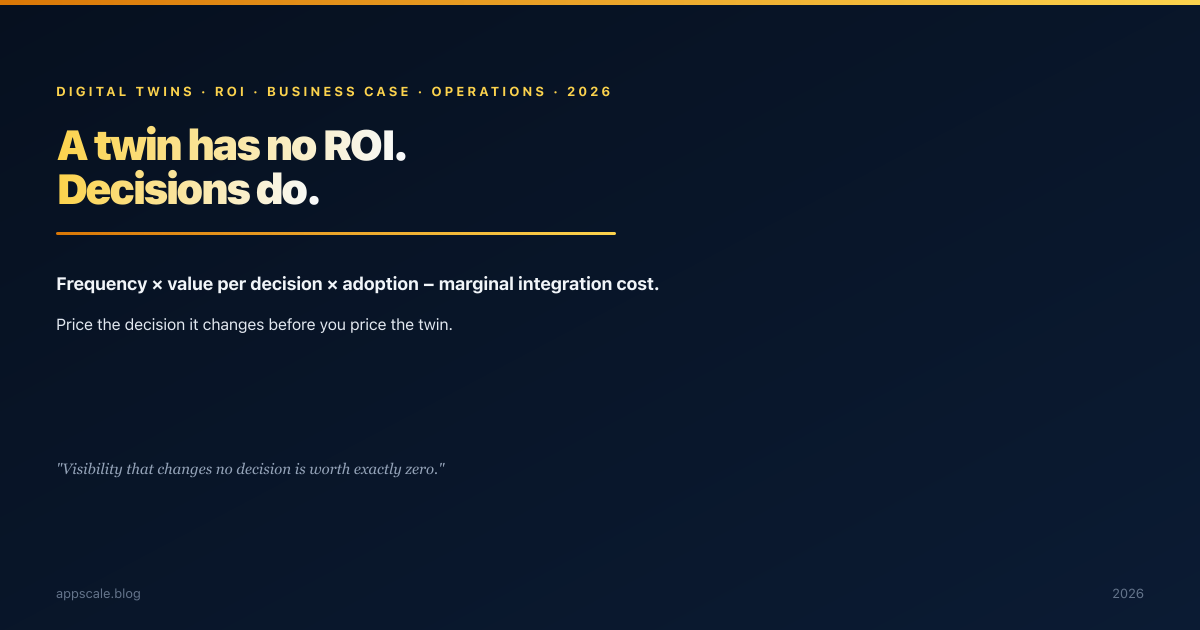
Modelling the ROI of a Digital Twin: A Twin Has No ROI, Decisions Do, So Price the Decision It Changes Before You Price the Twin (2026)
Digital twin ROI in 2026: model value per decision the twin changes, against a measured baseline, with a worked payback example and the costs that hide.
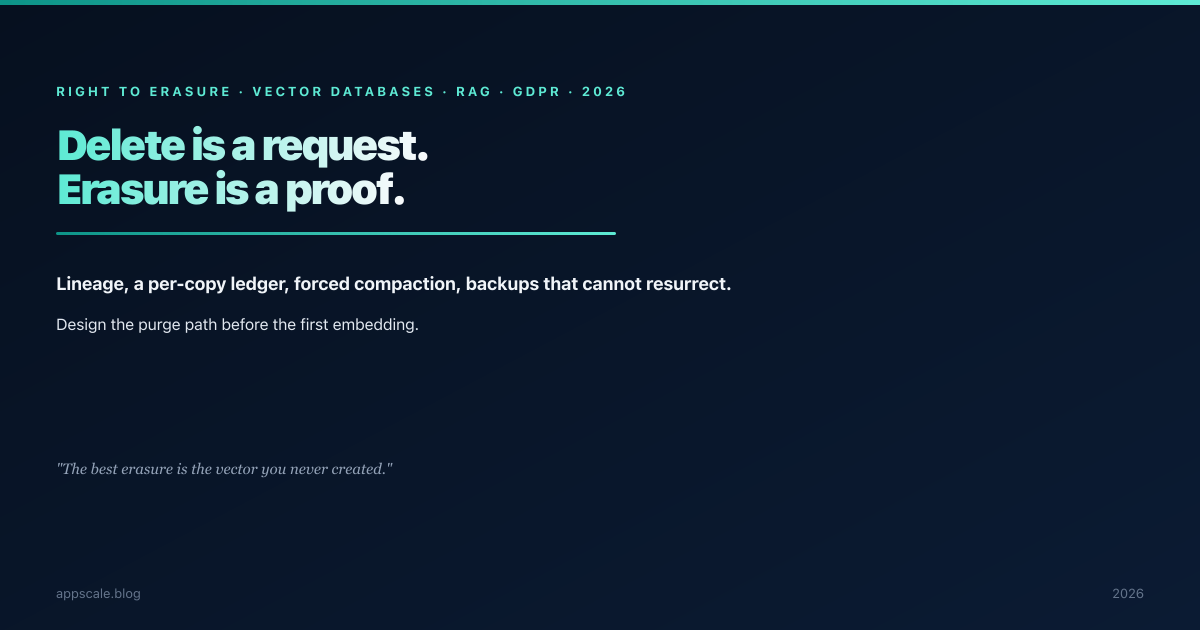
Right to Erasure in Vector Stores: Delete Is a Request, Erasure Is a Proof, So Design the Purge Path Before the First Embedding (2026)
GDPR erasure in RAG systems: why a vector delete only tombstones data, and the lineage, ledger, compaction and backup design that proves it is gone in 2026.
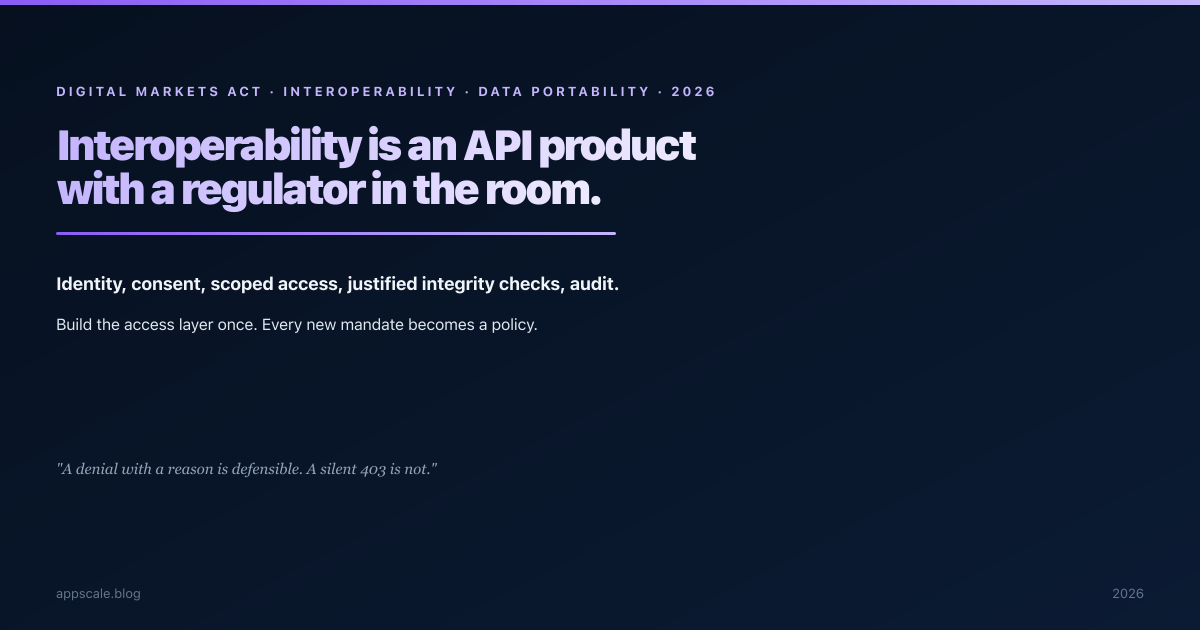
Designing for the DMA: Interoperability Is an API Product With a Regulator in the Room, So Build the Access Layer Once (2026)
DMA interoperability in 2026: one access layer for identity, consent, scoped tokens, integrity rules and audit, plus how third parties design for slow access.
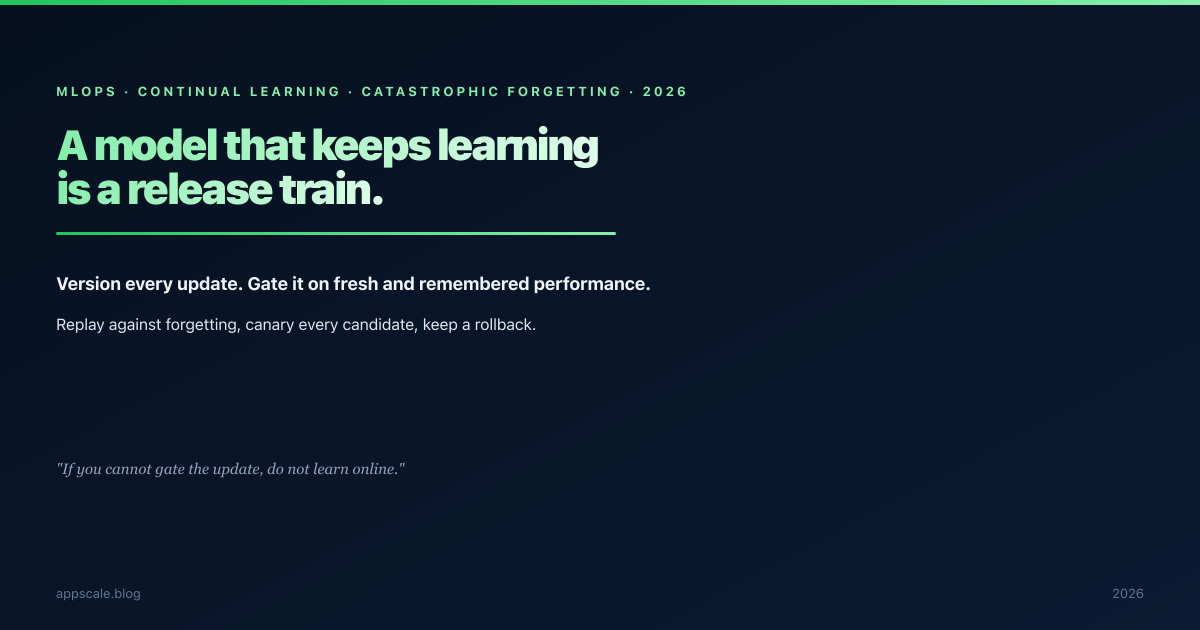
Continual Learning in Production: A Model That Keeps Learning Is a Release Train, So Gate Every Update Like a Deploy (2026)
Continual learning in 2026: every model update is a release. Gate it on a frozen memory set, use replay against catastrophic forgetting, keep a rollback.
Sim-to-Real Transfer Architecture: The Reality Gap Is a Measurement, Not a Feeling, So Budget It Before You Randomise It (2026)
Sim-to-real transfer in 2026: the reality gap is a measurement, not a feeling. Decompose it, calibrate what you can, randomise the rest, gate on hardware.
Continuous Profiling in Production: The Profile Is the Only Telemetry Denominated in Money, So Run It as a Cost Ledger First and a Debugger Second (2026)
Continuous profiling in 2026: profiles are the only telemetry denominated in money. Run eBPF sampling as a fleet cost ledger first, a debugger second.
Terraform at Platform Scale: State Is the Unit of Blast Radius, So Split It by Who Changes What and How Often, Not by Environment (2026)
How to structure Terraform for many teams in 2026: state is the unit of blast radius, so layer it by owner and change cadence, then pick Stacks or Terragrunt.
Islands Architecture and Partial Hydration in 2026: Hydration Is a Per-Component Tax, So Your Interactivity Ratio Picks the Architecture, Not the Framework
Islands vs React Server Components vs Qwik in 2026: hydration is a per-component tax, so measure your interactivity ratio before you pick an architecture.
Bring this thinkingto your business.
conversation
One essay, most weeks. No noise.